
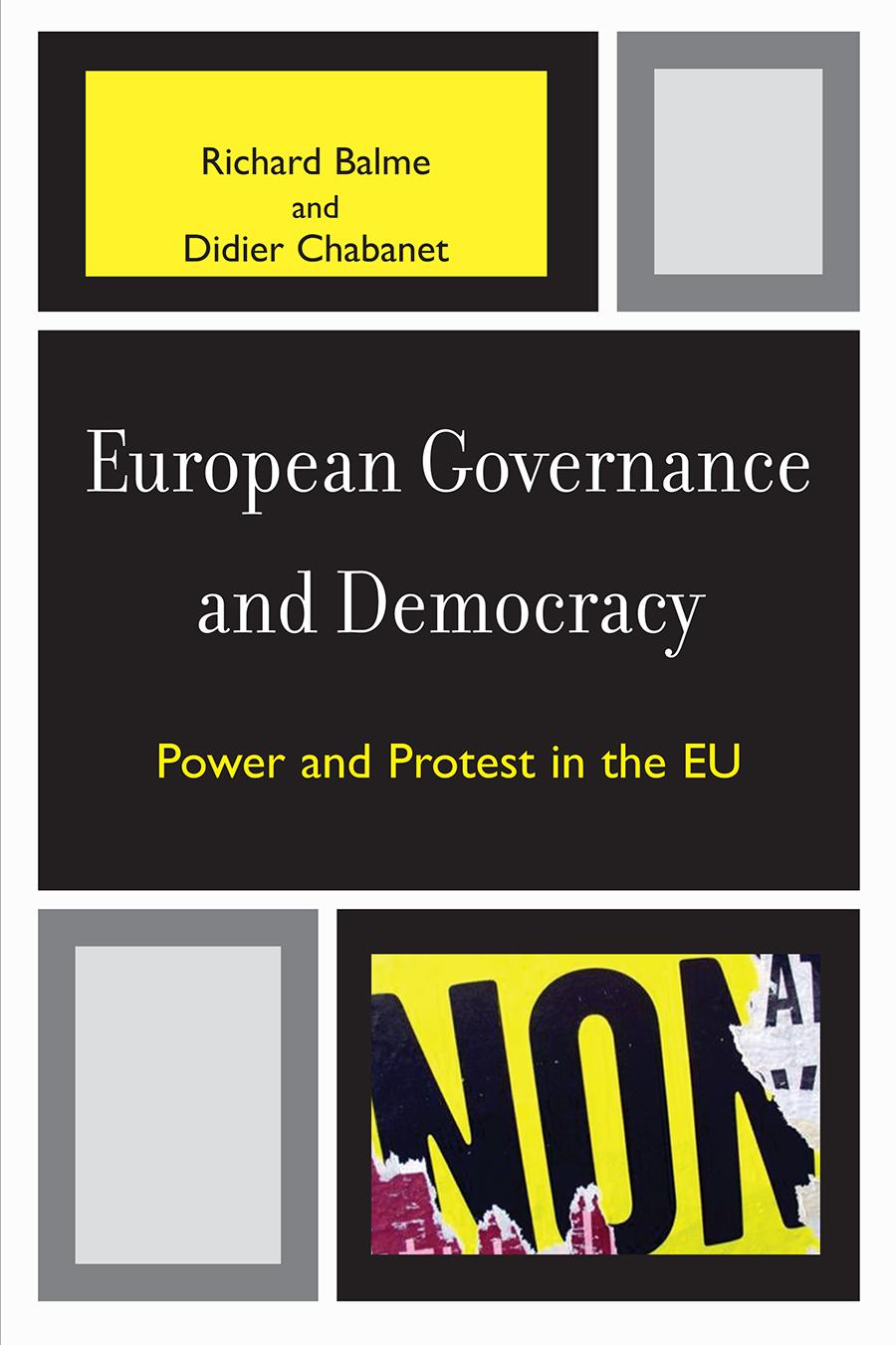
Considering the future of European integration, this clear and compelling study explores the interplay between collective action and democracy in the European Union and its member states. Richard Balme and Didier Chabanet analyze the influence of supranational governance on democratization through a wealth of case studies on a broad range of civil society interests, including regional policy, unemployment and poverty, women's rights, migration policy, and environmental protection.
The authors trace the evolving relationship between citizens and European institutions over the past decades, especially as public support for deepening and widening integration has waned. This trend culminated in a deep institutional crisis precipitated by the rejection of the draft constitutional treaty in France and the Netherlands in 2005. At least two truisms were proven wrong during this tumultuous period: that European citizens have little interest in European integration and that citizens have little influence on EU politics. However, this power shift has left citizens with a deep distrust of integration and EU institutions with limited capacities to cope with issues the public considers priorities-primarily unemployment and social inequalities.
The book shows how Europe-wide interest groups formed and protesters were able to mobilize around key issues of integration. The authors convincingly argue that the growth of contentious social movements has also been nourished by the EU policy process itself, which leaves more room for interest groups and protest politics than for political parties and representative democracy. An essential primer on European democracy, this study will be invaluable for scholars and students in European politics and public policy, globalization and democracy, and comparative social movements.
The authors trace the evolving relationship between citizens and European institutions over the past decades, especially as public support for deepening and widening integration has waned. This trend culminated in a deep institutional crisis precipitated by the rejection of the draft constitutional treaty in France and the Netherlands in 2005. At least two truisms were proven wrong during this tumultuous period: that European citizens have little interest in European integration and that citizens have little influence on EU politics. However, this power shift has left citizens with a deep distrust of integration and EU institutions with limited capacities to cope with issues the public considers priorities-primarily unemployment and social inequalities.
The book shows how Europe-wide interest groups formed and protesters were able to mobilize around key issues of integration. The authors convincingly argue that the growth of contentious social movements has also been nourished by the EU policy process itself, which leaves more room for interest groups and protest politics than for political parties and representative democracy. An essential primer on European democracy, this study will be invaluable for scholars and students in European politics and public policy, globalization and democracy, and comparative social movements.
Zahle einfach mit Karte, Klarna, Apple Pay oder Google Pay. Nicht zufrieden? Du hast immer ein 14-tägiges Widerrufsrecht. Lies mehr in unseren AGB. Hast du Fragen, schreib uns eine E-Mail an hello@memmo.org.
Memmo macht das Lernen einfacher – wo auch immer du bist. Bei uns findest du deine Kursbücher und smarte Lerntools an einem Ort: Zusammenfassungen, Quizzes, Podcasts und Lernkarten. Und Ted, dein Lernbuddy, beantwortet alles, was du wissen möchtest. Über 50.000 Studierende lernen bereits hier – gemacht, damit du schneller lernst und weniger Stress hast.