
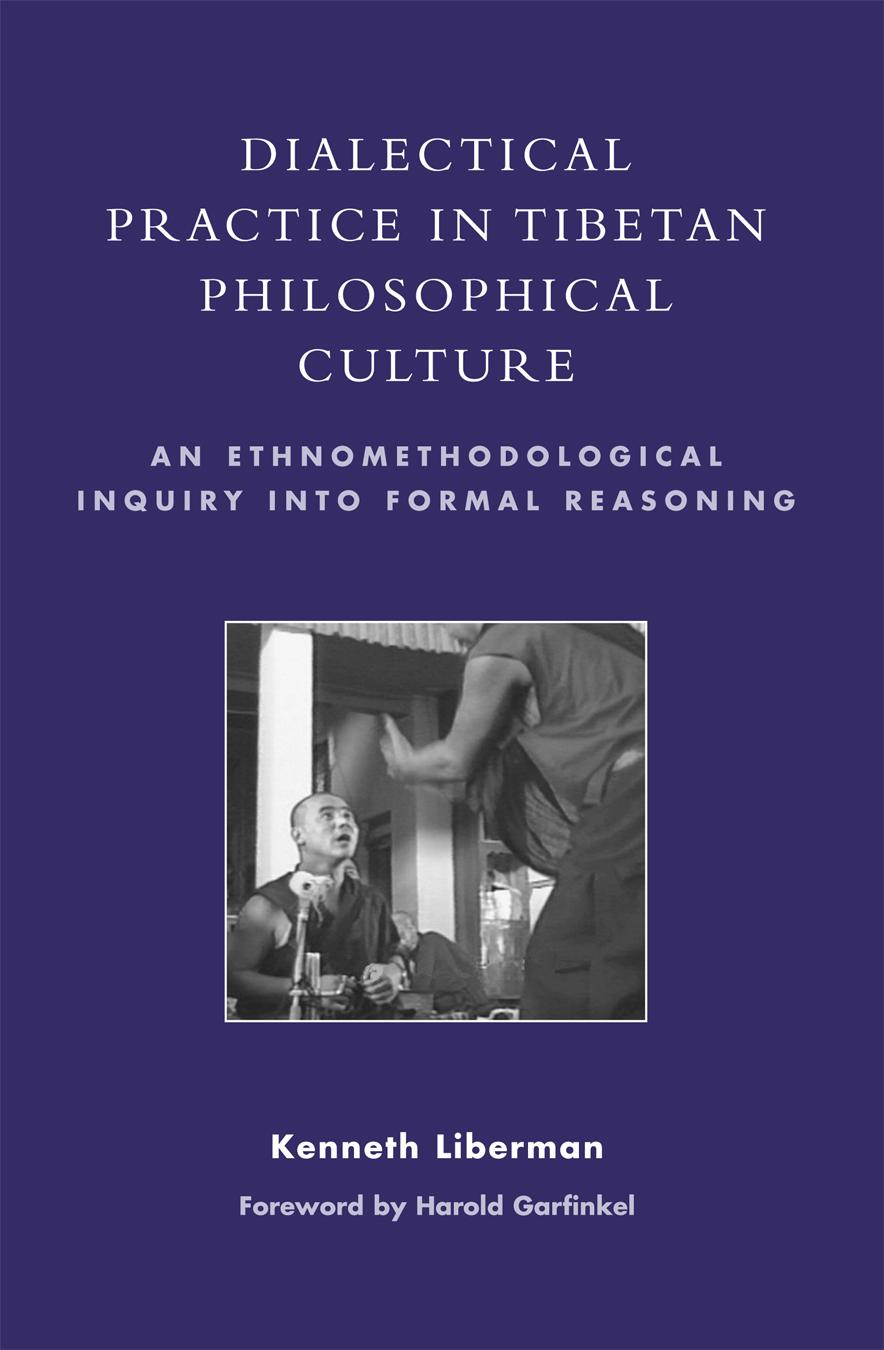
Tibetan Buddhist scholar-monks have long engaged in face-to-face public philosophical debates. This original study challenges Orientalist text-based scholarship, which has overlooked these lived practices of Tibetan dialectics. Kenneth Liberman brings these dynamic disputations to life for the modern reader through a richly detailed, turn-by-turn analysis of the monks' formal philosophical reasoning. He argues that Tibetan Buddhists deliberately organize their debates into formal structures that both empower and constrain thinking, skillfully using logic as an interactional tool to organize their reflections. During his three years in residence at Tibetan monastic universities, Liberman observed and videotaped the monks' debates. He then transcribed, translated, and analyzed them using multimedia software and ethnomethodological techniques, which enabled him to scrutinize the local methods that Tibetan debaters use to keep their philosophical inquiries alive. His study shows the monks rely on such indigenous dialectical methods as extending an opponent's position to its absurd consequences, 'pulling the rug out' from under an opponent, and other lively strategies. This careful investigation of the formal philosophical work of Tibetan scholars is a pathbreaking analysis of an important classical tradition.
Zahle einfach mit Karte, Klarna, Apple Pay oder Google Pay. Nicht zufrieden? Du hast immer ein 14-tägiges Widerrufsrecht. Lies mehr in unseren AGB. Hast du Fragen, schreib uns eine E-Mail an hello@memmo.org.
Memmo macht das Lernen einfacher – wo auch immer du bist. Bei uns findest du deine Kursbücher und smarte Lerntools an einem Ort: Zusammenfassungen, Quizzes, Podcasts und Lernkarten. Und Ted, dein Lernbuddy, beantwortet alles, was du wissen möchtest. Über 50.000 Studierende lernen bereits hier – gemacht, damit du schneller lernst und weniger Stress hast.