
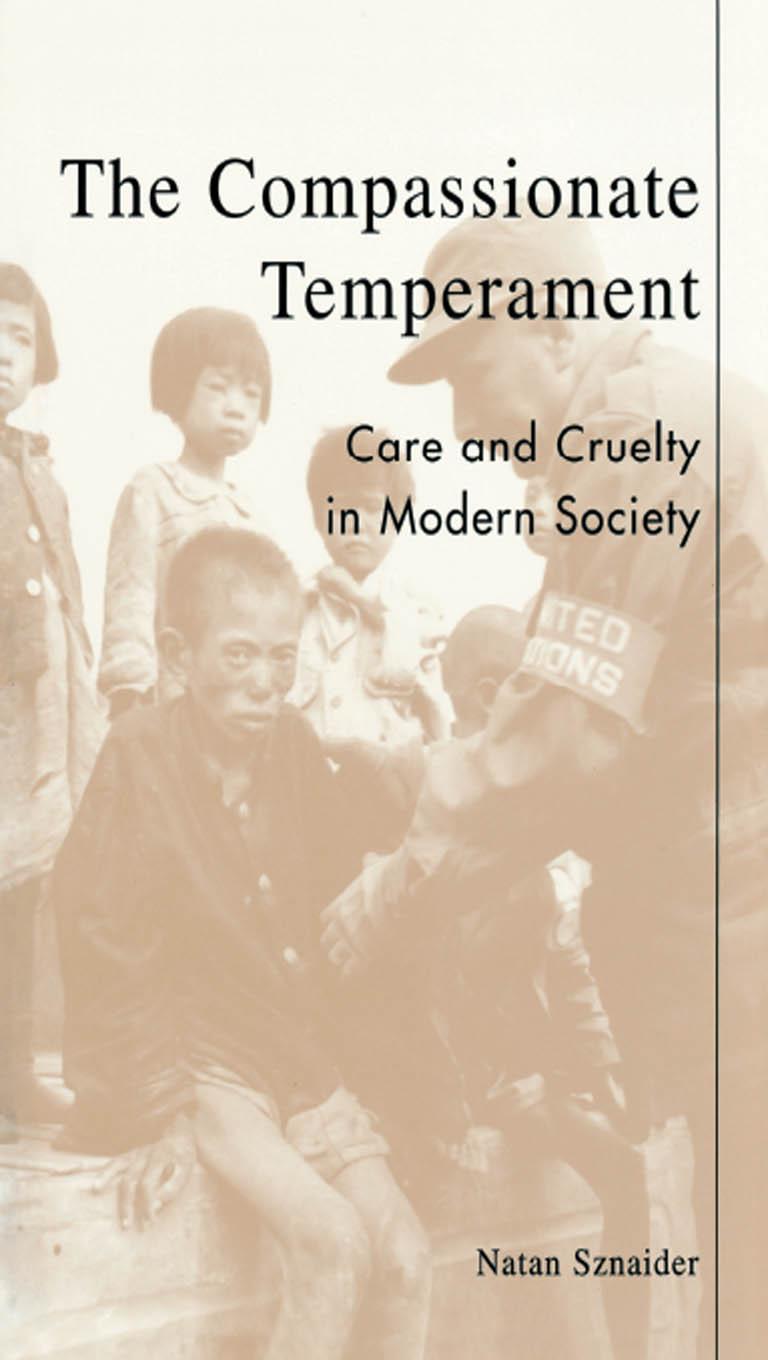
The argument of this book is that it is in the nature of modernity to foster compassion. Most critics tend to think of modernity as corrosive of moral sentiments. They see clearly the way in which modernity breaks down older social bonds, but they are much less attentive to the ways in which it also builds new ones. This book offers an historically informed corrective to this common view. Sznaider demonstrates that compassion, understood as the organized campaign to lessen the suffering of strangers, is a distinctly modern form of morality. It played an important role in the rise of modern society, and it continues to play an important role today. And when waves of compassion break out into demands for political action, these demands need to be understood rather than criticized as excuses or irrelevancies. Incorporating and critiquing the work of Arendt, Foucault, and other social theorists, this book is both erudite and historically rich-sure to be both controversial and influential among those who debate modernity, morality, and social justice.
Zahle einfach mit Karte, Klarna, Apple Pay oder Google Pay. Nicht zufrieden? Du hast immer ein 14-tägiges Widerrufsrecht. Lies mehr in unseren AGB. Hast du Fragen, schreib uns eine E-Mail an hello@memmo.org.
Memmo macht das Lernen einfacher – wo auch immer du bist. Bei uns findest du deine Kursbücher und smarte Lerntools an einem Ort: Zusammenfassungen, Quizzes, Podcasts und Lernkarten. Und Ted, dein Lernbuddy, beantwortet alles, was du wissen möchtest. Über 50.000 Studierende lernen bereits hier – gemacht, damit du schneller lernst und weniger Stress hast.