
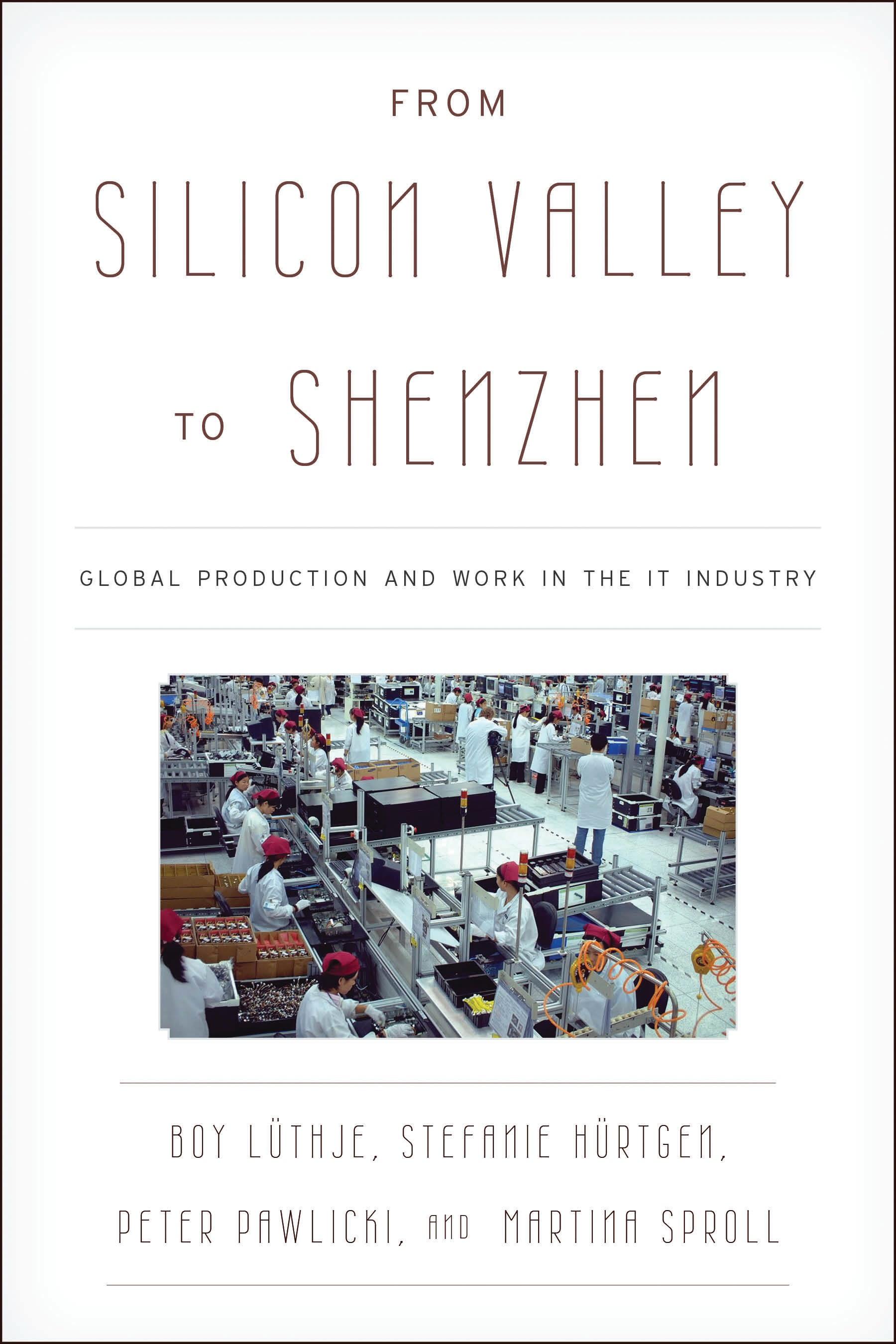
This seminal study explores the significant changes in the global IT industry as production has shifted from the developed world to massive sites in the developing world that house hundreds of thousands of workers in appalling low-wage conditions to minimize labor costs. Yet little is known about this phenomenon as the major contract manufacturers deliberately hide their names from the public on behalf of brand-name customers such as Apple. In short, the authors argue, globalization is not always helping the IT workers of the world, many of whom are working in unbearable factory conditions.
From Silicon Valley to Shenzhen traces the development of the new networks of globalized mass production in the IT industry and the reorganization of work since the 1990s, capturing the systemic nature of an industry-wide restructuring of production and work in the global context. Their wide-ranging and detailed analysis makes an important contribution to ongoing academic and political debates on the globalization of production, especially by taking these debates beyond narrow perspectives of determining criteria of “success” for participation in global production networks. Rather, they emphasize the changing nature of work, employment relations, and labor policies and their implications for the possibilities of sustainable economic and social development.
From Silicon Valley to Shenzhen traces the development of the new networks of globalized mass production in the IT industry and the reorganization of work since the 1990s, capturing the systemic nature of an industry-wide restructuring of production and work in the global context. Their wide-ranging and detailed analysis makes an important contribution to ongoing academic and political debates on the globalization of production, especially by taking these debates beyond narrow perspectives of determining criteria of “success” for participation in global production networks. Rather, they emphasize the changing nature of work, employment relations, and labor policies and their implications for the possibilities of sustainable economic and social development.
Zahle einfach mit Karte, Klarna, Apple Pay oder Google Pay. Nicht zufrieden? Du hast immer ein 14-tägiges Widerrufsrecht. Lies mehr in unseren AGB. Hast du Fragen, schreib uns eine E-Mail an hello@memmo.org.
Memmo macht das Lernen einfacher – wo auch immer du bist. Bei uns findest du deine Kursbücher und smarte Lerntools an einem Ort: Zusammenfassungen, Quizzes, Podcasts und Lernkarten. Und Ted, dein Lernbuddy, beantwortet alles, was du wissen möchtest. Über 50.000 Studierende lernen bereits hier – gemacht, damit du schneller lernst und weniger Stress hast.