
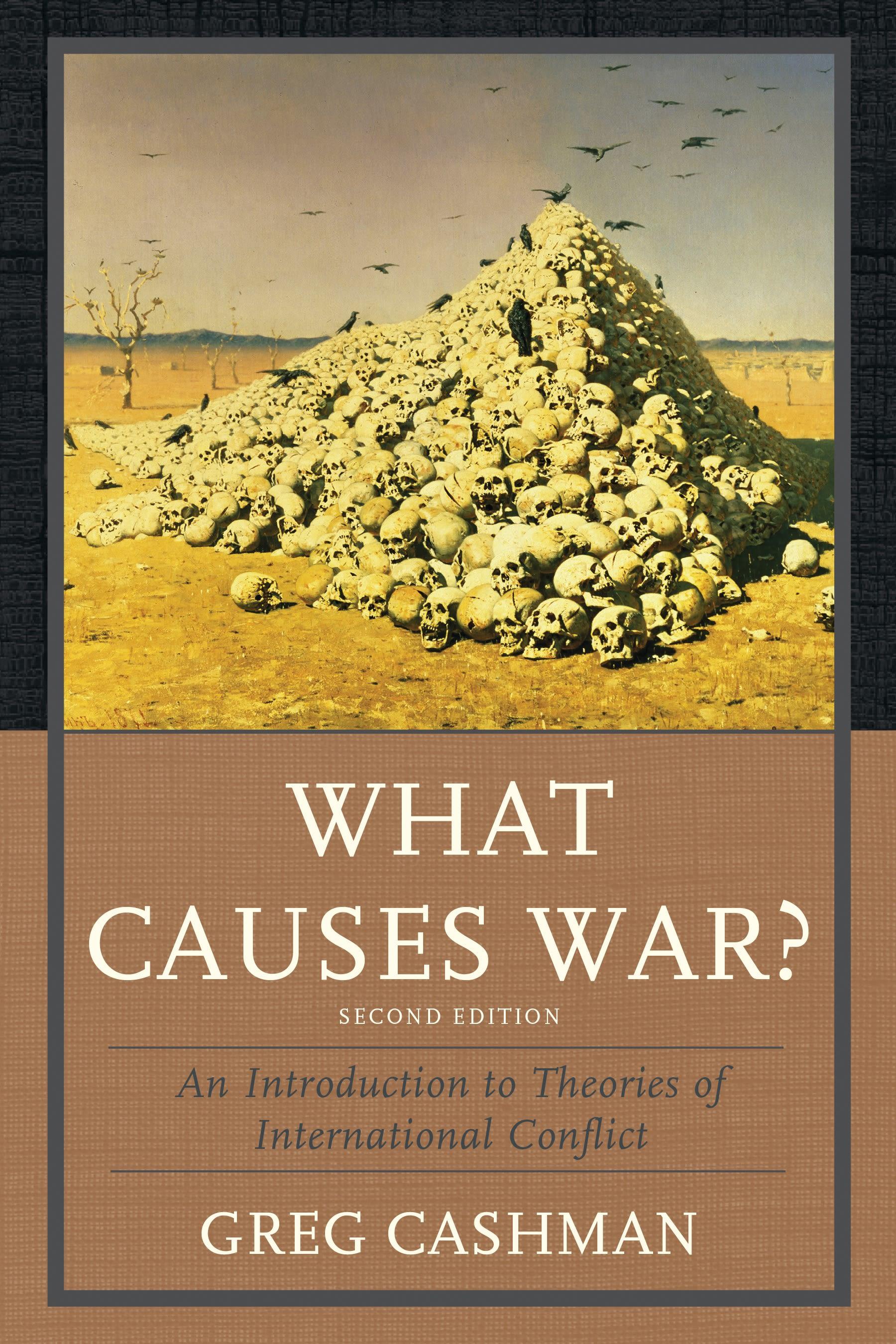
Now in a thoroughly revised and updated edition, this classic text presents a comprehensive survey of the many alternative theories that attempt to explain the causes of interstate war. For each theory, Greg Cashman examines the arguments and counterarguments, considers the empirical evidence and counterevidence generated by social-science research, looks at historical applications of the theory, and discusses the theory’s implications for restraining international violence.
Among the questions he explores are: Are humans aggressive by nature? Do individual differences among leaders matter? How might poor decision making procedures lead to war? Why do leaders engage in seemingly risky and irrational policies that end in war? Why do states with internal conflicts seem to become entangled in wars with their neighbors? What roles do nationalism and ethnicity play in international conflict? What kinds of countries are most likely to become involved in war? Why have certain pairs of countries been particularly war-prone over the centuries? Can strong states deter war? Can we find any patterns in the way that war breaks out? How do balances of power or changes in balances of power make war more likely? Do social scientists currently have an answer to the question of what causes war?
Cashman examines theories of war at the individual, substate, nation-state, dyadic, and international systems level of analysis. Written in a clear and accessible style, this interdisciplinary text will be essential reading for all students of international relations.
Among the questions he explores are: Are humans aggressive by nature? Do individual differences among leaders matter? How might poor decision making procedures lead to war? Why do leaders engage in seemingly risky and irrational policies that end in war? Why do states with internal conflicts seem to become entangled in wars with their neighbors? What roles do nationalism and ethnicity play in international conflict? What kinds of countries are most likely to become involved in war? Why have certain pairs of countries been particularly war-prone over the centuries? Can strong states deter war? Can we find any patterns in the way that war breaks out? How do balances of power or changes in balances of power make war more likely? Do social scientists currently have an answer to the question of what causes war?
Cashman examines theories of war at the individual, substate, nation-state, dyadic, and international systems level of analysis. Written in a clear and accessible style, this interdisciplinary text will be essential reading for all students of international relations.
Seiten: 620
Kategorie: Statsvetenskap & Politik
e-ISBN: 9780742566521
Versandgewicht: 1.2 kg
Versand in: 1-2 Tage
Zahle einfach mit Karte, Klarna, Apple Pay oder Google Pay. Nicht zufrieden? Du hast immer ein 14-tägiges Widerrufsrecht. Lies mehr in unseren AGB. Hast du Fragen, schreib uns eine E-Mail an hello@memmo.org.
Memmo macht das Lernen einfacher – wo auch immer du bist. Bei uns findest du deine Kursbücher und smarte Lerntools an einem Ort: Zusammenfassungen, Quizzes, Podcasts und Lernkarten. Und Ted, dein Lernbuddy, beantwortet alles, was du wissen möchtest. Über 50.000 Studierende lernen bereits hier – gemacht, damit du schneller lernst und weniger Stress hast.