
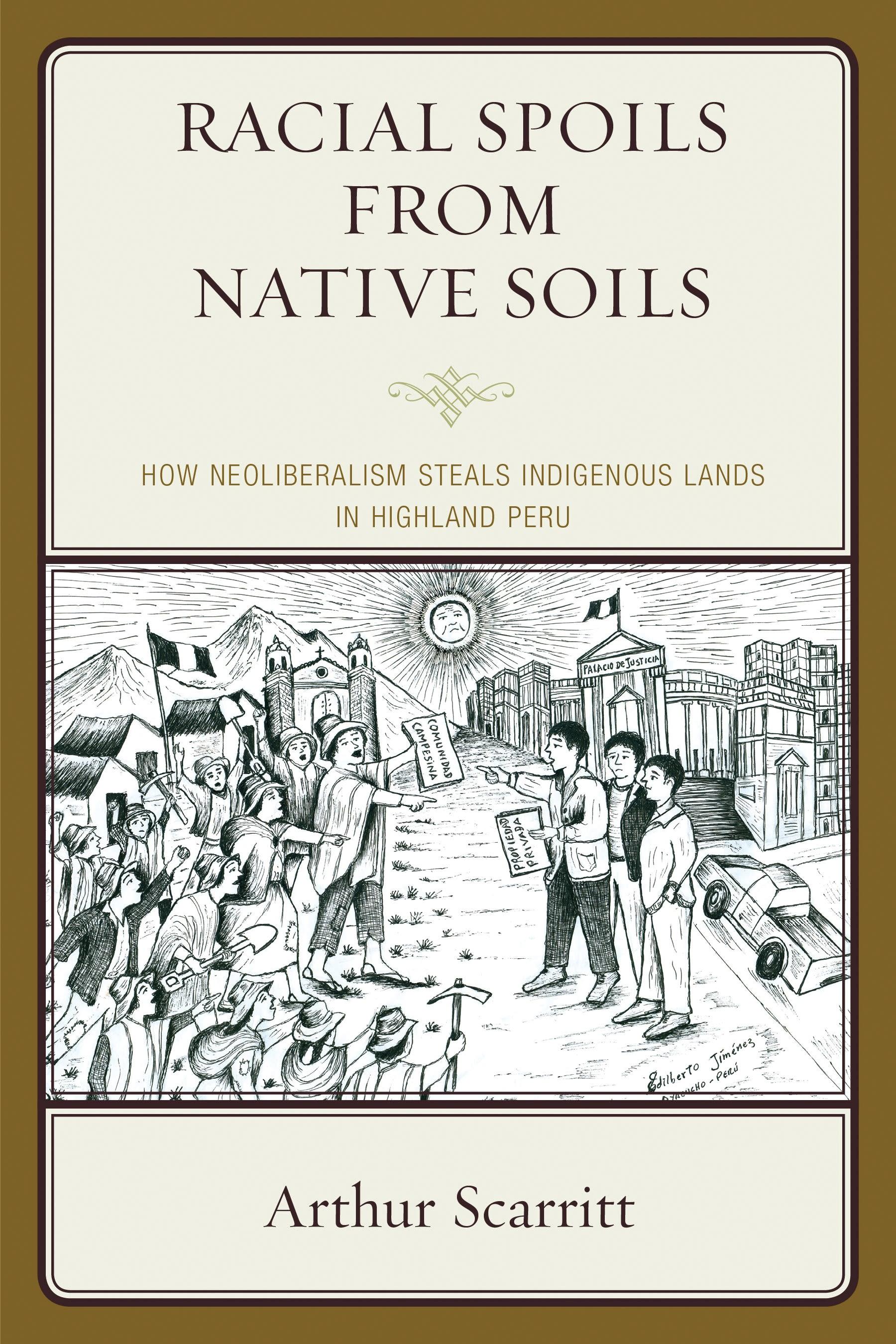
This book explains how one man swindled his Andean village twice. The first time he extorted everyone’s wealth and disappeared, leaving the village in shambles. The village slowly recovered through the unlikely means of converting to Evangelical religions, and therein reestablished trust and the ability to work together. The new religion also kept villagers from exacting violent revenge when this man returned six years later. While hated and mistrusted, this same man again succeeded in cheating the villagers. Only this time it was for their lands, the core resource on which they depended for their existence.
This is not a story about hapless isolation or cruel individuals. Rather, this is a story about racism, about the normal operation of society that continuously results in indigenous peoples’ impoverishment and dependency. This book explains how the institutions created for the purpose of exploiting Indians during colonialism have been continuously revitalized over the centuries despite innovative indigenous resistance and epochal changes, such as the end of the colonial era itself. The ethnographic case of the Andean village first shows how this institutional set up works through—rather than despite—the inflow of development monies. It then details how the turn to advanced capitalism—neoliberalism—intensifies this racialized system, thereby enabling the seizure of native lands.
This is not a story about hapless isolation or cruel individuals. Rather, this is a story about racism, about the normal operation of society that continuously results in indigenous peoples’ impoverishment and dependency. This book explains how the institutions created for the purpose of exploiting Indians during colonialism have been continuously revitalized over the centuries despite innovative indigenous resistance and epochal changes, such as the end of the colonial era itself. The ethnographic case of the Andean village first shows how this institutional set up works through—rather than despite—the inflow of development monies. It then details how the turn to advanced capitalism—neoliberalism—intensifies this racialized system, thereby enabling the seizure of native lands.
Zahle einfach mit Karte, Klarna, Apple Pay oder Google Pay. Nicht zufrieden? Du hast immer ein 14-tägiges Widerrufsrecht. Lies mehr in unseren AGB. Hast du Fragen, schreib uns eine E-Mail an hello@memmo.org.
Memmo macht das Lernen einfacher – wo auch immer du bist. Bei uns findest du deine Kursbücher und smarte Lerntools an einem Ort: Zusammenfassungen, Quizzes, Podcasts und Lernkarten. Und Ted, dein Lernbuddy, beantwortet alles, was du wissen möchtest. Über 50.000 Studierende lernen bereits hier – gemacht, damit du schneller lernst und weniger Stress hast.