
Liberalism is being called into question both in practice and in principle, from insurgencies at its bloody hinterlands and from the illiberal responses those insurgencies engender within the so-called civilized world, with technological integration creating the conditions for new forms of barbarism.
What then are the chances of progress towards a substantial equality of freedoms within this new context of retrograde attitudes framed by the occlusion of others as somehow essentially different? How can we register the significances of cultural distinctions without letting those ‘we's’ and ‘they's’ split an emergent global civil society into parochial retro-nations, where belonging knows itself only by exclusion? What is it that is being called out of the spirit of modernity in our seemingly backward-moving age of essentialized others and self-righteous rage? And to the end of inter-cultural understanding, how can we come to know the other, both through the care of others and in ourselves?
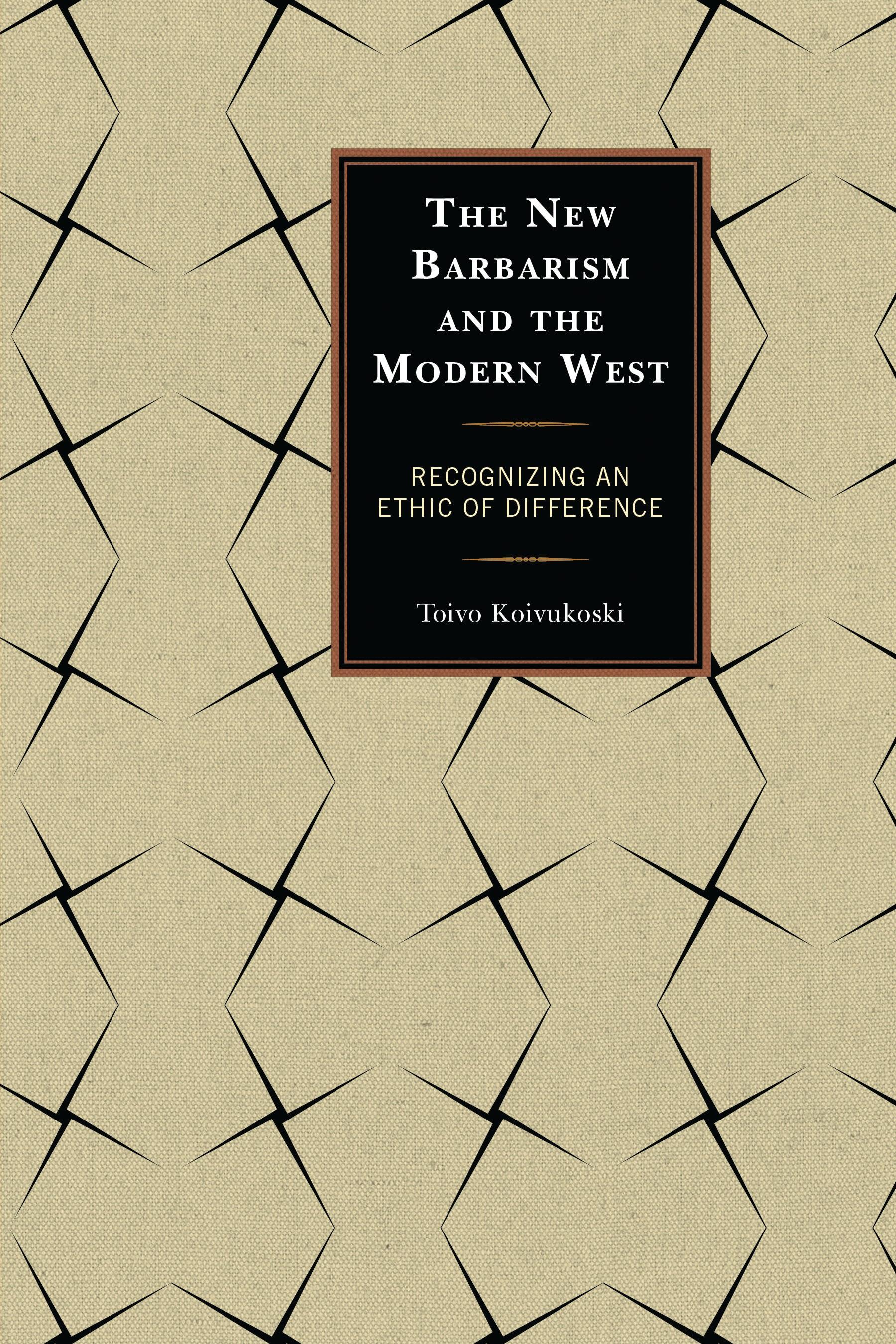
This work of political theory reflects on how cultures imagine their barbarians in the form of essentialized others, focusing specifically on the kinds of barbarism associated with a civilization devoted to technological progress. In response to the excesses of modernity, the author looks to advances an ethic of difference, inverting the golden rule so as to do unto others as those others would do unto themselves.
What then are the chances of progress towards a substantial equality of freedoms within this new context of retrograde attitudes framed by the occlusion of others as somehow essentially different? How can we register the significances of cultural distinctions without letting those ‘we's’ and ‘they's’ split an emergent global civil society into parochial retro-nations, where belonging knows itself only by exclusion? What is it that is being called out of the spirit of modernity in our seemingly backward-moving age of essentialized others and self-righteous rage? And to the end of inter-cultural understanding, how can we come to know the other, both through the care of others and in ourselves?
This work of political theory reflects on how cultures imagine their barbarians in the form of essentialized others, focusing specifically on the kinds of barbarism associated with a civilization devoted to technological progress. In response to the excesses of modernity, the author looks to advances an ethic of difference, inverting the golden rule so as to do unto others as those others would do unto themselves.
Seiten: 164
Kategorie: Statsvetenskap & Politik
e-ISBN: 9780739190005
Versandgewicht: 1.2 kg
Versand in: 1-2 Tage
Zahle einfach mit Karte, Klarna, Apple Pay oder Google Pay. Nicht zufrieden? Du hast immer ein 14-tägiges Widerrufsrecht. Lies mehr in unseren AGB. Hast du Fragen, schreib uns eine E-Mail an hello@memmo.org.
Memmo macht das Lernen einfacher – wo auch immer du bist. Bei uns findest du deine Kursbücher und smarte Lerntools an einem Ort: Zusammenfassungen, Quizzes, Podcasts und Lernkarten. Und Ted, dein Lernbuddy, beantwortet alles, was du wissen möchtest. Über 50.000 Studierende lernen bereits hier – gemacht, damit du schneller lernst und weniger Stress hast.