
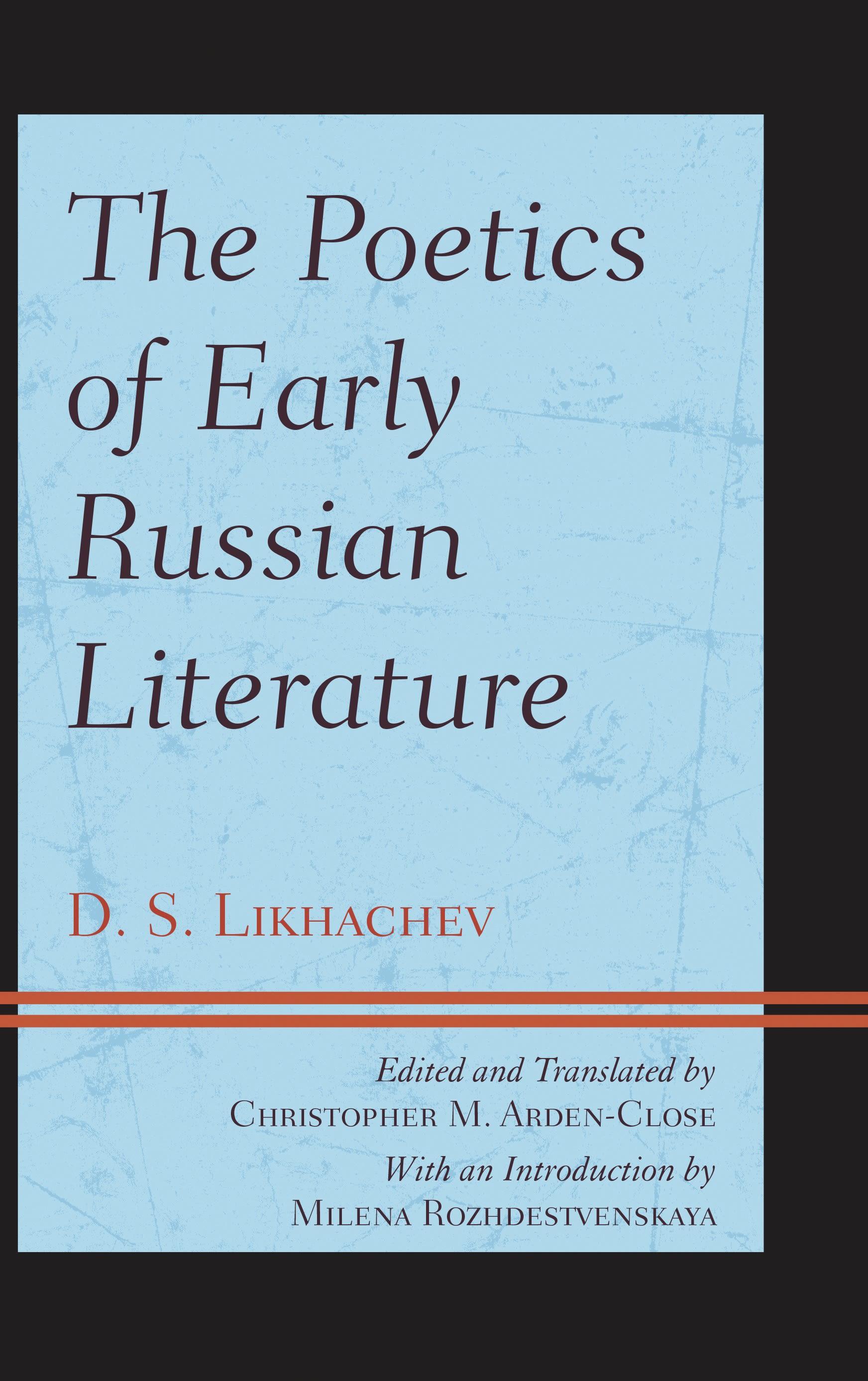
This translation of Likhachev’s Poetika Drevnerusskoy Literatury (The Poetics of Early Russian Literature), provides a description of the basic themes of early (tenth to seventeenth century) Russian literature. Likhachev compares literary narrative with narrative used in the representational arts. Furthermore, Likhachev stresses the genre-based character of medieval Russian literature and shows how choice of style in medieval times depended on a genre with its own specific etiquette and how innovation was discouraged.
The text contrasts medieval abstraction and modern realism, as Likhachev shows how realisticness gradually breaks through in specific situations—such as those of princely crimes. Likhachev draws contrasts in three different areas: the basic stock of symbols and comparisons used in early Russian literature with those used in modern literature, artistic time in folklore and early Russian literature, and artistic space in folklore and early Russian literature. Likhachev traces the gradual development into modern artistic time through a comparison of the chronicle, the first Russian play, the seventeenth century writer Avvakum, and three modern authors, Goncharov, Dostoevsky and Saltykov-Shchedrin. Finally, the text gives a justification for studying early literatures. This book will be invaluable for students of Russian, medieval and comparative literature.
The text contrasts medieval abstraction and modern realism, as Likhachev shows how realisticness gradually breaks through in specific situations—such as those of princely crimes. Likhachev draws contrasts in three different areas: the basic stock of symbols and comparisons used in early Russian literature with those used in modern literature, artistic time in folklore and early Russian literature, and artistic space in folklore and early Russian literature. Likhachev traces the gradual development into modern artistic time through a comparison of the chronicle, the first Russian play, the seventeenth century writer Avvakum, and three modern authors, Goncharov, Dostoevsky and Saltykov-Shchedrin. Finally, the text gives a justification for studying early literatures. This book will be invaluable for students of Russian, medieval and comparative literature.
Zahle einfach mit Karte, Klarna, Apple Pay oder Google Pay. Nicht zufrieden? Du hast immer ein 14-tägiges Widerrufsrecht. Lies mehr in unseren AGB. Hast du Fragen, schreib uns eine E-Mail an hello@memmo.org.
Memmo macht das Lernen einfacher – wo auch immer du bist. Bei uns findest du deine Kursbücher und smarte Lerntools an einem Ort: Zusammenfassungen, Quizzes, Podcasts und Lernkarten. Und Ted, dein Lernbuddy, beantwortet alles, was du wissen möchtest. Über 50.000 Studierende lernen bereits hier – gemacht, damit du schneller lernst und weniger Stress hast.