
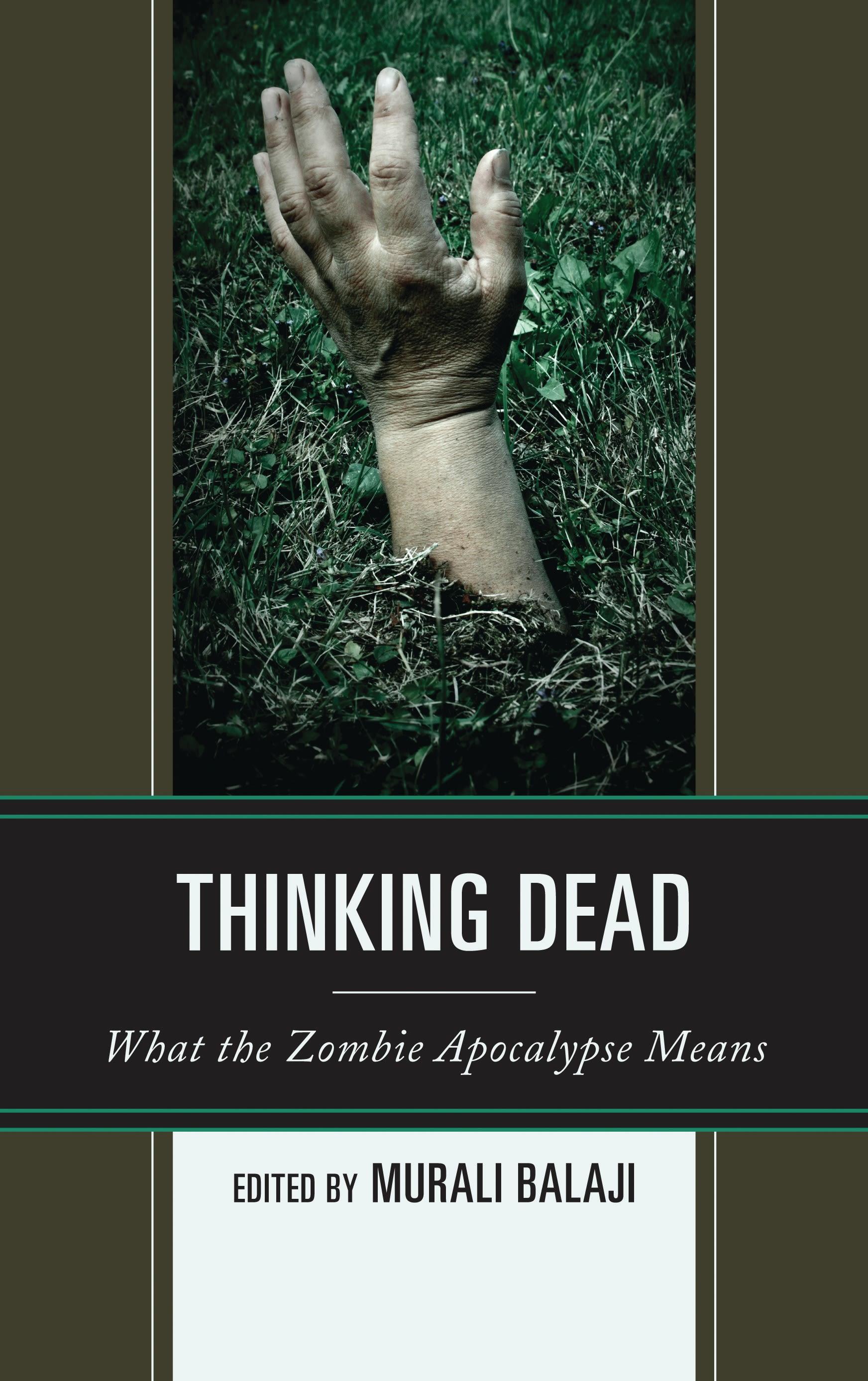
Zombies are everywhere these days. We are consuming zombies as much as they are said to be consuming us in mediated apocalyptic scenarios on popular television shows, video game franchises and movies. The “zombie industry” generates billions a year through media texts and other cultural manifestations (zombie races and zombie-themed parks, to name a few). Zombies, like vampires, werewolves, witches and wizards, have become both big dollars for cultural producers and the subject of audience fascination and fetishization. With popular television shows such as AMC’s The Walking Dead (based on the popular graphic novel) and movie franchises such as the ones pioneered by George Romero, global fascination with zombies does not show signs of diminishing.
In The Thinking Dead: What the Zombie Apocalypse Means, edited by Murali Balaji, scholars ask why our culture has becomes so fascinated by the zombie apocalypse. Essays address this question from a range of theoretical perspectives that tie our consumption of zombies to larger narratives of race, gender, sexuality, politics, economics and the end of the world. Thinking Dead brings together an array of media and cultural studies scholars whose contributions to understanding our obsession with zombies will far outlast the current trends of zombie popularity.
In The Thinking Dead: What the Zombie Apocalypse Means, edited by Murali Balaji, scholars ask why our culture has becomes so fascinated by the zombie apocalypse. Essays address this question from a range of theoretical perspectives that tie our consumption of zombies to larger narratives of race, gender, sexuality, politics, economics and the end of the world. Thinking Dead brings together an array of media and cultural studies scholars whose contributions to understanding our obsession with zombies will far outlast the current trends of zombie popularity.
Seiten: 268
Kategorie: Film- & Medievetenskap
e-ISBN: 9780739183830
Versandgewicht: 1.2 kg
Versand in: 1-2 Tage
Zahle einfach mit Karte, Klarna, Apple Pay oder Google Pay. Nicht zufrieden? Du hast immer ein 14-tägiges Widerrufsrecht. Lies mehr in unseren AGB. Hast du Fragen, schreib uns eine E-Mail an hello@memmo.org.
Memmo macht das Lernen einfacher – wo auch immer du bist. Bei uns findest du deine Kursbücher und smarte Lerntools an einem Ort: Zusammenfassungen, Quizzes, Podcasts und Lernkarten. Und Ted, dein Lernbuddy, beantwortet alles, was du wissen möchtest. Über 50.000 Studierende lernen bereits hier – gemacht, damit du schneller lernst und weniger Stress hast.