
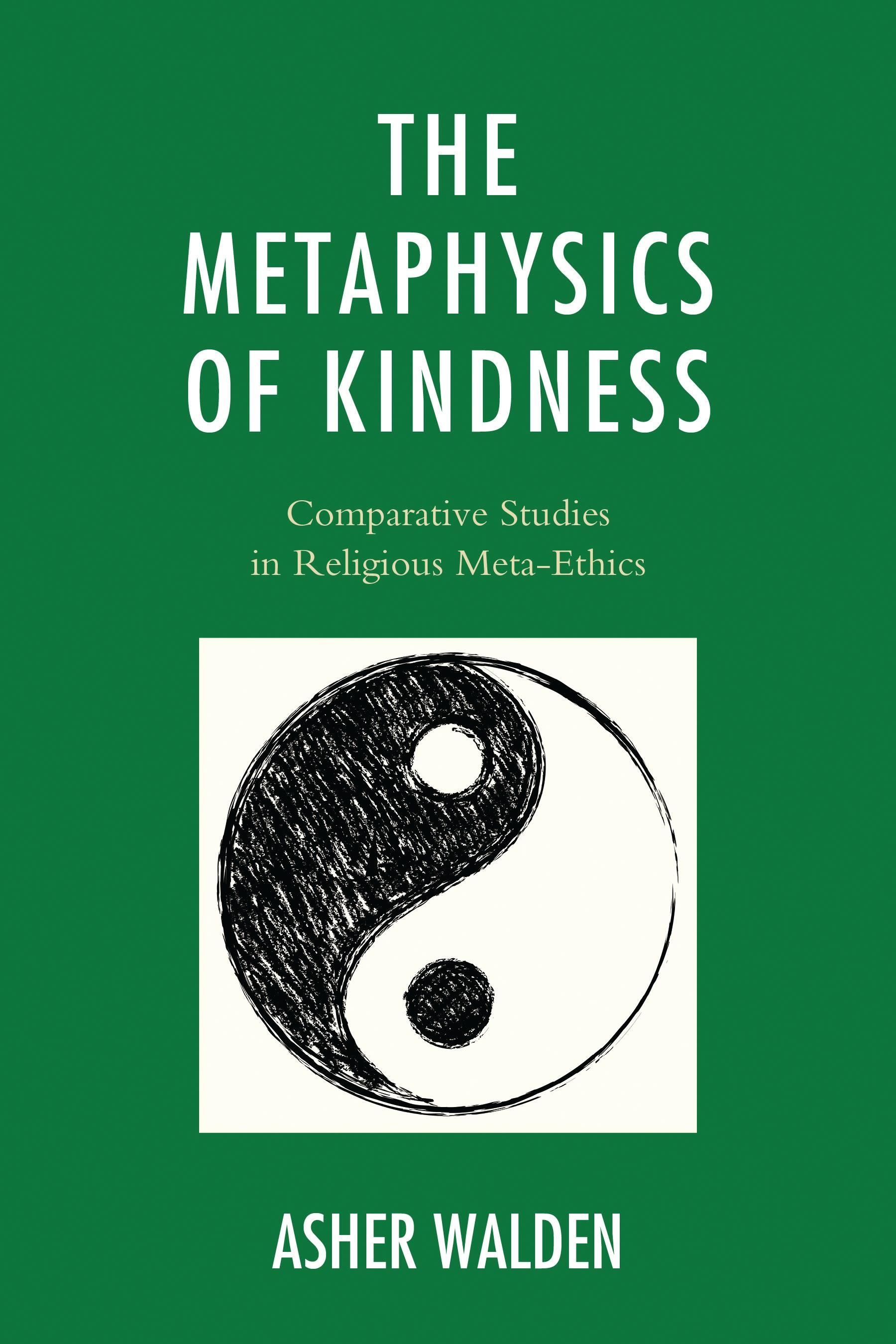
Religious world-views reserve a central and prominent place for human moral action, yet they must also contend with the reality of human moral failings. Is it possible to anchor moral knowledge and practice in the framework of a moral universe? If so, how do you explain why things go wrong? Must the religions appeal to faith alone, or can they develop a rational framework for their moral visions?
The Metaphysics of Kindness: Comparative Studies in Religious Meta-ethics explores the attempted solutions of four pivotal philosophers from very different traditions: the Neo-Confucian Zhu Xi, the German Idealist Arthur Schopenhauer, the Mahayana Buddhist Santideva, and the progenitor of the Kyoto School, Nishida Kitaro. Each position is investigated sympathetically and independently, yet there is an underlying commonality weaving the different studies together: compassion. Each philosopher treats compassion not only as one virtue among others, but as a kind of meta-virtue, the one that is in some respect the logical and/or psychological basis for all the other virtues. It is also a trait that is both at the heart of human nature, and also somehow at the heart of nature itself.
The Metaphysics of Kindness: Comparative Studies in Religious Meta-ethics explores the attempted solutions of four pivotal philosophers from very different traditions: the Neo-Confucian Zhu Xi, the German Idealist Arthur Schopenhauer, the Mahayana Buddhist Santideva, and the progenitor of the Kyoto School, Nishida Kitaro. Each position is investigated sympathetically and independently, yet there is an underlying commonality weaving the different studies together: compassion. Each philosopher treats compassion not only as one virtue among others, but as a kind of meta-virtue, the one that is in some respect the logical and/or psychological basis for all the other virtues. It is also a trait that is both at the heart of human nature, and also somehow at the heart of nature itself.
Zahle einfach mit Karte, Klarna, Apple Pay oder Google Pay. Nicht zufrieden? Du hast immer ein 14-tägiges Widerrufsrecht. Lies mehr in unseren AGB. Hast du Fragen, schreib uns eine E-Mail an hello@memmo.org.
Memmo macht das Lernen einfacher – wo auch immer du bist. Bei uns findest du deine Kursbücher und smarte Lerntools an einem Ort: Zusammenfassungen, Quizzes, Podcasts und Lernkarten. Und Ted, dein Lernbuddy, beantwortet alles, was du wissen möchtest. Über 50.000 Studierende lernen bereits hier – gemacht, damit du schneller lernst und weniger Stress hast.