
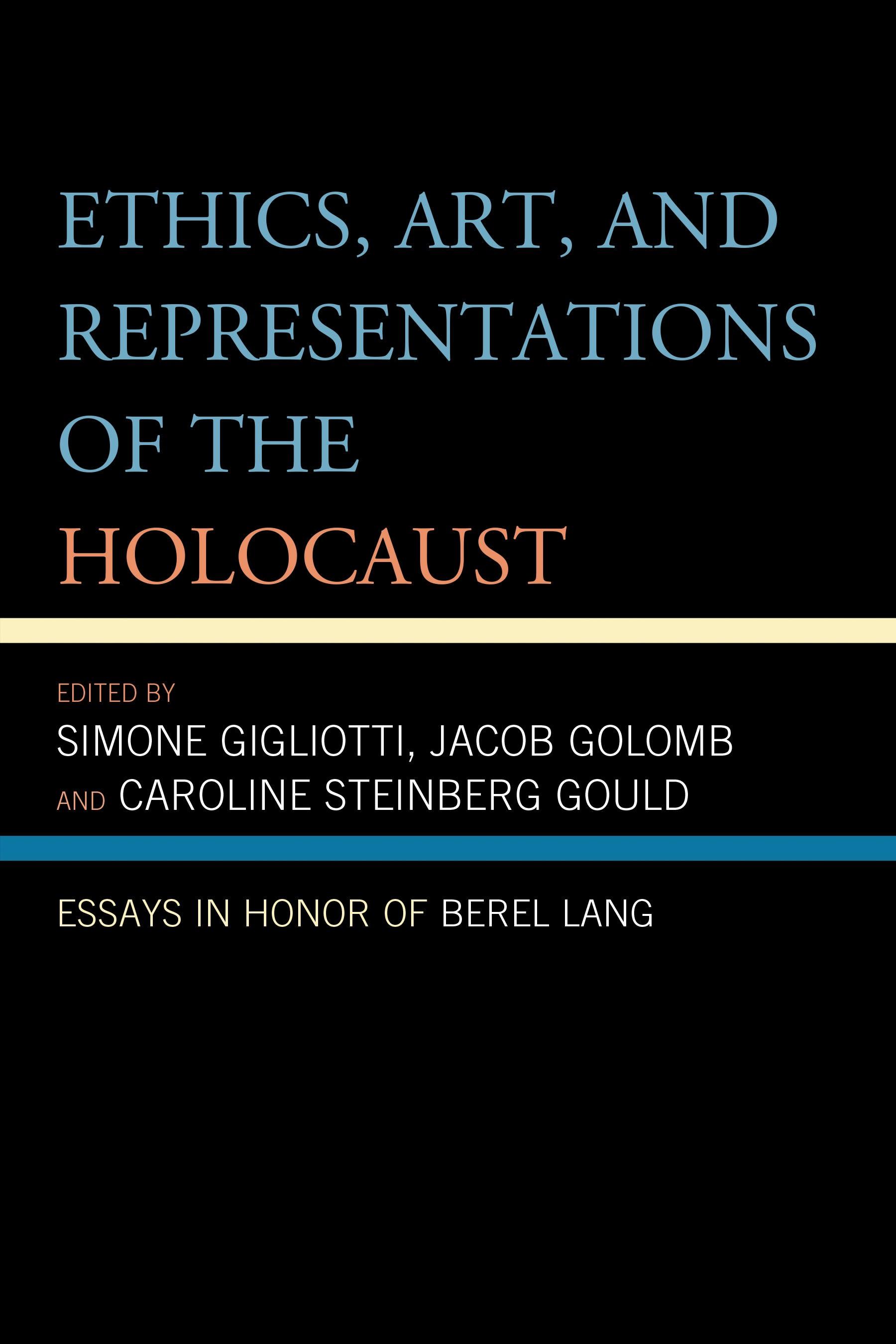
The American-Jewish philosopher Berel Lang has left an indelible impression on an unusually broad range of fields that few scholars can rival. From his earliest innovations in philosophy and meta-philosophy, to his ground-breaking work on representation, historical writing, and art after Auschwitz, he has contributed original and penetrating insights to the philosophical, literary, and historical debates on ethics, art, and the representation of the Nazi Genocide.
In honor of Berel Lang’s five decades of scholarly and philosophical contributions, the editors of Ethics, Art and Representations of the Holocaust invited seventeen eminent scholars from around the world to discuss Lang’s impact on their own research and to reflect on how the Nazi genocide continues to resonate in contemporary debates about antisemitism, commemoration and poetic representations. Resisting what Alvin Rosenfeld warned as “the end of the Holocaust”, the essays in this collection signal the Holocaust as an event without closure, of enduring resonance to new generations of scholars of genocide, Jewish studies, and philosophy.
Readers will find original and provocative essays on topics as diverse as Nietzsche’s reputed Nazi leanings, Jewish anti-apartheid activists in South Africa, wartime rescue in Poland, philosophical responses to the Holocaust, hidden diaries in the Kovno Ghetto, and analyses of reactions to trauma in classic literary works by Bernhard Schlink, Sylvia Plath, and Derek Walcott.
In honor of Berel Lang’s five decades of scholarly and philosophical contributions, the editors of Ethics, Art and Representations of the Holocaust invited seventeen eminent scholars from around the world to discuss Lang’s impact on their own research and to reflect on how the Nazi genocide continues to resonate in contemporary debates about antisemitism, commemoration and poetic representations. Resisting what Alvin Rosenfeld warned as “the end of the Holocaust”, the essays in this collection signal the Holocaust as an event without closure, of enduring resonance to new generations of scholars of genocide, Jewish studies, and philosophy.
Readers will find original and provocative essays on topics as diverse as Nietzsche’s reputed Nazi leanings, Jewish anti-apartheid activists in South Africa, wartime rescue in Poland, philosophical responses to the Holocaust, hidden diaries in the Kovno Ghetto, and analyses of reactions to trauma in classic literary works by Bernhard Schlink, Sylvia Plath, and Derek Walcott.
Zahle einfach mit Karte, Klarna, Apple Pay oder Google Pay. Nicht zufrieden? Du hast immer ein 14-tägiges Widerrufsrecht. Lies mehr in unseren AGB. Hast du Fragen, schreib uns eine E-Mail an hello@memmo.org.
Memmo macht das Lernen einfacher – wo auch immer du bist. Bei uns findest du deine Kursbücher und smarte Lerntools an einem Ort: Zusammenfassungen, Quizzes, Podcasts und Lernkarten. Und Ted, dein Lernbuddy, beantwortet alles, was du wissen möchtest. Über 50.000 Studierende lernen bereits hier – gemacht, damit du schneller lernst und weniger Stress hast.