
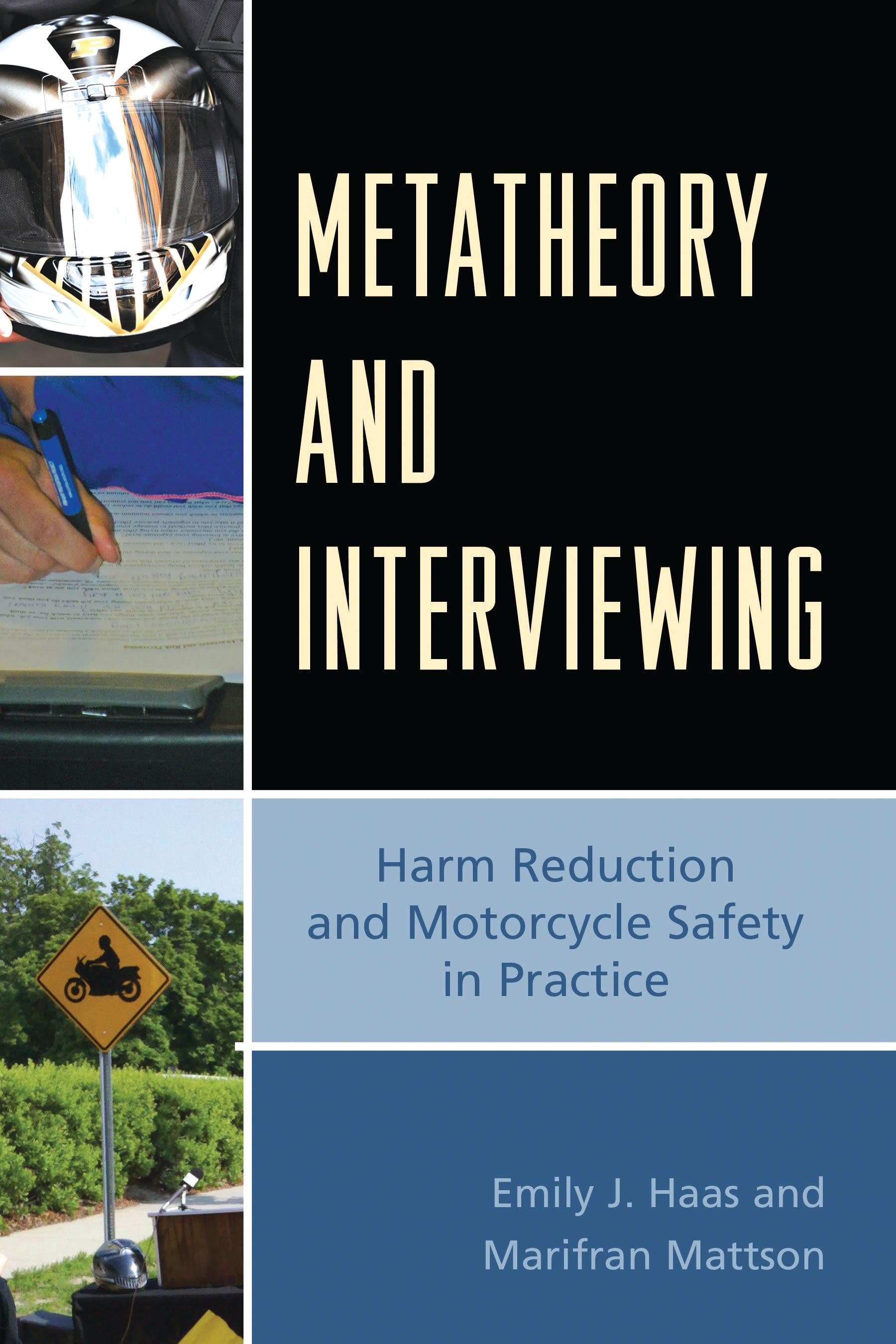
Metatheory and Interviewing: Harm Reduction and Motorcycle Safety in Practice
describes and applies a unique approach for advancing harm reduction theory. Emily J. Haas and Marifran Mattson argue that using harm reduction as a metatheory to guide qualitative interviews strengthens the use and acceptance of harm reduction and the application of constructs within health theories. Through analysis of in-depth interviews with respective participants—at-risk motorcyclists—which are informed by harm reduction metatheory, the authors examine how this unique approach to interviewing can be used to link metatheory, theory, methodology, and ultimately application and translation of research results. Metatheory and Interviewing culminates with a discussion of how the way we conduct and analyze interviews facilitates a deeper, more intimate conversation with research participants by encouraging them to incorporate the same, overarching harm reduction framework to provide feedback about changing specific health behaviors. Scholars of health communication and research will understand the critical role of a humanistic attitude and pragmatic communication with participants, as well as the importance of further extrapolating these strategies to their broader target audience.
describes and applies a unique approach for advancing harm reduction theory. Emily J. Haas and Marifran Mattson argue that using harm reduction as a metatheory to guide qualitative interviews strengthens the use and acceptance of harm reduction and the application of constructs within health theories. Through analysis of in-depth interviews with respective participants—at-risk motorcyclists—which are informed by harm reduction metatheory, the authors examine how this unique approach to interviewing can be used to link metatheory, theory, methodology, and ultimately application and translation of research results. Metatheory and Interviewing culminates with a discussion of how the way we conduct and analyze interviews facilitates a deeper, more intimate conversation with research participants by encouraging them to incorporate the same, overarching harm reduction framework to provide feedback about changing specific health behaviors. Scholars of health communication and research will understand the critical role of a humanistic attitude and pragmatic communication with participants, as well as the importance of further extrapolating these strategies to their broader target audience.
Seiten: 294
Kategorie: Vetenskapsteori och forskningsmetod
e-ISBN: 9780739180570
Versandgewicht: 1.2 kg
Versand in: 1-2 Tage
Zahle einfach mit Karte, Klarna, Apple Pay oder Google Pay. Nicht zufrieden? Du hast immer ein 14-tägiges Widerrufsrecht. Lies mehr in unseren AGB. Hast du Fragen, schreib uns eine E-Mail an hello@memmo.org.
Memmo macht das Lernen einfacher – wo auch immer du bist. Bei uns findest du deine Kursbücher und smarte Lerntools an einem Ort: Zusammenfassungen, Quizzes, Podcasts und Lernkarten. Und Ted, dein Lernbuddy, beantwortet alles, was du wissen möchtest. Über 50.000 Studierende lernen bereits hier – gemacht, damit du schneller lernst und weniger Stress hast.