
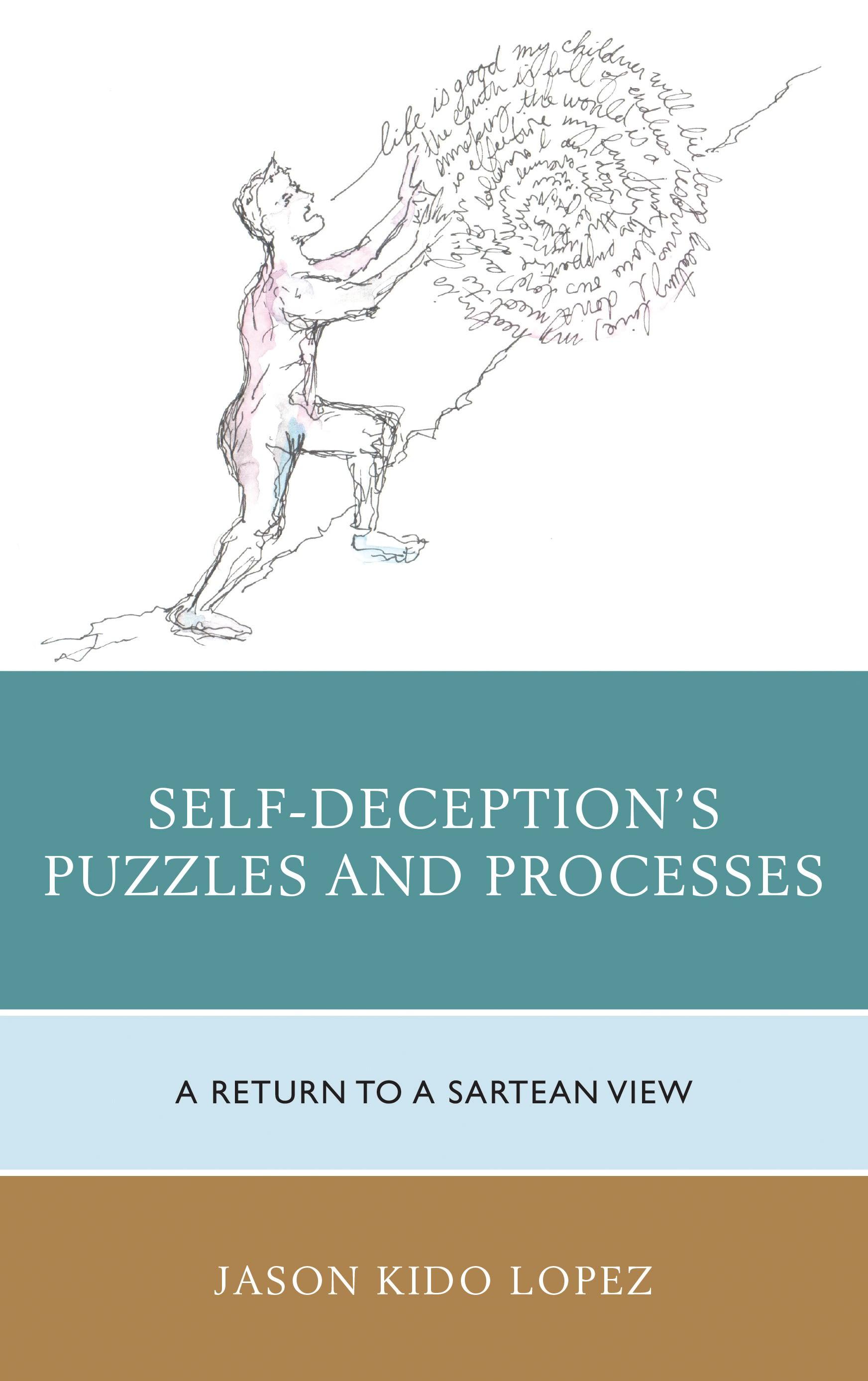
The contemporary literature on self-deception was born out of Jean-Paul Sartre’s work on bad faith—lying to oneself. As time has progressed, the conception of self-deception has moved further and further away from Sartre’s conception of bad faith. In Self-Deception’s Puzzles and Processes: A Return to a Sartrean View, Jason Kido Lopez argues that this departure is a mistake and that we should return to thinking about self-deception in a Sartrean fashion, in which we are self-deceived when we intentionally use the strategies and methods of interpersonal deception on ourselves. Since literally tricking ourselves cannot work—we will always see through our own self-deception, after all—self-deception merely consists of the attempt to trick ourselves in this way. Other scholars have rejected this notion of self-deception historically, dismissing it as paradoxical. Lopez argues first that it isn’t paradoxical, and he further suggests that moving away from this notion of self-deception has caused the contemporary literature on the topic to be littered with disparate and conflicting theories. Indeed, there are a great many ways to avoid the allegedly paradoxical Sartrean notion of self-deception, and the resulting plethora of accounts lead to a fragmented picture of self-deception. If, however, the Sartrean view isn’t paradoxical, then there was no need for the host of contradictory theories and most researchers on self-deception have missed what was originally so intriguing about self-deception: that it, like bad faith, is the process of literally trying to trick oneself into believing what is false or unwarranted.
Self-Deception’s Puzzles and Processes will be of great interest to students and scholars of epistemology, philosophy of mind, psychology, and continental philosophy, and to anyone else interested in the problems of self-deception.
Self-Deception’s Puzzles and Processes will be of great interest to students and scholars of epistemology, philosophy of mind, psychology, and continental philosophy, and to anyone else interested in the problems of self-deception.
Zahle einfach mit Karte, Klarna, Apple Pay oder Google Pay. Nicht zufrieden? Du hast immer ein 14-tägiges Widerrufsrecht. Lies mehr in unseren AGB. Hast du Fragen, schreib uns eine E-Mail an hello@memmo.org.
Memmo macht das Lernen einfacher – wo auch immer du bist. Bei uns findest du deine Kursbücher und smarte Lerntools an einem Ort: Zusammenfassungen, Quizzes, Podcasts und Lernkarten. Und Ted, dein Lernbuddy, beantwortet alles, was du wissen möchtest. Über 50.000 Studierende lernen bereits hier – gemacht, damit du schneller lernst und weniger Stress hast.