
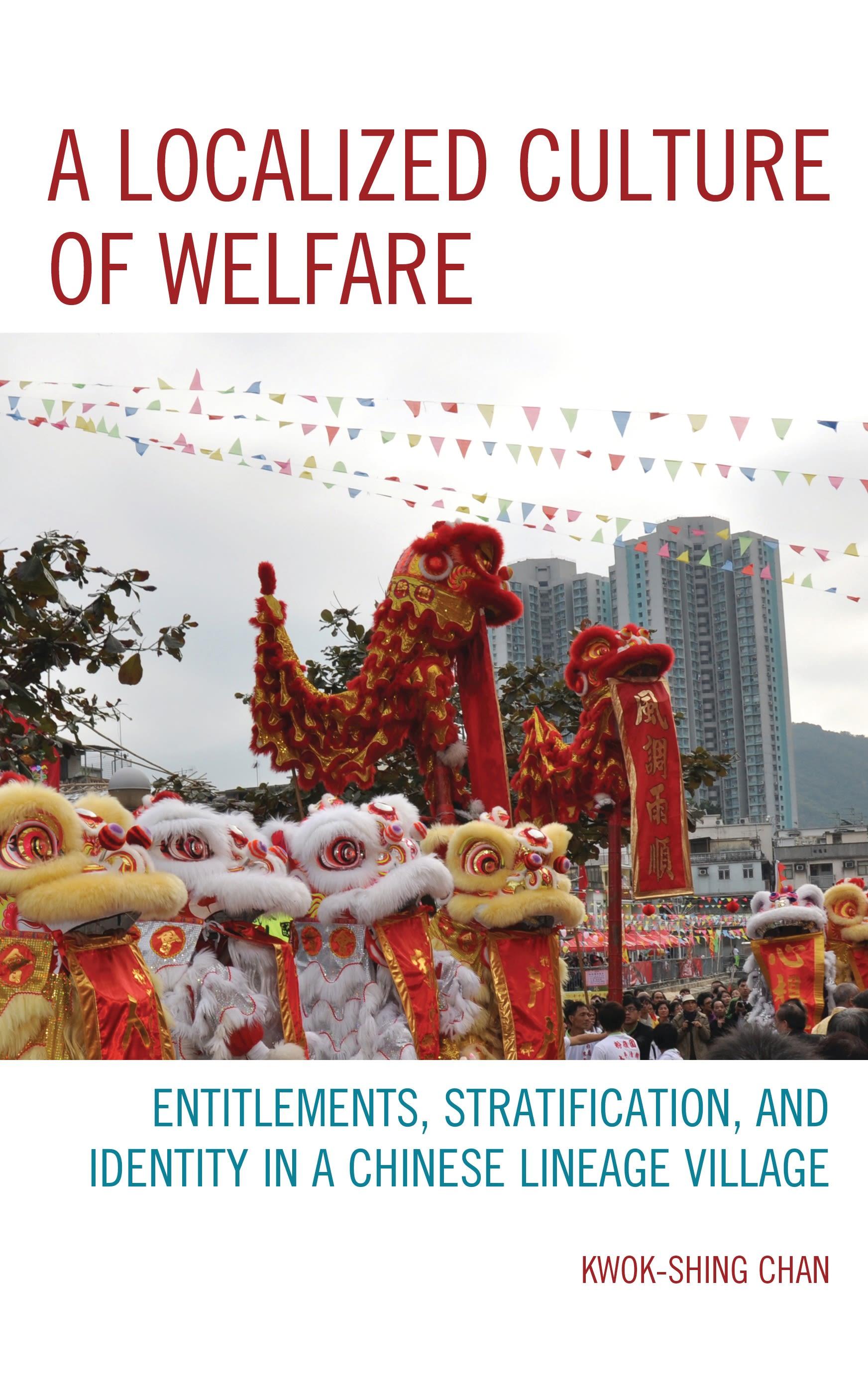
Hong Kong has undergone rapid and substantial social, economic, political and demographic changes since the 1970s. This book examines critically the real impact of these changes on a single surname village in rural Hong Kong. It draws on anthropological fieldwork conducted during the late 1990s and the early 2000s.
This ethnographic study demonstrates that kinship, particularly agnatic kinship, has remained a valuable resource for Pang villagers, enabling them to acquire key welfare entitlements, and to secure a good measure of economic and social well-being. Kinship affiliation has provided and still provides (admittedly differential) access to political patronage and legal entitlements, financial assistance and the substantial benefits of corporate property-holding, physical protection and political leadership, employment, care-giving and support networks, housing needs, old age security, a ritually-imagined community, with a sense of spiritual well-being. Agnatic kinship has been organized as a corporate institution and as a quasi-religious community through which substantial support, protection, and privileged access is provided for villagers. At the same time, reliance on this elaborate “localized culture of welfare” has maintained or reinforced the contours of stratification and inequality among Pang villagers, even as lineage identity has remained largely intact in the face of changing external circumstances.
This ethnographic study demonstrates that kinship, particularly agnatic kinship, has remained a valuable resource for Pang villagers, enabling them to acquire key welfare entitlements, and to secure a good measure of economic and social well-being. Kinship affiliation has provided and still provides (admittedly differential) access to political patronage and legal entitlements, financial assistance and the substantial benefits of corporate property-holding, physical protection and political leadership, employment, care-giving and support networks, housing needs, old age security, a ritually-imagined community, with a sense of spiritual well-being. Agnatic kinship has been organized as a corporate institution and as a quasi-religious community through which substantial support, protection, and privileged access is provided for villagers. At the same time, reliance on this elaborate “localized culture of welfare” has maintained or reinforced the contours of stratification and inequality among Pang villagers, even as lineage identity has remained largely intact in the face of changing external circumstances.
Zahle einfach mit Karte, Klarna, Apple Pay oder Google Pay. Nicht zufrieden? Du hast immer ein 14-tägiges Widerrufsrecht. Lies mehr in unseren AGB. Hast du Fragen, schreib uns eine E-Mail an hello@memmo.org.
Memmo macht das Lernen einfacher – wo auch immer du bist. Bei uns findest du deine Kursbücher und smarte Lerntools an einem Ort: Zusammenfassungen, Quizzes, Podcasts und Lernkarten. Und Ted, dein Lernbuddy, beantwortet alles, was du wissen möchtest. Über 50.000 Studierende lernen bereits hier – gemacht, damit du schneller lernst und weniger Stress hast.