
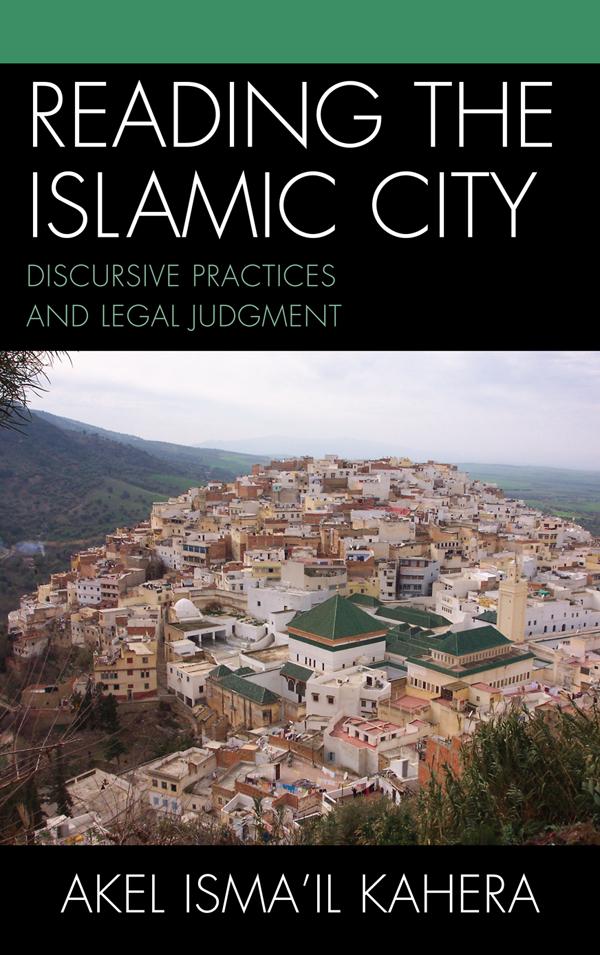
Reading the Islamic City offers insights into the implications the practices of the Maliki school of Islamic law have for the inhabitants of the Islamic city, the madinah. The problematic term madinah fundamentally indicates a phenomenon of building, dwelling, and urban settlement patterns that evolved after the 7th century CE in the Maghrib (North Africa) and al-Andalusia (Spain). Madinah involves multiple contexts that have socio-religious functions and symbolic connotations related to the faith and practice of Islam, and can be viewed in terms of a number of critiques such as everyday lives, boundaries, utopias, and dystopias. The book considers Foucault’s power/knowledge matrix as it applies to an erudite cadre of scholars and legal judgments in the realm of architecture and urbanism. It acknowledges the specificity of power/knowledge insofar as it provides a dominant framework to tackle property rights, custom, noise, privacy, and a host of other subjects. Scholars of urban studies, religion, history, and geography will greatly benefit from this vivid analysis of the relevance of the juridico-discursive practice of Maliki Law in a set of productive or formative discourses in the Islamic city.
Zahle einfach mit Karte, Klarna, Apple Pay oder Google Pay. Nicht zufrieden? Du hast immer ein 14-tägiges Widerrufsrecht. Lies mehr in unseren AGB. Hast du Fragen, schreib uns eine E-Mail an hello@memmo.org.
Memmo macht das Lernen einfacher – wo auch immer du bist. Bei uns findest du deine Kursbücher und smarte Lerntools an einem Ort: Zusammenfassungen, Quizzes, Podcasts und Lernkarten. Und Ted, dein Lernbuddy, beantwortet alles, was du wissen möchtest. Über 50.000 Studierende lernen bereits hier – gemacht, damit du schneller lernst und weniger Stress hast.