
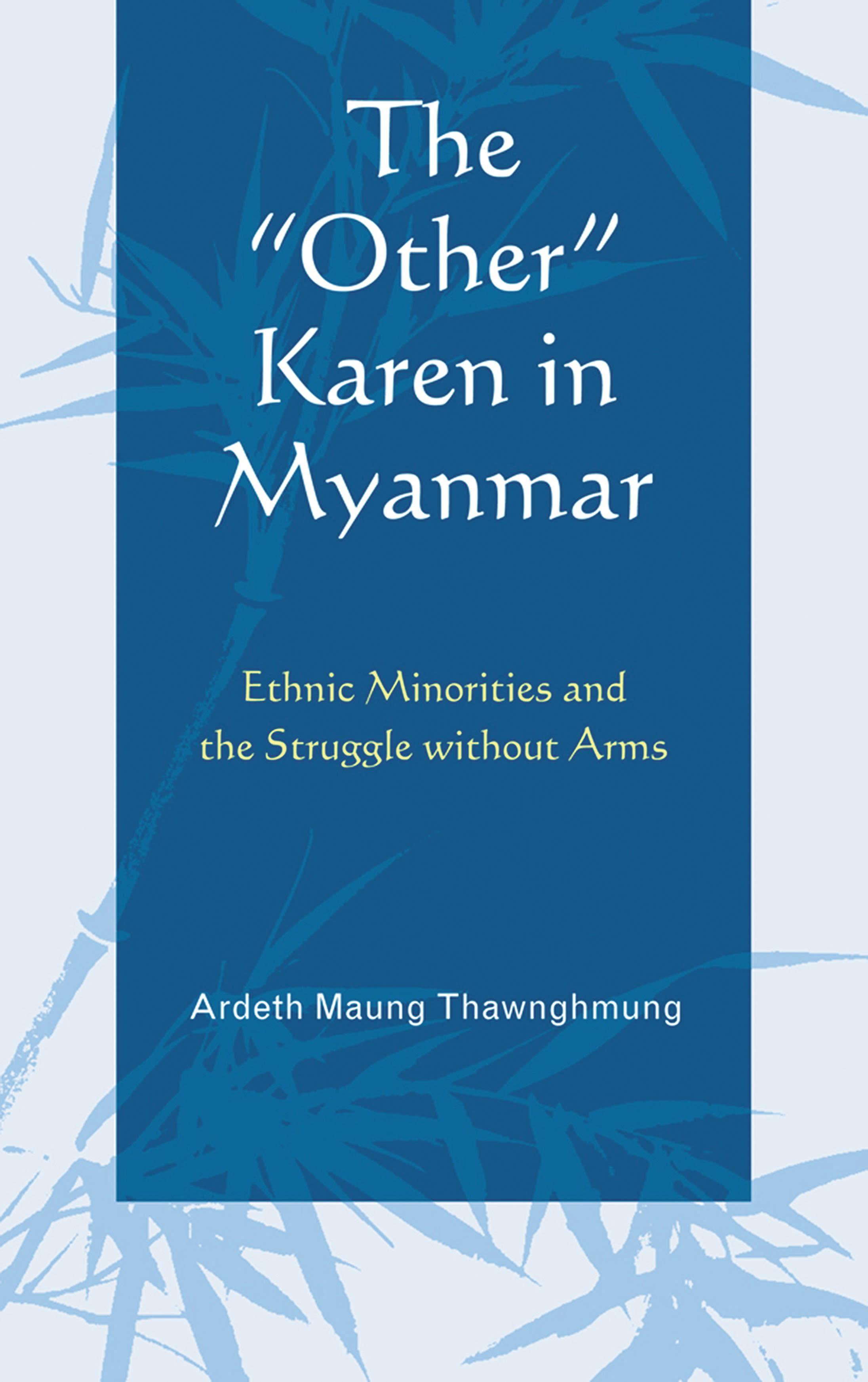
The “Other” Karen in Myanmar looks at the “other” or “quiet” minorities, who are members of ethnic groups associated with well-known armed resistance organizations, but who pursued non-violent approaches to promote their individual and collective interests. This is the first in-depth study to uncover the existence and activities of the “other” Karen and analyze the nature of relationships with their “rebel” counterparts and the state authorities. It also discusses other ethnic armed organizations that have experienced similar situations and assesses their implications for inter-ethnic relations, negotiations with state authorities and political reform.
Most previous studies have focused on violent aspects of ethnic relations and on ethnic armed organizations, such as the Karen National Union (KNU) in Burma, the Moro Islamic Liberation Front (MNLF) in the Philippines, and the LTTE in Sri Lanka. However, even among these minorities which are locked in armed conflicts, the majority of people have shunned armed resistance and sought to remain ‘quietly’ beyond the struggle and pursued non-violent approaches to promote their individual and collective interests in the face of authoritarian, governments.
This study, which sheds light on the lives and growing political significance of non-armed, non-insurgent members of ethnic minorities in Burma, draws heavily on opinion surveys and open-ended interviews among Karen diaspora (among individuals who lived a minimum of 20 years in Burma), “quiet Karens” who live inside Burma, KNU officials, personnel, and soldiers, and Karen refugees and IDPs who are currently living in Thai-Burma border areas. These interviews, which covered approximately two hundred respondents, have been conducted since 2002.
It is mainly directed toward social scientists, historians, humanitarian workers, policy makers, and practitioners, and non-specialist ordinary audience who are interested in Southeast Asian/Burmese politics and society, comparative politics, identity politics, ethnic conflict, social movements, conflict resolution, and political reform.
Most previous studies have focused on violent aspects of ethnic relations and on ethnic armed organizations, such as the Karen National Union (KNU) in Burma, the Moro Islamic Liberation Front (MNLF) in the Philippines, and the LTTE in Sri Lanka. However, even among these minorities which are locked in armed conflicts, the majority of people have shunned armed resistance and sought to remain ‘quietly’ beyond the struggle and pursued non-violent approaches to promote their individual and collective interests in the face of authoritarian, governments.
This study, which sheds light on the lives and growing political significance of non-armed, non-insurgent members of ethnic minorities in Burma, draws heavily on opinion surveys and open-ended interviews among Karen diaspora (among individuals who lived a minimum of 20 years in Burma), “quiet Karens” who live inside Burma, KNU officials, personnel, and soldiers, and Karen refugees and IDPs who are currently living in Thai-Burma border areas. These interviews, which covered approximately two hundred respondents, have been conducted since 2002.
It is mainly directed toward social scientists, historians, humanitarian workers, policy makers, and practitioners, and non-specialist ordinary audience who are interested in Southeast Asian/Burmese politics and society, comparative politics, identity politics, ethnic conflict, social movements, conflict resolution, and political reform.
Zahle einfach mit Karte, Klarna, Apple Pay oder Google Pay. Nicht zufrieden? Du hast immer ein 14-tägiges Widerrufsrecht. Lies mehr in unseren AGB. Hast du Fragen, schreib uns eine E-Mail an hello@memmo.org.
Memmo macht das Lernen einfacher – wo auch immer du bist. Bei uns findest du deine Kursbücher und smarte Lerntools an einem Ort: Zusammenfassungen, Quizzes, Podcasts und Lernkarten. Und Ted, dein Lernbuddy, beantwortet alles, was du wissen möchtest. Über 50.000 Studierende lernen bereits hier – gemacht, damit du schneller lernst und weniger Stress hast.