
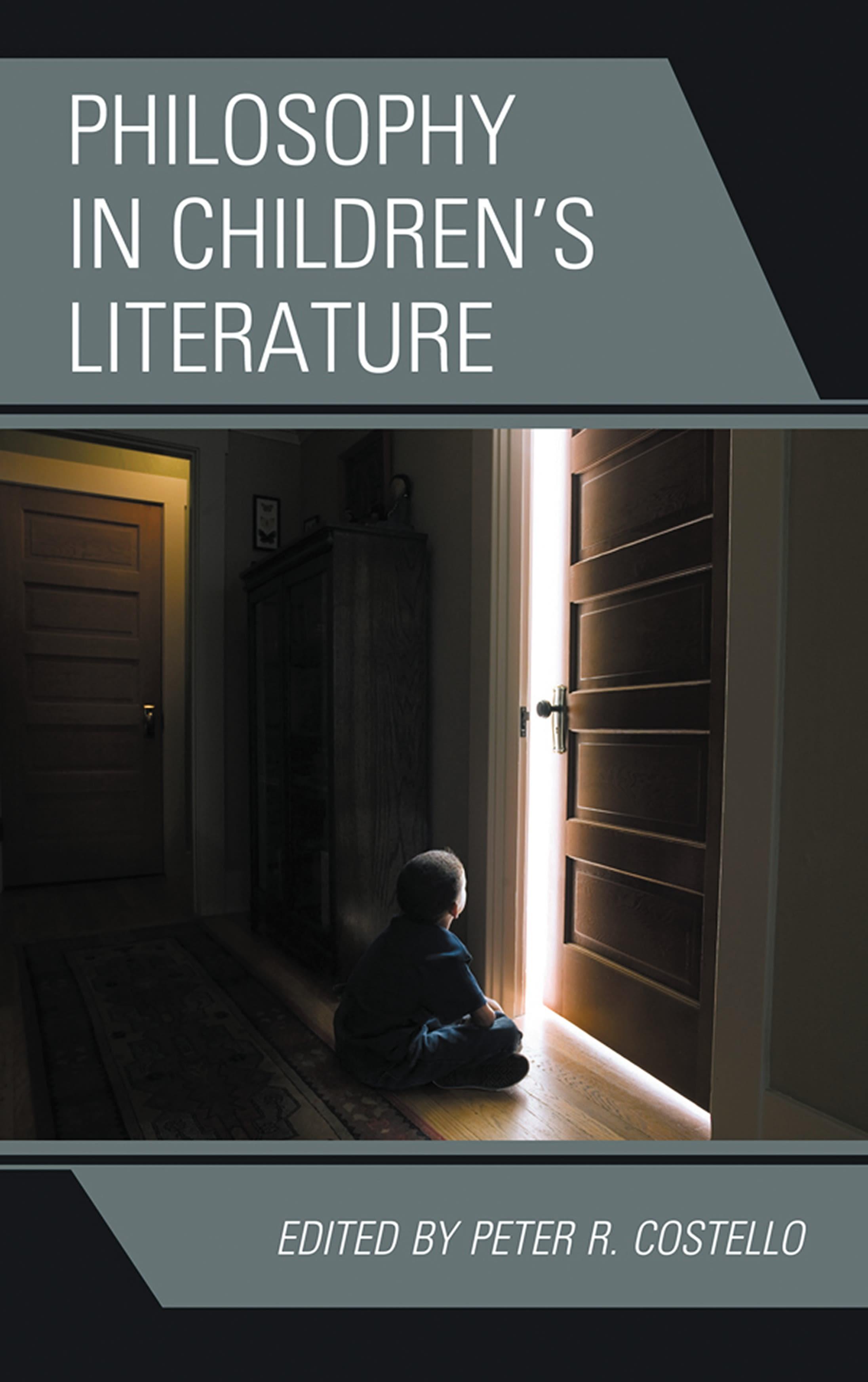
This book allows philosophers, literary theorists, and education specialists to come together to offer a series of readings on works of children’s literature. Each of their readings is focused on pairing a particular, popular picture book or a chapter book with philosophical texts or themes.
The book has three sections—the first, on picturebooks; the second, on chapter books; and the third, on two sets of paired readings of two very popular picturebooks. By means of its three sections, the book sets forth as its goal to show how philosophy can be helpful in reappraising books aimed at children from early childhood on. Particularly in the third section, the book emphasizes how philosophy can help to multiply the type of interpretative stances that are possible when readers listen again to what they thought they knew so well.
The kinds of questions this book raises are the following: How are children’s books already anticipating or articulating philosophical problems and discussions? How does children’s literature work by means of philosophical puzzles or language games? What do children’s books reveal about the existential situation the child reader faces?
In posing and answering these kinds of questions, the readings within the book thus intersect with recent, developing scholarship in children’s literature studies as well as in the psychology and philosophy of childhood.
The book has three sections—the first, on picturebooks; the second, on chapter books; and the third, on two sets of paired readings of two very popular picturebooks. By means of its three sections, the book sets forth as its goal to show how philosophy can be helpful in reappraising books aimed at children from early childhood on. Particularly in the third section, the book emphasizes how philosophy can help to multiply the type of interpretative stances that are possible when readers listen again to what they thought they knew so well.
The kinds of questions this book raises are the following: How are children’s books already anticipating or articulating philosophical problems and discussions? How does children’s literature work by means of philosophical puzzles or language games? What do children’s books reveal about the existential situation the child reader faces?
In posing and answering these kinds of questions, the readings within the book thus intersect with recent, developing scholarship in children’s literature studies as well as in the psychology and philosophy of childhood.
Seiten: 354
Kategorie: Litteraturvetenskap & Teori
e-ISBN: 9780739168240
Versandgewicht: 1.2 kg
Versand in: 1-2 Tage
Zahle einfach mit Karte, Klarna, Apple Pay oder Google Pay. Nicht zufrieden? Du hast immer ein 14-tägiges Widerrufsrecht. Lies mehr in unseren AGB. Hast du Fragen, schreib uns eine E-Mail an hello@memmo.org.
Memmo macht das Lernen einfacher – wo auch immer du bist. Bei uns findest du deine Kursbücher und smarte Lerntools an einem Ort: Zusammenfassungen, Quizzes, Podcasts und Lernkarten. Und Ted, dein Lernbuddy, beantwortet alles, was du wissen möchtest. Über 50.000 Studierende lernen bereits hier – gemacht, damit du schneller lernst und weniger Stress hast.