
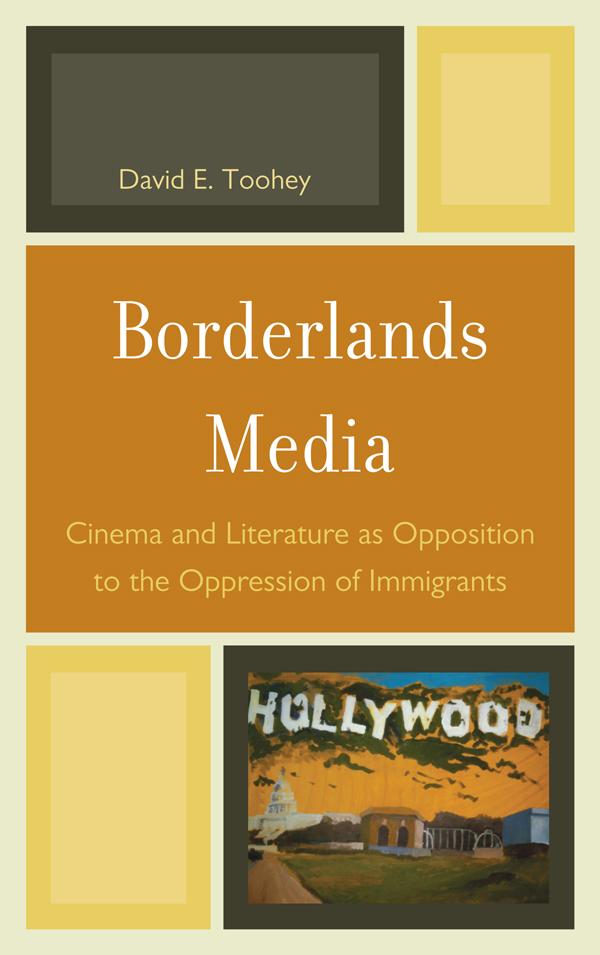
David E. Toohey’s Borderlands Media: Cinema and Literature as Opposition to the Oppression of Immigrants is an in-depth analysis which explores the immigrant experience using a mixture of cinema, literary, and other artistic media spanning from 1958 onward.
Toohey begins with Orson Welles’s 1958 Touch of Evil, which triggered a wave of protest resulting in Chicana/o filmmakers acting out against the racism against immigrant and diaspora communities. The study then adds policy documents and social science scholarship to the mix, both to clarify and oppose undesirable elements in these forms of thought. Through extensive analysis and explication, Toohey uncovers a history of power ranging from lingual and visual to more widely recognized class and racial divisions. These divisions are analyzed both with an emphasis on how they oppress, but also how cinematic political thought can challenge them, with special attention to the philosophy of Gilles Deleuze. David E. Toohey’s Borderlands Media is an essential text for scholars and students engaged in questions regarding the effect of media on the oppression of immigrants and diaspora communities.
Toohey begins with Orson Welles’s 1958 Touch of Evil, which triggered a wave of protest resulting in Chicana/o filmmakers acting out against the racism against immigrant and diaspora communities. The study then adds policy documents and social science scholarship to the mix, both to clarify and oppose undesirable elements in these forms of thought. Through extensive analysis and explication, Toohey uncovers a history of power ranging from lingual and visual to more widely recognized class and racial divisions. These divisions are analyzed both with an emphasis on how they oppress, but also how cinematic political thought can challenge them, with special attention to the philosophy of Gilles Deleuze. David E. Toohey’s Borderlands Media is an essential text for scholars and students engaged in questions regarding the effect of media on the oppression of immigrants and diaspora communities.
Zahle einfach mit Karte, Klarna, Apple Pay oder Google Pay. Nicht zufrieden? Du hast immer ein 14-tägiges Widerrufsrecht. Lies mehr in unseren AGB. Hast du Fragen, schreib uns eine E-Mail an hello@memmo.org.
Memmo macht das Lernen einfacher – wo auch immer du bist. Bei uns findest du deine Kursbücher und smarte Lerntools an einem Ort: Zusammenfassungen, Quizzes, Podcasts und Lernkarten. Und Ted, dein Lernbuddy, beantwortet alles, was du wissen möchtest. Über 50.000 Studierende lernen bereits hier – gemacht, damit du schneller lernst und weniger Stress hast.