
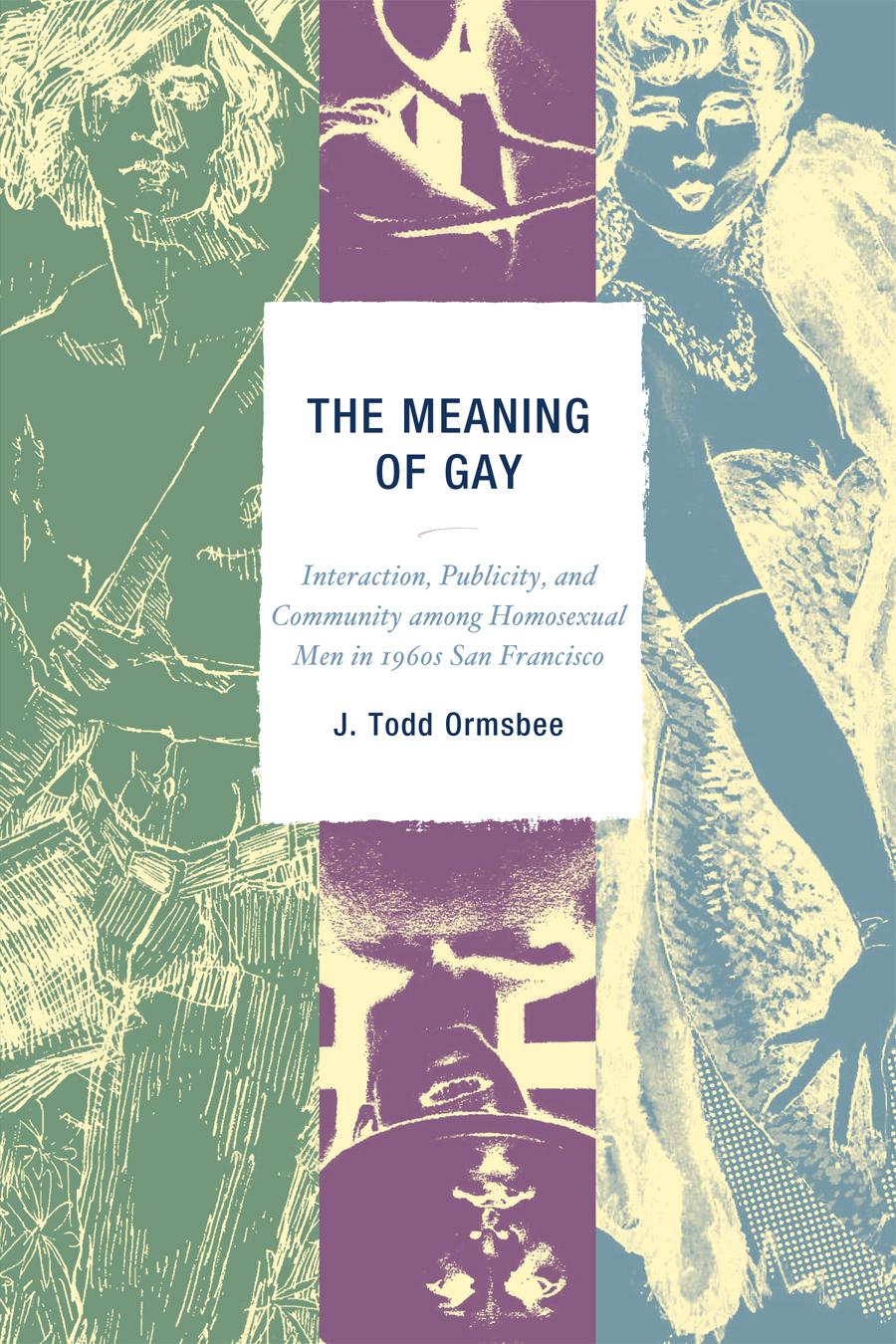
Homosexual men in San Francisco had started the 1960s interacting mostly in private, informal groups, meeting in bars and house parties. But by 1972, the city had a "gay community" and "gay pride," all celebrated with a parade. Through numerous organizations and publications, gay men created a counter-publicity to fight against their domination and subordination, and had begun to try to build a community that would foster deeper, more meaningful relationships with each other. The emergent counter-publicity and community in turn created the social spaces necessary for gay men to create an expanding range of possible meanings for their "gayness," meanings that aligned more closely with their experiences and which better helped them meet their needs and desires. The gayness they created could expand and contract depending on the needs and circumstances of the individual or group.
Rather than the typical story of the evolution from "conservative" to "radical" social movement, The Meaning of Gay sees the development of gay politics as the shift from the need to establish a public-facing gayness in the early 1960s, to the community building efforts that began in the mid-1960s, through the efforts to create a gayness based in authenticity, brotherhood, and revolution in the early 1970s. Each of these developments flowed from gay men's responses to the swiftly changing San Francisco and American environment. The dramatic explosion of possibilities for gayness that emerged during the 1960s may serve as a touchstone for those concerned with the problems of gay male life in the twenty-first century. This book traces these developments as they was recorded in the gay periodicals of the era, and analyzes them from the perspective of John Dewey's theory of mind, desire, public, valuation, and democratic community.
Rather than the typical story of the evolution from "conservative" to "radical" social movement, The Meaning of Gay sees the development of gay politics as the shift from the need to establish a public-facing gayness in the early 1960s, to the community building efforts that began in the mid-1960s, through the efforts to create a gayness based in authenticity, brotherhood, and revolution in the early 1970s. Each of these developments flowed from gay men's responses to the swiftly changing San Francisco and American environment. The dramatic explosion of possibilities for gayness that emerged during the 1960s may serve as a touchstone for those concerned with the problems of gay male life in the twenty-first century. This book traces these developments as they was recorded in the gay periodicals of the era, and analyzes them from the perspective of John Dewey's theory of mind, desire, public, valuation, and democratic community.
Zahle einfach mit Karte, Klarna, Apple Pay oder Google Pay. Nicht zufrieden? Du hast immer ein 14-tägiges Widerrufsrecht. Lies mehr in unseren AGB. Hast du Fragen, schreib uns eine E-Mail an hello@memmo.org.
Memmo macht das Lernen einfacher – wo auch immer du bist. Bei uns findest du deine Kursbücher und smarte Lerntools an einem Ort: Zusammenfassungen, Quizzes, Podcasts und Lernkarten. Und Ted, dein Lernbuddy, beantwortet alles, was du wissen möchtest. Über 50.000 Studierende lernen bereits hier – gemacht, damit du schneller lernst und weniger Stress hast.