
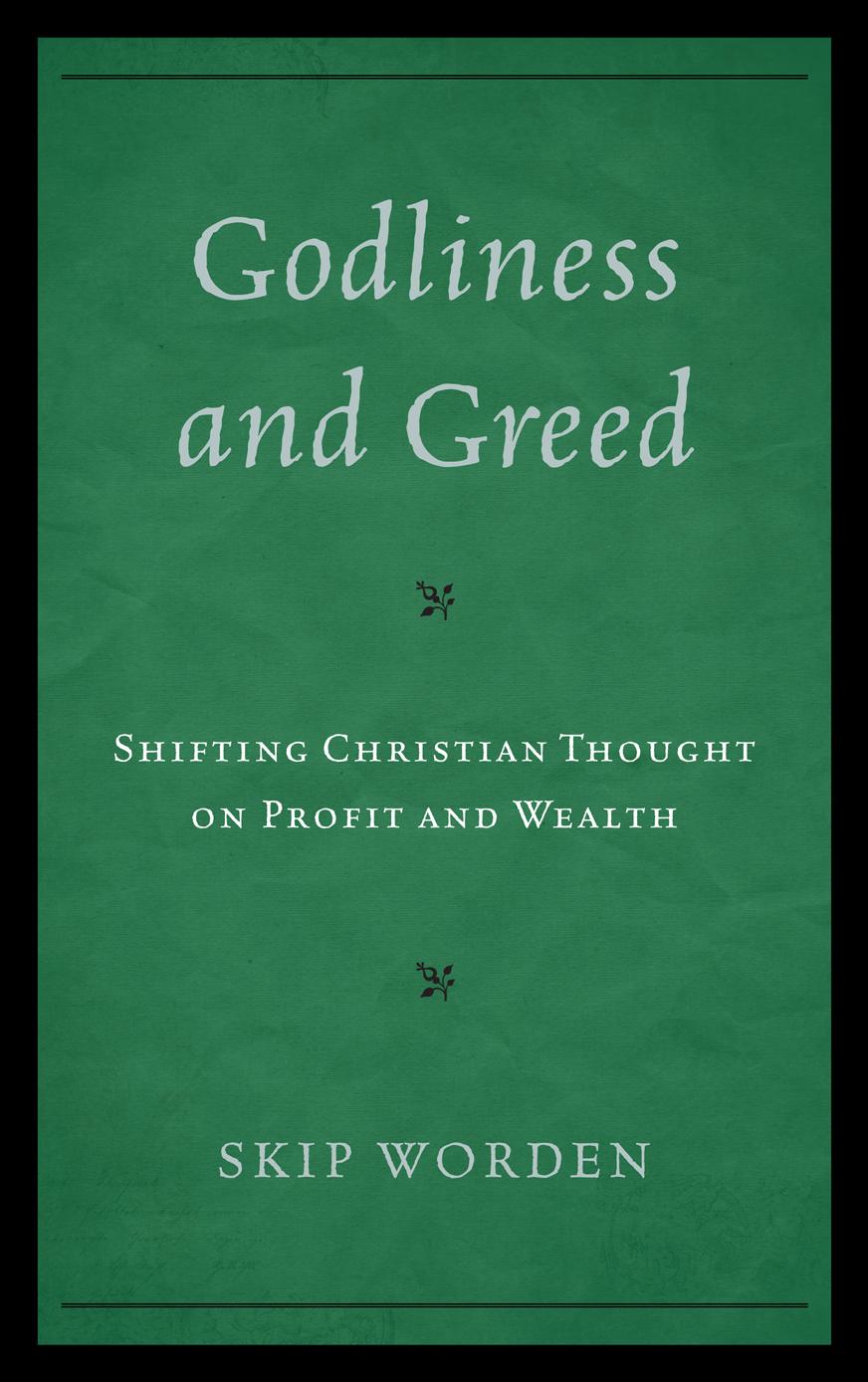
Traditional scholarship often points to the Calvinists and Max Weber's writing on the Protestant ethic as the catalysts to changing Christian attitudes concerning profit-seeking and wealth. Author Skip Worden argues that the seeds of this change occurred centuries earlier. From the beginning of the Commercial Revolution to the fifteenth-century Renaissance, he shows that the predominant Christian thought on economics went through a fundamental shift, becoming favorable toward profit-seeking and wealth-holding. Worden discusses this dramatic change and explains how the general antagonism toward the pursuit of wealth before the Commercial Revolution transformed into Protestant theologians' fighting against the prevailing view of a pro-wealth paradigm during the fifteenth century.
Worden contends that the shift away from the Patristic view of wealth occurred well before the addition of the Calvinist spirit of capitalism and the Puritan work ethic into Christian economic vernacular. Drawing on Plato, Cicero, and Augustine, early Protestant theologians unsuccessfully sought to check the rising dominance of the pro-wealth Christian paradigm, which they believed had been pushed too far. These theologians of the sixteenth and seventeenth century felt it was too close to advocating love of gain itself, something too close to the sin of greed. How well the Reformation succeeded can be assessed by Worden's insightful concluding study of John D. Rockefeller, the ascetic steward of God's Gold in the form of monopoly.
Worden contends that the shift away from the Patristic view of wealth occurred well before the addition of the Calvinist spirit of capitalism and the Puritan work ethic into Christian economic vernacular. Drawing on Plato, Cicero, and Augustine, early Protestant theologians unsuccessfully sought to check the rising dominance of the pro-wealth Christian paradigm, which they believed had been pushed too far. These theologians of the sixteenth and seventeenth century felt it was too close to advocating love of gain itself, something too close to the sin of greed. How well the Reformation succeeded can be assessed by Worden's insightful concluding study of John D. Rockefeller, the ascetic steward of God's Gold in the form of monopoly.
Seiten: 328
Kategorie: Religion & Teologi
e-ISBN: 9780739139851
Versandgewicht: 1.2 kg
Versand in: 1-2 Tage
Zahle einfach mit Karte, Klarna, Apple Pay oder Google Pay. Nicht zufrieden? Du hast immer ein 14-tägiges Widerrufsrecht. Lies mehr in unseren AGB. Hast du Fragen, schreib uns eine E-Mail an hello@memmo.org.
Memmo macht das Lernen einfacher – wo auch immer du bist. Bei uns findest du deine Kursbücher und smarte Lerntools an einem Ort: Zusammenfassungen, Quizzes, Podcasts und Lernkarten. Und Ted, dein Lernbuddy, beantwortet alles, was du wissen möchtest. Über 50.000 Studierende lernen bereits hier – gemacht, damit du schneller lernst und weniger Stress hast.