
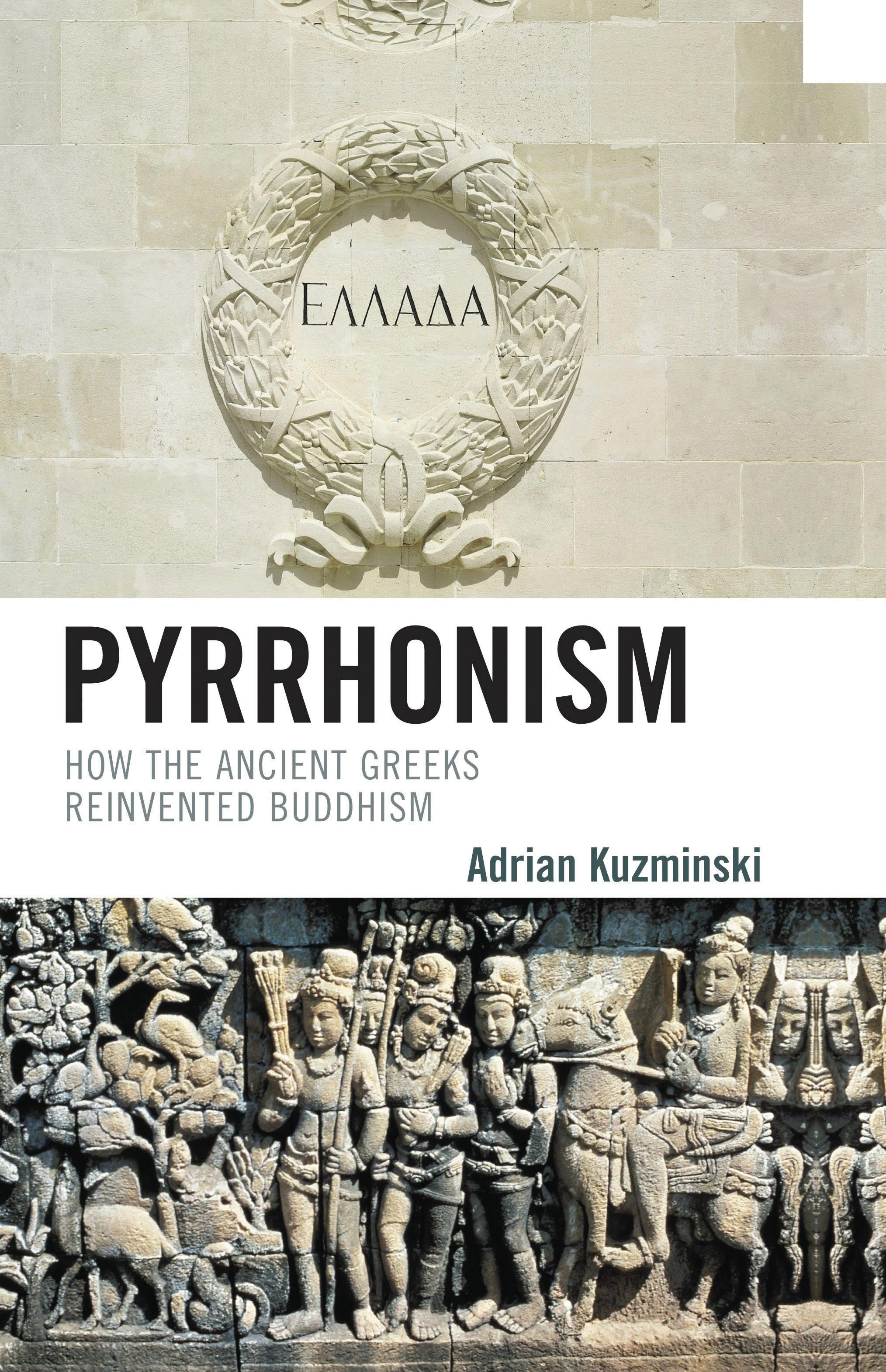
Pyrrhonism is commonly confused with scepticism in Western philosophy. Unlike sceptics, who believe there are no true beliefs, Pyrrhonists suspend judgment about all beliefs, including the belief that there are no true beliefs. Pyrrhonism was developed by a line of ancient Greek philosophers, from its founder Pyrrho of Elis in the fourth century BCE through Sextus Empiricus in the second century CE. Pyrrhonists offer no view, theory, or knowledge about the world, but recommend instead a practice, a distinct way of life, designed to suspend beliefs and ease suffering. Adrian Kuzminski examines Pyrrhonism in terms of its striking similarity to some Eastern non-dogmatic soteriological traditions-particularly Madhyamaka Buddhism. He argues that its origin can plausibly be traced to the contacts between Pyrrho and the sages he encountered in India, where he traveled with Alexander the Great. Although Pyrrhonism has not been practiced in the West since ancient times, its insights have occasionally been independently recovered, most recently in the work of Ludwig Wittgenstein. Kuzminski shows that Pyrrhonism remains relevant perhaps more than ever as an antidote to today's cultures of belief.
Zahle einfach mit Karte, Klarna, Apple Pay oder Google Pay. Nicht zufrieden? Du hast immer ein 14-tägiges Widerrufsrecht. Lies mehr in unseren AGB. Hast du Fragen, schreib uns eine E-Mail an hello@memmo.org.
Memmo macht das Lernen einfacher – wo auch immer du bist. Bei uns findest du deine Kursbücher und smarte Lerntools an einem Ort: Zusammenfassungen, Quizzes, Podcasts und Lernkarten. Und Ted, dein Lernbuddy, beantwortet alles, was du wissen möchtest. Über 50.000 Studierende lernen bereits hier – gemacht, damit du schneller lernst und weniger Stress hast.