
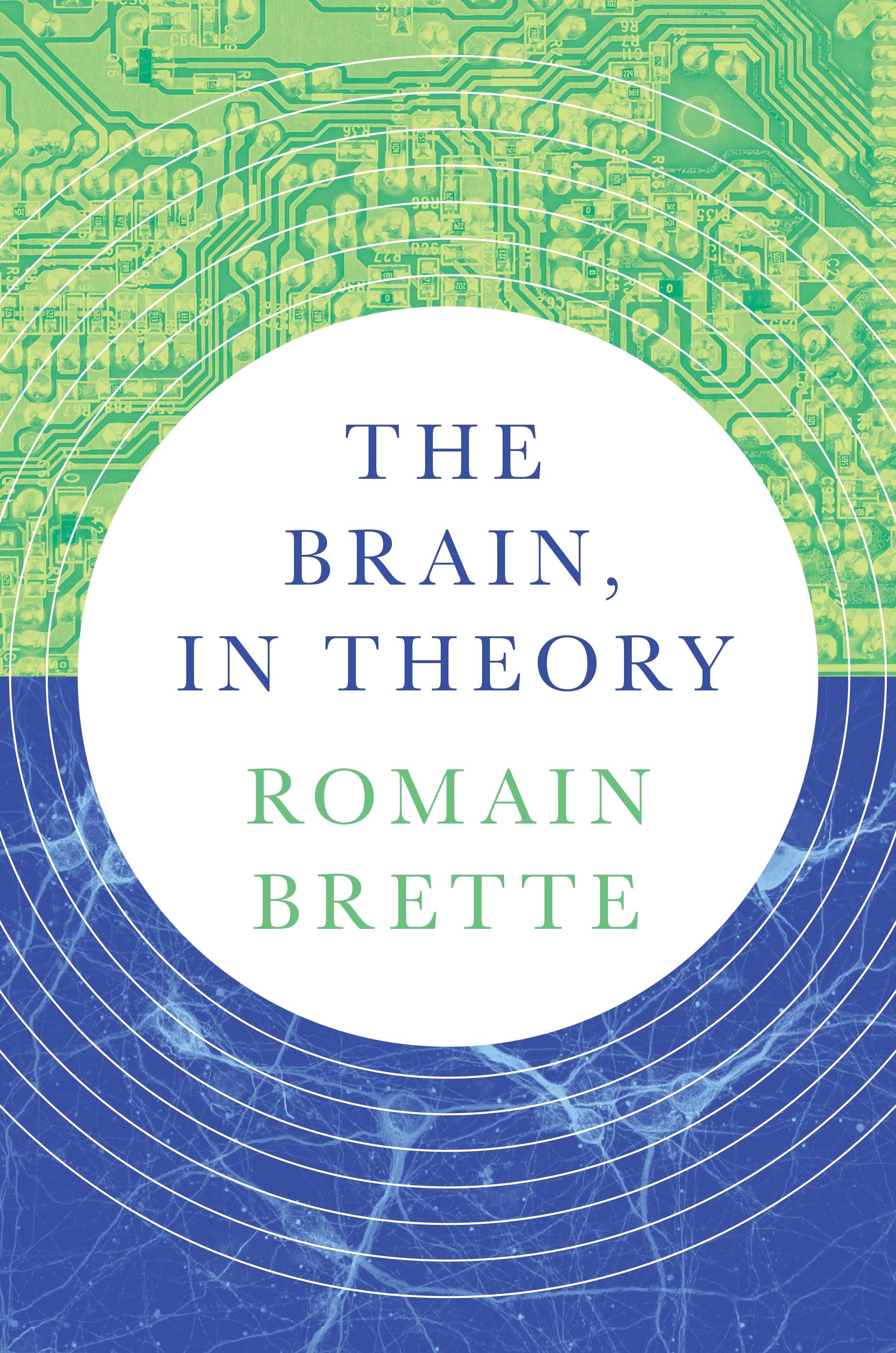
Why engineering and computational analogies are poorly suited to the study of biological cognition
Mainstream theories of the brain are often expressed through engineering concepts—computation, code, control, reverse-engineering, optimization. These theories cast the living organism as a machine and the brain as a computer. The fact that cognition is a biological phenomenon seems merely anecdotal; biology is considered just “implementation.” In The Brain, In Theory, Romain Brette argues that the brain is not a “biological computer” because living organisms are not engineered. Engineering is the use of knowledge to solve technical problems, to build an artifact with a plan. But, Brette reminds us, Darwin’s insight is precisely that evolution is not a case of engineering. Unlike engineering, evolution has no predetermined goals, plans, or knowledge.
Brette reviews the main theoretical frameworks for thinking about the brain, including computation, neural representations, information, and prediction, and finds them poorly suited to the study of biological cognition. He proposes understanding the brain as a self-organized, developing community of living entities rather than an optimized assembly of machine components. With this new perspective, Brette brings life back to the study of the brain and cognition.
Zahle einfach mit Karte, Klarna, Apple Pay oder Google Pay. Nicht zufrieden? Du hast immer ein 14-tägiges Widerrufsrecht. Lies mehr in unseren AGB. Hast du Fragen, schreib uns eine E-Mail an hello@memmo.org.
Memmo macht das Lernen einfacher – wo auch immer du bist. Bei uns findest du deine Kursbücher und smarte Lerntools an einem Ort: Zusammenfassungen, Quizzes, Podcasts und Lernkarten. Und Ted, dein Lernbuddy, beantwortet alles, was du wissen möchtest. Über 50.000 Studierende lernen bereits hier – gemacht, damit du schneller lernst und weniger Stress hast.