
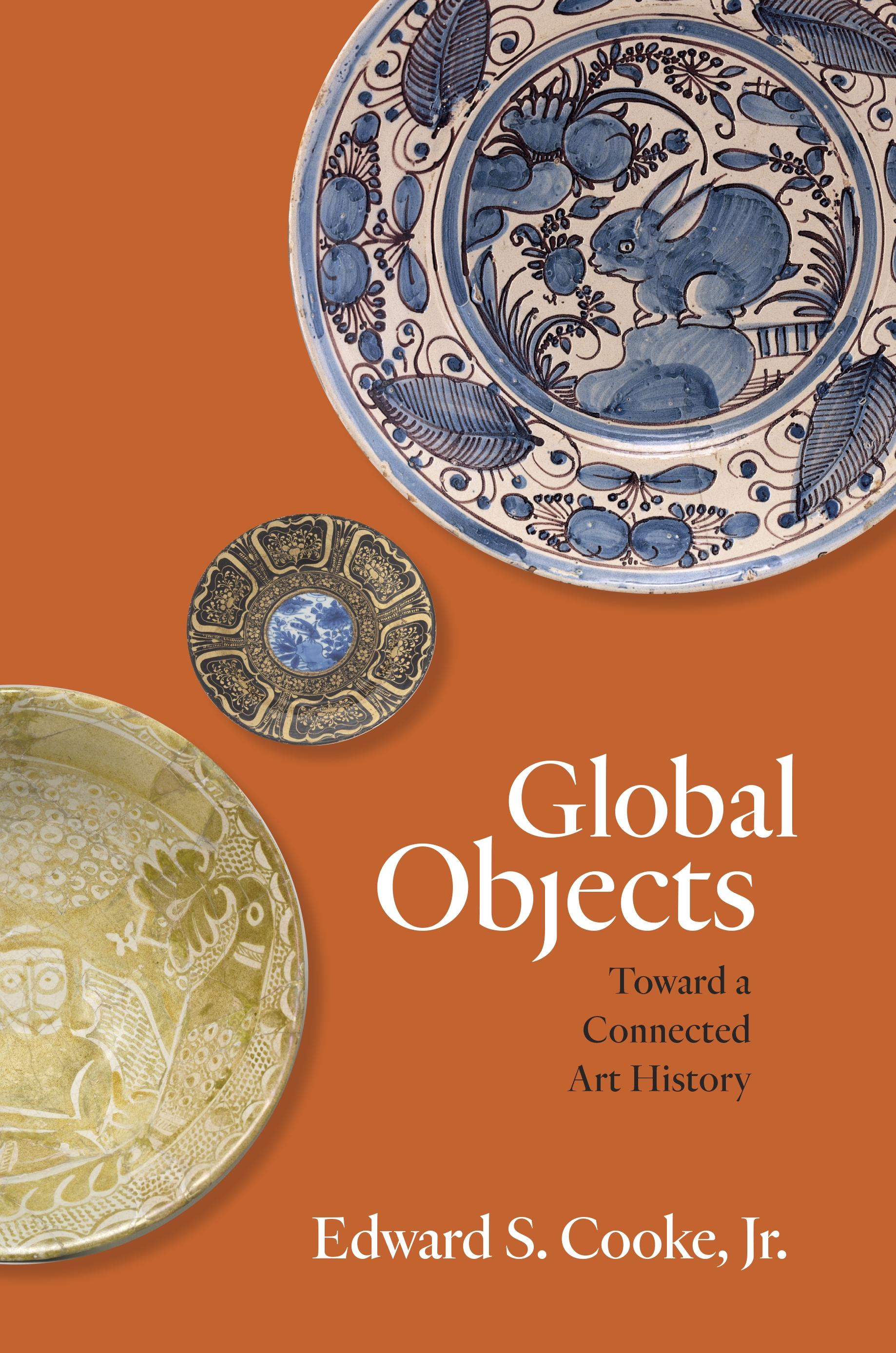
A bold reorientation of art history that bridges the divide between fine art and material culture through an examination of objects and their uses
Art history is often viewed through cultural or national lenses that define some works as fine art while relegating others to the category of craft. Global Objects points the way to an interconnected history of art, examining a broad array of functional aesthetic objects that transcend geographic and temporal boundaries and challenging preconceived ideas about what is and is not art.
Avoiding traditional binaries such as East versus West and fine art versus decorative art, Edward Cooke looks at the production, consumption, and circulation of objects made from clay, fiber, wood, and nonferrous base metals. Carefully considering the materials and process of making, and connecting process to product and people, he demonstrates how objects act on those who look at, use, and acquire them. He reveals how objects retain aspects of their local fabrication while absorbing additional meanings in subtle and unexpected ways as they move through space and time. In emphasizing multiple centers of art production amid constantly changing contexts, Cooke moves beyond regional histories driven by geography, nation-state, time period, or medium.
Beautifully illustrated, Global Objects traces the social lives of objects from creation to purchase, and from use to experienced meaning, charting exciting new directions in art history.
Zahle einfach mit Karte, Klarna, Apple Pay oder Google Pay. Nicht zufrieden? Du hast immer ein 14-tägiges Widerrufsrecht. Lies mehr in unseren AGB. Hast du Fragen, schreib uns eine E-Mail an hello@memmo.org.
Memmo macht das Lernen einfacher – wo auch immer du bist. Bei uns findest du deine Kursbücher und smarte Lerntools an einem Ort: Zusammenfassungen, Quizzes, Podcasts und Lernkarten. Und Ted, dein Lernbuddy, beantwortet alles, was du wissen möchtest. Über 50.000 Studierende lernen bereits hier – gemacht, damit du schneller lernst und weniger Stress hast.