
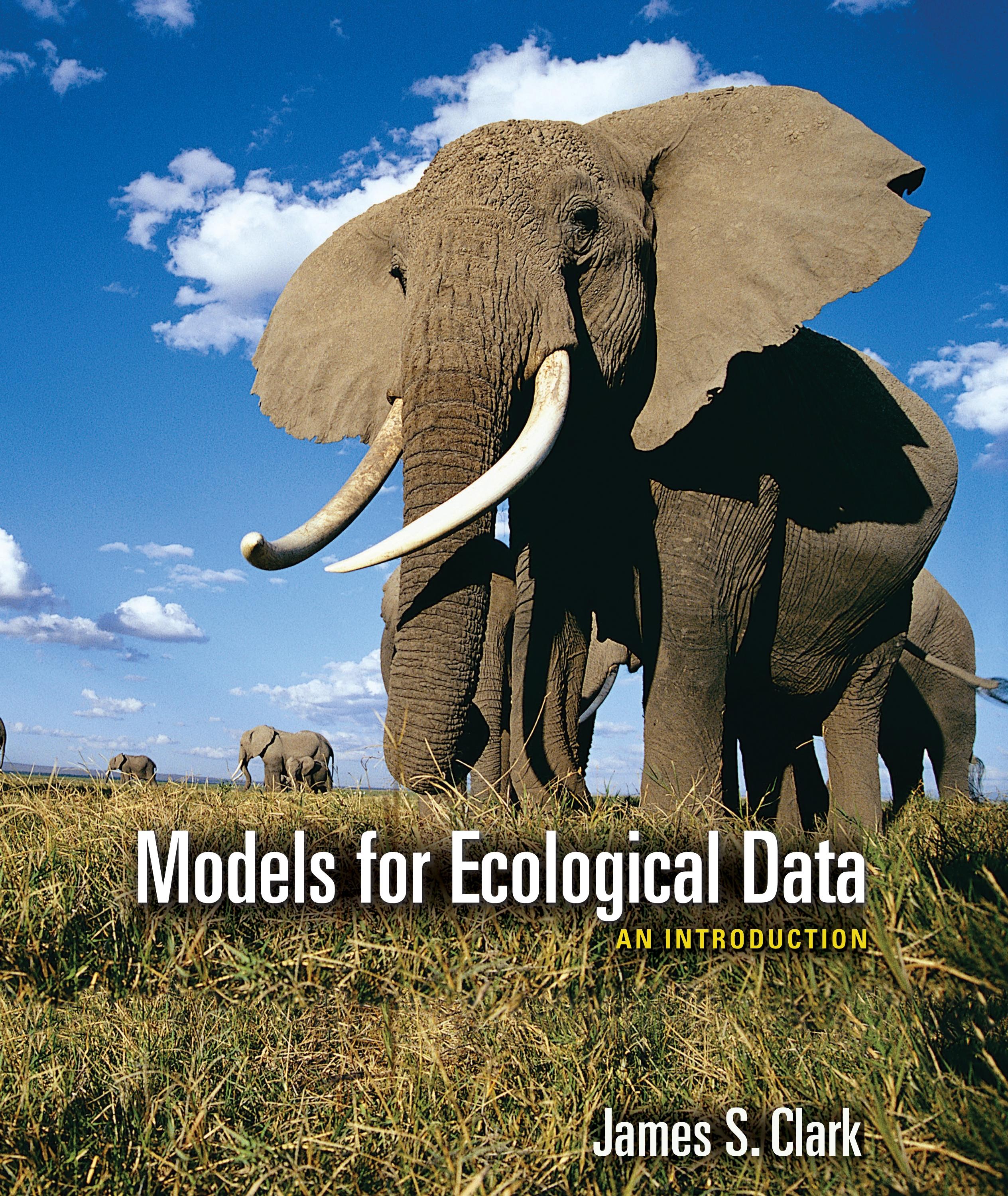
The environmental sciences are undergoing a revolution in the use of models and data. Facing ecological data sets of unprecedented size and complexity, environmental scientists are struggling to understand and exploit powerful new statistical tools for making sense of ecological processes.
In Models for Ecological Data, James Clark introduces ecologists to these modern methods in modeling and computation. Assuming only basic courses in calculus and statistics, the text introduces readers to basic maximum likelihood and then works up to more advanced topics in Bayesian modeling and computation. Clark covers both classical statistical approaches and powerful new computational tools and describes how complexity can motivate a shift from classical to Bayesian methods. Through an available lab manual, the book introduces readers to the practical work of data modeling and computation in the language R. Based on a successful course at Duke University and National Science Foundation-funded institutes on hierarchical modeling, Models for Ecological Data will enable ecologists and other environmental scientists to develop useful models that make sense of ecological data.
- Consistent treatment from classical to modern Bayes
- Underlying distribution theory to algorithm development
- Many examples and applications
- Does not assume statistical background
- Extensive supporting appendixes
- Lab manual in R is available separately
Zahle einfach mit Karte, Klarna, Apple Pay oder Google Pay. Nicht zufrieden? Du hast immer ein 14-tägiges Widerrufsrecht. Lies mehr in unseren AGB. Hast du Fragen, schreib uns eine E-Mail an hello@memmo.org.
Memmo macht das Lernen einfacher – wo auch immer du bist. Bei uns findest du deine Kursbücher und smarte Lerntools an einem Ort: Zusammenfassungen, Quizzes, Podcasts und Lernkarten. Und Ted, dein Lernbuddy, beantwortet alles, was du wissen möchtest. Über 50.000 Studierende lernen bereits hier – gemacht, damit du schneller lernst und weniger Stress hast.