
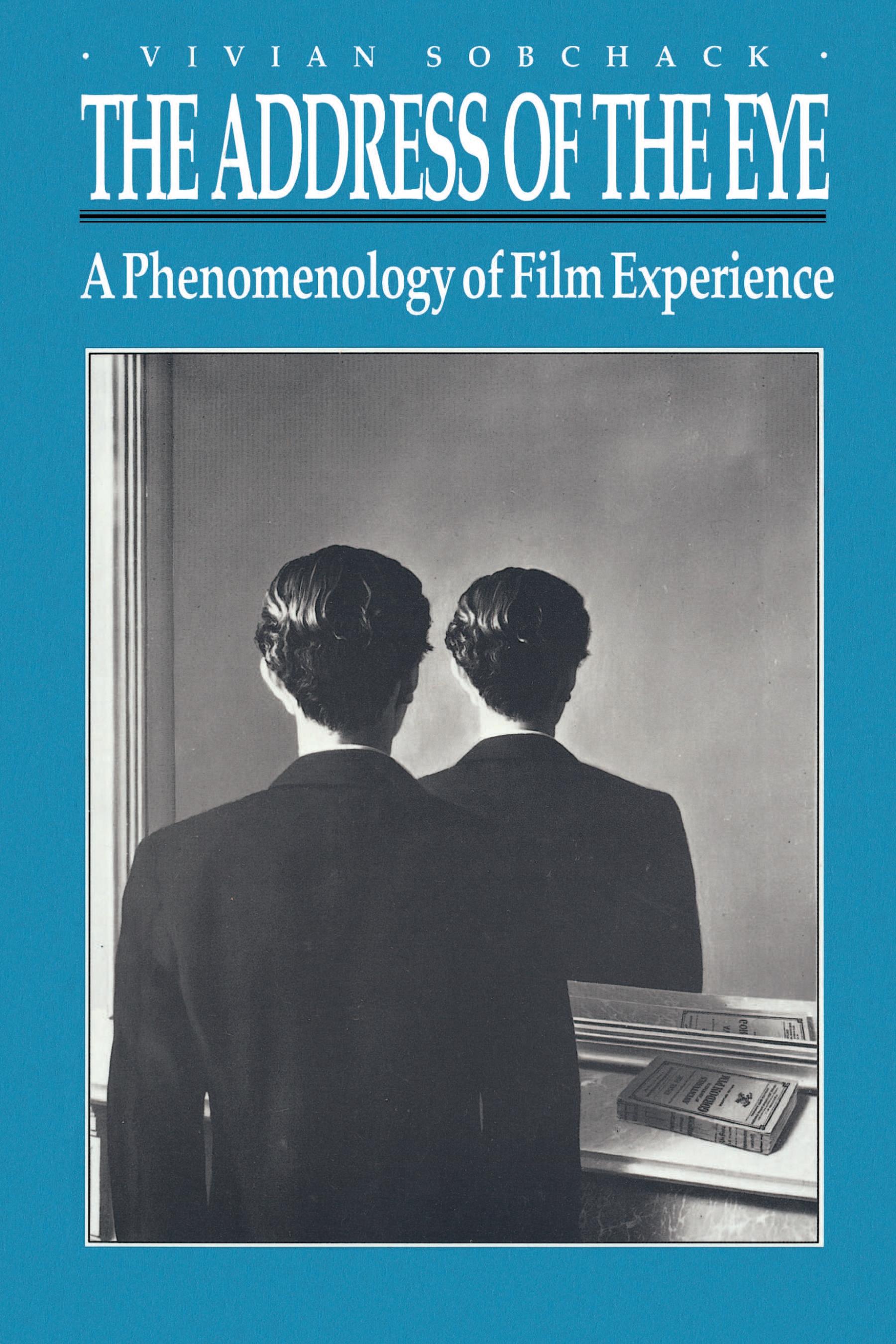
Cinema is a sensuous object, but in our presence it becomes also a sensing, sensual, sense-making subject. Thus argues Vivian Sobchack as she challenges basic assumptions of current film theory that reduce film to an object of vision and the spectator to a victim of a deterministic cinematic apparatus. Maintaining that these premises ignore the material and cultural-historical situations of both the spectator and the film, the author makes the radical proposal that the cinematic experience depends on two "viewers" viewing: the spectator and the film, each existing as both subject and object of vision. Drawing on existential and semiotic phenomenology, and particularly on the work of Merleau-Ponty, Sobchack shows how the film experience provides empirical insight into the reversible, dialectical, and signifying nature of that embodied vision we each live daily as both "mine" and "another's." In this attempt to account for cinematic intelligibility and signification, the author explores the possibility of human choice and expressive freedom within the bounds of history and culture.
Zahle einfach mit Karte, Klarna, Apple Pay oder Google Pay. Nicht zufrieden? Du hast immer ein 14-tägiges Widerrufsrecht. Lies mehr in unseren AGB. Hast du Fragen, schreib uns eine E-Mail an hello@memmo.org.
Memmo macht das Lernen einfacher – wo auch immer du bist. Bei uns findest du deine Kursbücher und smarte Lerntools an einem Ort: Zusammenfassungen, Quizzes, Podcasts und Lernkarten. Und Ted, dein Lernbuddy, beantwortet alles, was du wissen möchtest. Über 50.000 Studierende lernen bereits hier – gemacht, damit du schneller lernst und weniger Stress hast.