
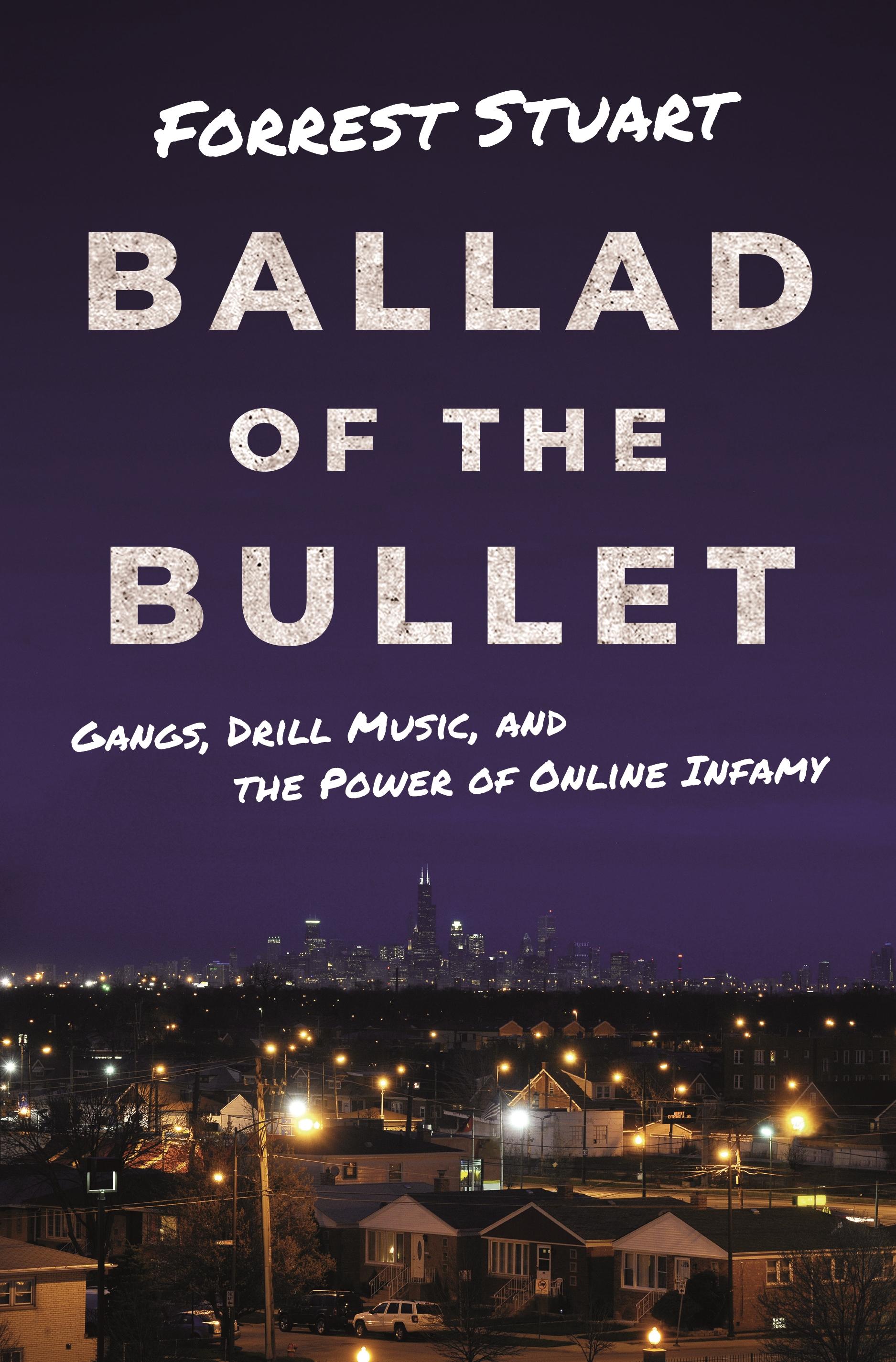
How poor urban youth in Chicago use social media to profit from portrayals of gang violence, and the questions this raises about poverty, opportunities, and public voyeurism
Amid increasing hardship and limited employment options, poor urban youth are developing creative online strategies to make ends meet. Using such social media platforms as YouTube, Twitter, and Instagram, they’re capitalizing on the public’s fascination with the ghetto and gang violence. But with what consequences? Ballad of the Bullet follows the Corner Boys, a group of thirty or so young men on Chicago’s South Side who have hitched their dreams of success to the creation of “drill music” (slang for “shooting music”). Drillers disseminate this competitive genre of hyperviolent, hyperlocal, DIY-style gangsta rap digitally, hoping to amass millions of clicks, views, and followers—and a ticket out of poverty. But in this perverse system of benefits, where online popularity can convert into offline rewards, the risks can be too great.
Drawing on extensive fieldwork and countless interviews compiled from daily, close interactions with the Corner Boys, as well as time spent with their families, friends, music producers, and followers, Forrest Stuart looks at the lives and motivations of these young men. Stuart examines why drillers choose to embrace rather than distance themselves from negative stereotypes, using the web to assert their supposed superior criminality over rival gangs. While these virtual displays of ghetto authenticity—the saturation of social media with images of guns, drugs, and urban warfare—can lead to online notoriety and actual resources, including cash, housing, guns, sex, and, for a select few, upward mobility, drillers frequently end up behind bars, seriously injured, or dead.
Raising questions about online celebrity, public voyeurism, and the commodification of the ghetto, Ballad of the Bullet offers a singular look at what happens when the digital economy and urban poverty collide.
Zahle einfach mit Karte, Klarna, Apple Pay oder Google Pay. Nicht zufrieden? Du hast immer ein 14-tägiges Widerrufsrecht. Lies mehr in unseren AGB. Hast du Fragen, schreib uns eine E-Mail an hello@memmo.org.
Memmo macht das Lernen einfacher – wo auch immer du bist. Bei uns findest du deine Kursbücher und smarte Lerntools an einem Ort: Zusammenfassungen, Quizzes, Podcasts und Lernkarten. Und Ted, dein Lernbuddy, beantwortet alles, was du wissen möchtest. Über 50.000 Studierende lernen bereits hier – gemacht, damit du schneller lernst und weniger Stress hast.