
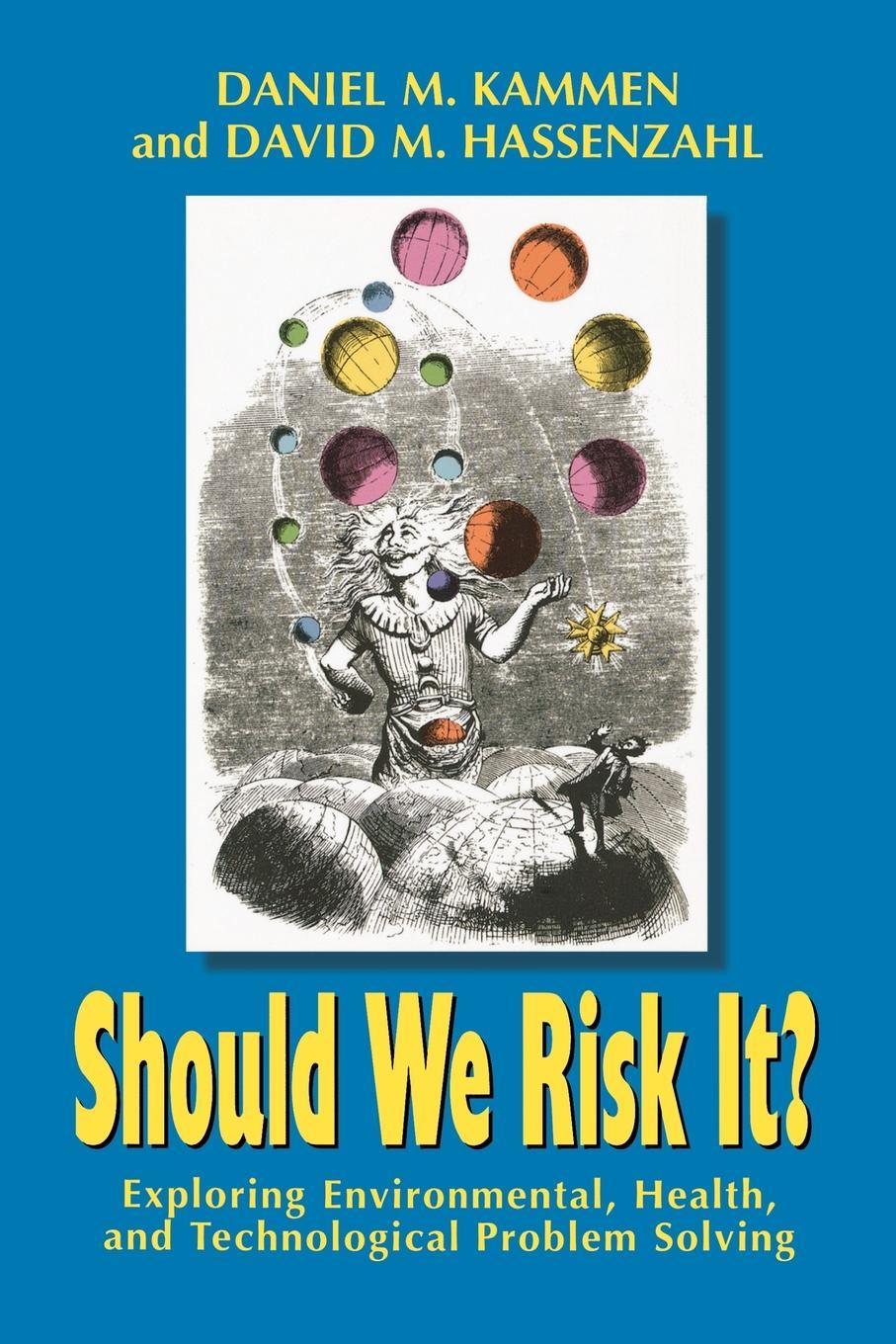
How dangerous is smoking? What are the risks of nuclear power or of climate change? What are the chances of dying on an airplane? More importantly, how do we use this information once we have it? The demand for risk analysts who are able to answer such questions has grown exponentially in recent years. Yet programs to train these analysts have not kept pace. In this book, Daniel Kammen and David Hassenzahl address that problem. They draw together, organize, and seek to unify previously disparate theories and methodologies connected with risk analysis for health, environmental, and technological problems. They also provide a rich variety of case studies and worked problems, meeting the growing need for an up-to-date book suitable for teaching and individual learning.
The specific problems addressed in the book include order-of-magnitude estimation, dose-response calculations, exposure assessment, extrapolations and forecasts based on experimental or natural data, modeling and the problems of complexity in models, fault-tree analysis, managing and estimating uncertainty, and social theories of risk and risk communication. The authors cover basic and intermediate statistics, as well as Monte Carlo methods, Bayesian analysis, and various techniques of uncertainty and forecast evaluation. The volume's unique approach will appeal to a wide range of people in environmental science and studies, health care, and engineering, as well as to policy makers confronted by the increasing number of decisions requiring risk and cost/benefit analysis. Should We Risk It? will become a standard text in courses involving risk and decision analysis and in courses of applied statistics with a focus on environmental and technological issues.
Zahle einfach mit Karte, Klarna, Apple Pay oder Google Pay. Nicht zufrieden? Du hast immer ein 14-tägiges Widerrufsrecht. Lies mehr in unseren AGB. Hast du Fragen, schreib uns eine E-Mail an hello@memmo.org.
Memmo macht das Lernen einfacher – wo auch immer du bist. Bei uns findest du deine Kursbücher und smarte Lerntools an einem Ort: Zusammenfassungen, Quizzes, Podcasts und Lernkarten. Und Ted, dein Lernbuddy, beantwortet alles, was du wissen möchtest. Über 50.000 Studierende lernen bereits hier – gemacht, damit du schneller lernst und weniger Stress hast.