
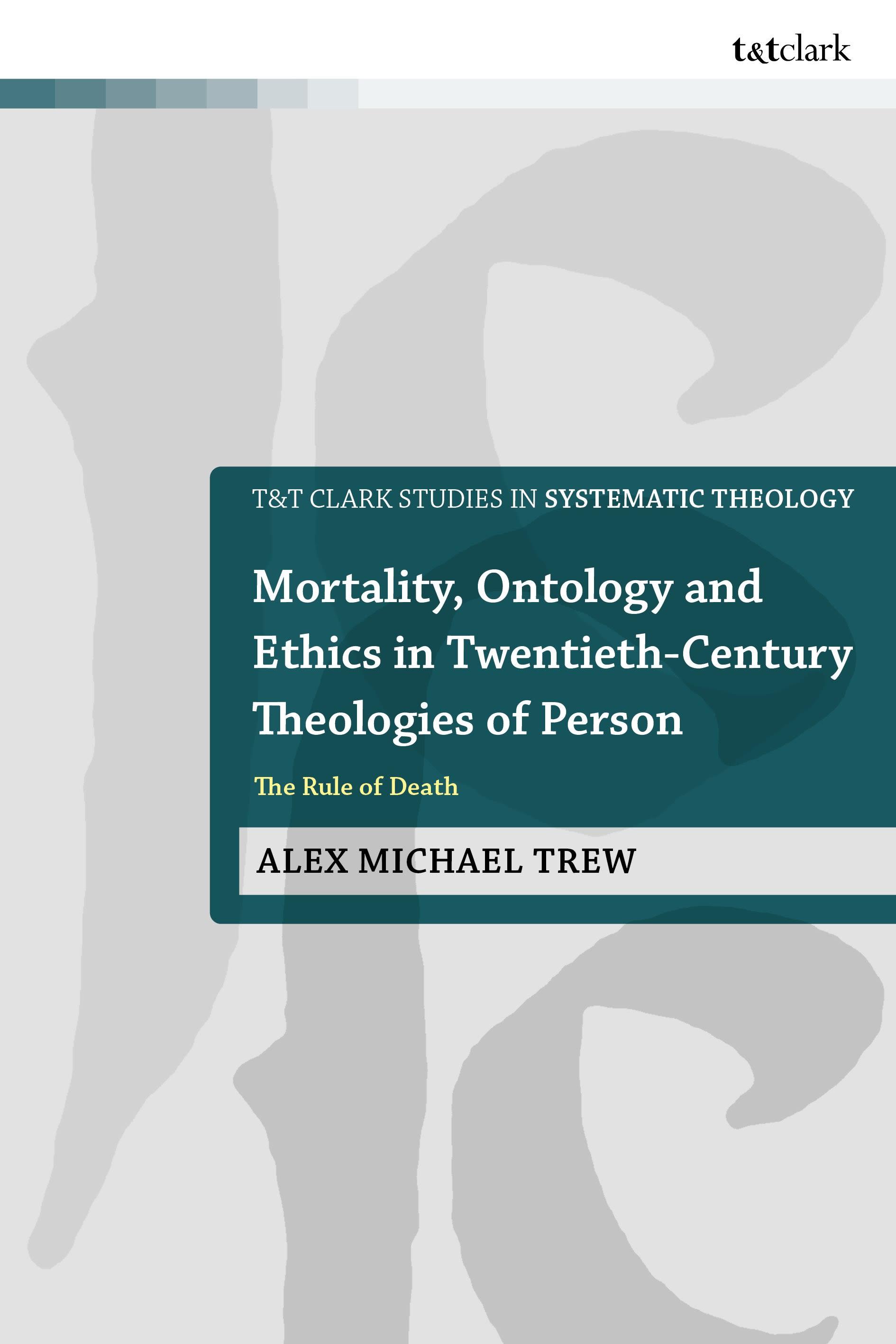
This book considers what it means to die.
Trew achieves this through the prism of two significant twentieth century thinkers: Dietrich Bonhoeffer and Christos Yannaras. In doing so, he continues an esteemed tradition of works considering the theology and philosophy of death, including Karl Rahner's On the Theology of Death and Martin Heidegger's Being and Time. However, Trew is also breaking new ground: this is the first English language book to compare the late Christos Yannaras with major western theologians, making this an innovative and ecumenical work.
Different as they are, both Bonhoeffer and Yannaras are well-known for their robustly relational views of human existence. Trew elegantly guides us through a systematic unfolding of how they both believe that, in and through Christ and his church, human life stands newly formed and empowered before the radical individuation of death.
Bonhoeffer and Yannaras both see in the means for modern theological anthropology to address the asymmetrical togetherness of historical existence and divine transcendence. Trew highlights how this is crucial for a redescription of what individual death might mean in the context of the church as 'communion'. In doing so, he constructively recasts Heidegger's best insights about anticipating death with Bohoeffer and Yannaras.
Ultimately, Trew powerfully argues for the Christological conversion of human creaturely passivity into recapitulative activity wherein human beings, by their 'daily dying' take up death's power and transfigure it into new life. Death becomes entangled within a distinctively and irreducibly relational vision of the human being.
Trew achieves this through the prism of two significant twentieth century thinkers: Dietrich Bonhoeffer and Christos Yannaras. In doing so, he continues an esteemed tradition of works considering the theology and philosophy of death, including Karl Rahner's On the Theology of Death and Martin Heidegger's Being and Time. However, Trew is also breaking new ground: this is the first English language book to compare the late Christos Yannaras with major western theologians, making this an innovative and ecumenical work.
Different as they are, both Bonhoeffer and Yannaras are well-known for their robustly relational views of human existence. Trew elegantly guides us through a systematic unfolding of how they both believe that, in and through Christ and his church, human life stands newly formed and empowered before the radical individuation of death.
Bonhoeffer and Yannaras both see in the means for modern theological anthropology to address the asymmetrical togetherness of historical existence and divine transcendence. Trew highlights how this is crucial for a redescription of what individual death might mean in the context of the church as 'communion'. In doing so, he constructively recasts Heidegger's best insights about anticipating death with Bohoeffer and Yannaras.
Ultimately, Trew powerfully argues for the Christological conversion of human creaturely passivity into recapitulative activity wherein human beings, by their 'daily dying' take up death's power and transfigure it into new life. Death becomes entangled within a distinctively and irreducibly relational vision of the human being.
Zahle einfach mit Karte, Klarna, Apple Pay oder Google Pay. Nicht zufrieden? Du hast immer ein 14-tägiges Widerrufsrecht. Lies mehr in unseren AGB. Hast du Fragen, schreib uns eine E-Mail an hello@memmo.org.
Memmo macht das Lernen einfacher – wo auch immer du bist. Bei uns findest du deine Kursbücher und smarte Lerntools an einem Ort: Zusammenfassungen, Quizzes, Podcasts und Lernkarten. Und Ted, dein Lernbuddy, beantwortet alles, was du wissen möchtest. Über 50.000 Studierende lernen bereits hier – gemacht, damit du schneller lernst und weniger Stress hast.