
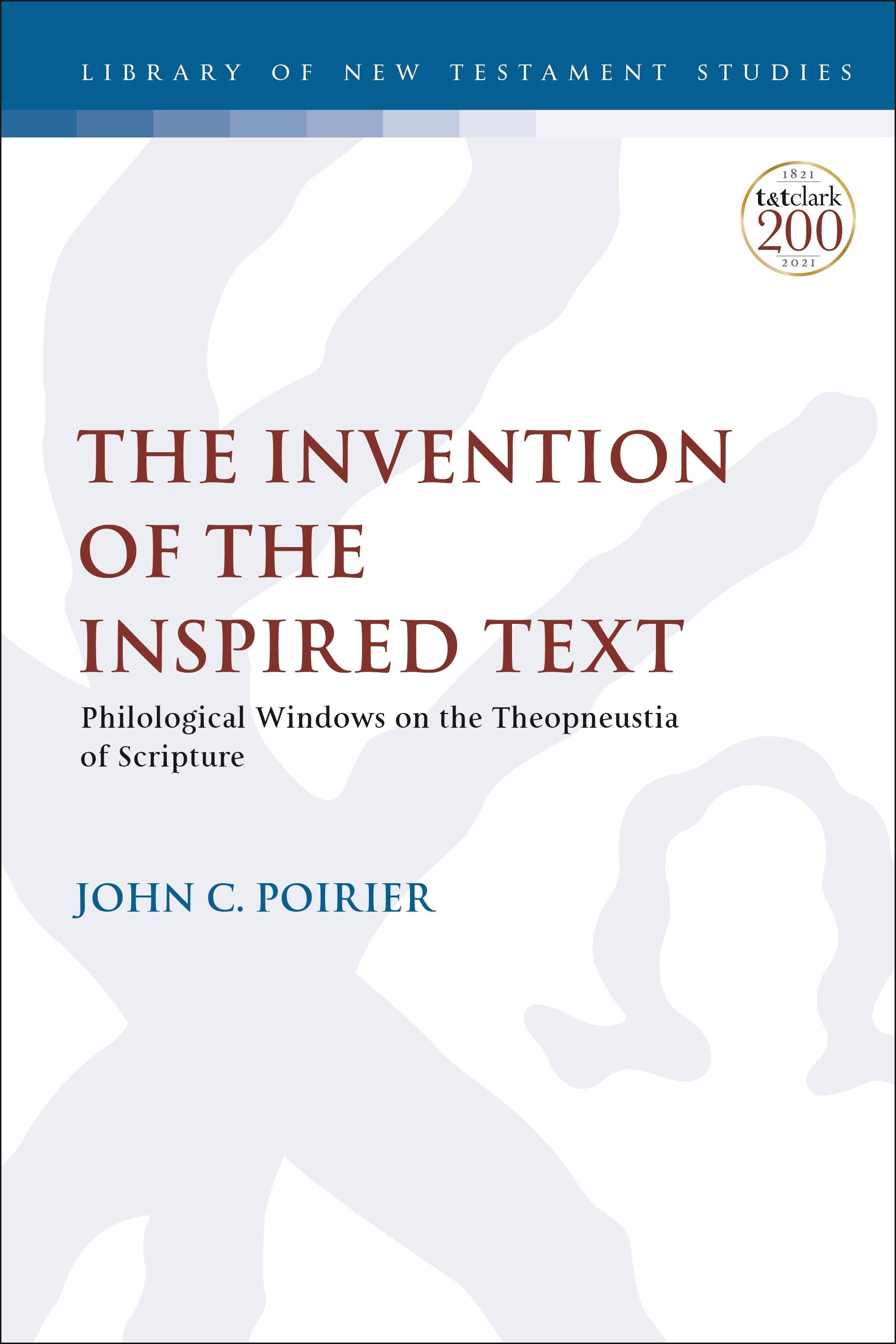
John C. Poirier examines the “theopneustic” nature of the Scripture, as a response to the view that “inspiration” lies at the heart of most contemporary Christian theology. In contrast to the traditional rendering of the Greek word theopneustos as “God-inspired” in 2 Tim 3:16, Poirier argues that a close look at first- and second-century uses of theopneustos reveals that the traditional inspirationist understanding of the term did not arise until the time of Origen in the early third century CE, and that in every pre-Origen use of theopneustos the word instead means “life-giving.”
Poirier thus conducts a detailed investigation of theopneustos as it appears in the fifth Sibylline Oracle, the Testament of Abraham, Vettius Valens, Pseudo-Plutarch (Placita Philosophorum), and Pseudo-Phocylides, all of whom understand the word to mean “life-giving.” He also studies the use of the cognate term theopnous in Numenius, the Corpus Hermeticum, on an inscription at the Great Sphinx of Giza, and on an inscription at a nymphaeum at Laodicea on the Lycus. Poirier argues that a rendering of “life-giving” also fits better within the context of 2 Tim 3:16, and that this meaning survived late enough to figure in a fifth-century work by Nonnus of Panopolis. He further traces the pre-Origen use of theopneustos among the Church Fathers. Poirier concludes by addressing the implication of rethinking the traditional understanding of Scripture, stressing that the lack of “God-inspired” scripture ultimately does not affect the truth status of the gospel as preached by the apostles.
Poirier thus conducts a detailed investigation of theopneustos as it appears in the fifth Sibylline Oracle, the Testament of Abraham, Vettius Valens, Pseudo-Plutarch (Placita Philosophorum), and Pseudo-Phocylides, all of whom understand the word to mean “life-giving.” He also studies the use of the cognate term theopnous in Numenius, the Corpus Hermeticum, on an inscription at the Great Sphinx of Giza, and on an inscription at a nymphaeum at Laodicea on the Lycus. Poirier argues that a rendering of “life-giving” also fits better within the context of 2 Tim 3:16, and that this meaning survived late enough to figure in a fifth-century work by Nonnus of Panopolis. He further traces the pre-Origen use of theopneustos among the Church Fathers. Poirier concludes by addressing the implication of rethinking the traditional understanding of Scripture, stressing that the lack of “God-inspired” scripture ultimately does not affect the truth status of the gospel as preached by the apostles.
Zahle einfach mit Karte, Klarna, Apple Pay oder Google Pay. Nicht zufrieden? Du hast immer ein 14-tägiges Widerrufsrecht. Lies mehr in unseren AGB. Hast du Fragen, schreib uns eine E-Mail an hello@memmo.org.
Memmo macht das Lernen einfacher – wo auch immer du bist. Bei uns findest du deine Kursbücher und smarte Lerntools an einem Ort: Zusammenfassungen, Quizzes, Podcasts und Lernkarten. Und Ted, dein Lernbuddy, beantwortet alles, was du wissen möchtest. Über 50.000 Studierende lernen bereits hier – gemacht, damit du schneller lernst und weniger Stress hast.