
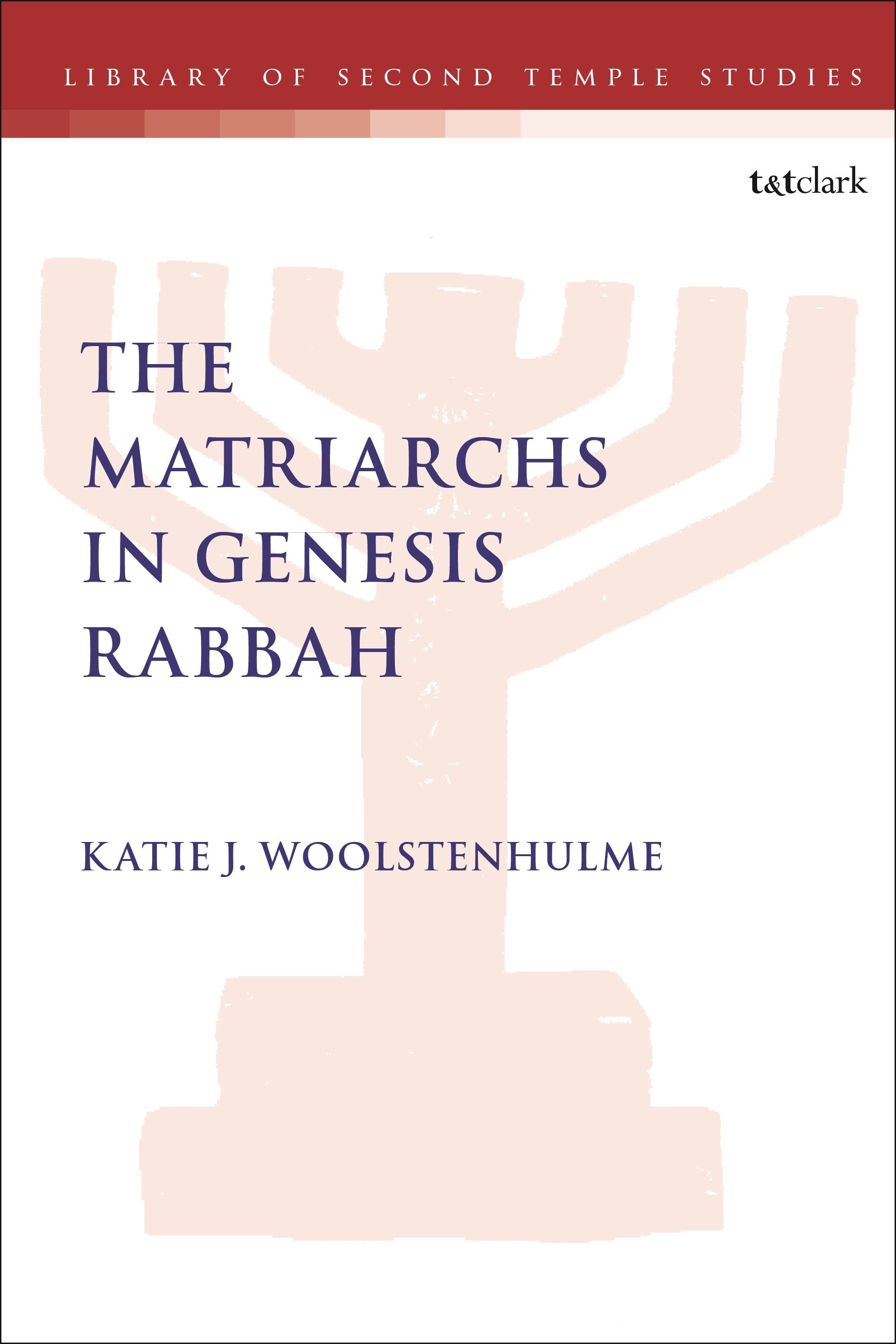
Katie J. Woolstenhulme considers the pertinent questions: Who were 'the matriarchs', and what did the rabbis think about them? Whilst scholarship on the role of women in the Bible and Rabbinic Judaism has increased, the authoritative group of women known as 'the matriarchs' has been neglected. This volume consequently focuses on the role and status of the biblical matriarchs in Genesis Rabbah, the fifth century CE rabbinic commentary on Genesis.
Woolstenhulme begins by discussing the nature of midrash and introducing Genesis Rabbah; before exploring the term 'the matriarchs' and its development through early exegetical literature, culminating in the emergence of two definitions of the term in Genesis Rabbah – 'the matriarchs' as the legitimate wives of Israel's patriarchs, and 'the matriarchs' as a reference to Jacob's four wives, who bore Israel's tribal ancestors. She then moves to discuss 'the matriarchal cycle' in Genesis Rabbah with its three stages of barrenness; motherhood; and succession. Finally, Woolstenhulme considers Genesis Rabbah's portrayal of the matriarchs as representatives of the female sex, exploring positive and negative rabbinic attitudes towards women with a focus on piety, prayer, praise, beauty and sexuality, and the matriarchs' exemplification of stereotypical, negative female traits. This volume concludes that for the ancient rabbis, the matriarchs were the historical mothers of Israel, bearing covenant sons, but also the present mothers of Israel, continuing to influence Jewish identity.
Woolstenhulme begins by discussing the nature of midrash and introducing Genesis Rabbah; before exploring the term 'the matriarchs' and its development through early exegetical literature, culminating in the emergence of two definitions of the term in Genesis Rabbah – 'the matriarchs' as the legitimate wives of Israel's patriarchs, and 'the matriarchs' as a reference to Jacob's four wives, who bore Israel's tribal ancestors. She then moves to discuss 'the matriarchal cycle' in Genesis Rabbah with its three stages of barrenness; motherhood; and succession. Finally, Woolstenhulme considers Genesis Rabbah's portrayal of the matriarchs as representatives of the female sex, exploring positive and negative rabbinic attitudes towards women with a focus on piety, prayer, praise, beauty and sexuality, and the matriarchs' exemplification of stereotypical, negative female traits. This volume concludes that for the ancient rabbis, the matriarchs were the historical mothers of Israel, bearing covenant sons, but also the present mothers of Israel, continuing to influence Jewish identity.
Seiten: 240
Kategorie: Religion & Teologi
e-ISBN: 9780567695765
Versandgewicht: 1.2 kg
Versand in: 1-2 Tage
Zahle einfach mit Karte, Klarna, Apple Pay oder Google Pay. Nicht zufrieden? Du hast immer ein 14-tägiges Widerrufsrecht. Lies mehr in unseren AGB. Hast du Fragen, schreib uns eine E-Mail an hello@memmo.org.
Memmo macht das Lernen einfacher – wo auch immer du bist. Bei uns findest du deine Kursbücher und smarte Lerntools an einem Ort: Zusammenfassungen, Quizzes, Podcasts und Lernkarten. Und Ted, dein Lernbuddy, beantwortet alles, was du wissen möchtest. Über 50.000 Studierende lernen bereits hier – gemacht, damit du schneller lernst und weniger Stress hast.