
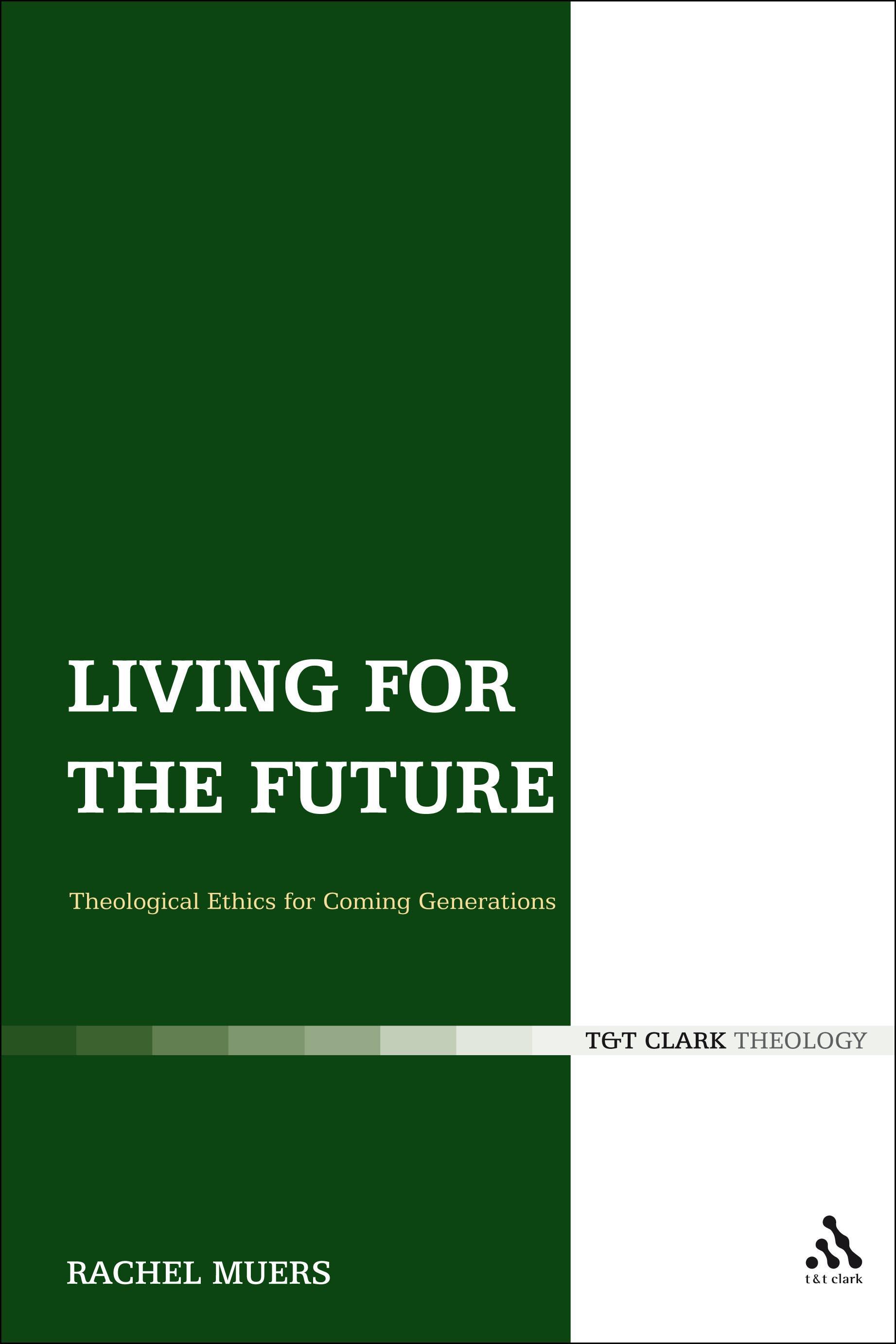
Our relationship to future generations raises fundamental issues for ethical thought, to which a Christian theological response is both possible and significant. A relationship to future generations is implicitly central to many of today's most public controversies - over environmental protection, genetic research, and the purpose of education, to name but a few; but it has received little explicit or extended consideration.
In Living for the Future Rachel Muers argues and seeks to demonstrate that to consider future generations as ethically significant is not simply to extend an existing ethical framework, but to rethink how ethics is done. Doing intergenerationally responsible theology and ethics means paying attention to how people are formed as theological and ethical reasoners (reasoners about the good), how social practices of deliberation about the good are maintained and developed, and how all of this relates to an understanding of the world as the sphere of God's transforming action. In other words, an intergenerationally responsible theological ethics will pay attention to the ethics, and the spirituality, of "ethics" itself.
Her account of the ethical relation to future generations centres on three key concepts: "choosing life" (see Deut 30:19); "keeping the sources open"; and "sustaining fruitful contexts". These concepts are developed theologically and in engagement with extra-theological conversations on intergenerational responsibility. She shows how they take up and move beyond concerns expressed in those conversations - for "survival", for the right distribution of resources, and for the maintenance of human values.
In Living for the Future Rachel Muers argues and seeks to demonstrate that to consider future generations as ethically significant is not simply to extend an existing ethical framework, but to rethink how ethics is done. Doing intergenerationally responsible theology and ethics means paying attention to how people are formed as theological and ethical reasoners (reasoners about the good), how social practices of deliberation about the good are maintained and developed, and how all of this relates to an understanding of the world as the sphere of God's transforming action. In other words, an intergenerationally responsible theological ethics will pay attention to the ethics, and the spirituality, of "ethics" itself.
Her account of the ethical relation to future generations centres on three key concepts: "choosing life" (see Deut 30:19); "keeping the sources open"; and "sustaining fruitful contexts". These concepts are developed theologically and in engagement with extra-theological conversations on intergenerational responsibility. She shows how they take up and move beyond concerns expressed in those conversations - for "survival", for the right distribution of resources, and for the maintenance of human values.
Seiten: 240
Kategorie: Religion & Teologi
e-ISBN: 9780567006448
Versandgewicht: 1.2 kg
Versand in: 1-2 Tage
Zahle einfach mit Karte, Klarna, Apple Pay oder Google Pay. Nicht zufrieden? Du hast immer ein 14-tägiges Widerrufsrecht. Lies mehr in unseren AGB. Hast du Fragen, schreib uns eine E-Mail an hello@memmo.org.
Memmo macht das Lernen einfacher – wo auch immer du bist. Bei uns findest du deine Kursbücher und smarte Lerntools an einem Ort: Zusammenfassungen, Quizzes, Podcasts und Lernkarten. Und Ted, dein Lernbuddy, beantwortet alles, was du wissen möchtest. Über 50.000 Studierende lernen bereits hier – gemacht, damit du schneller lernst und weniger Stress hast.