
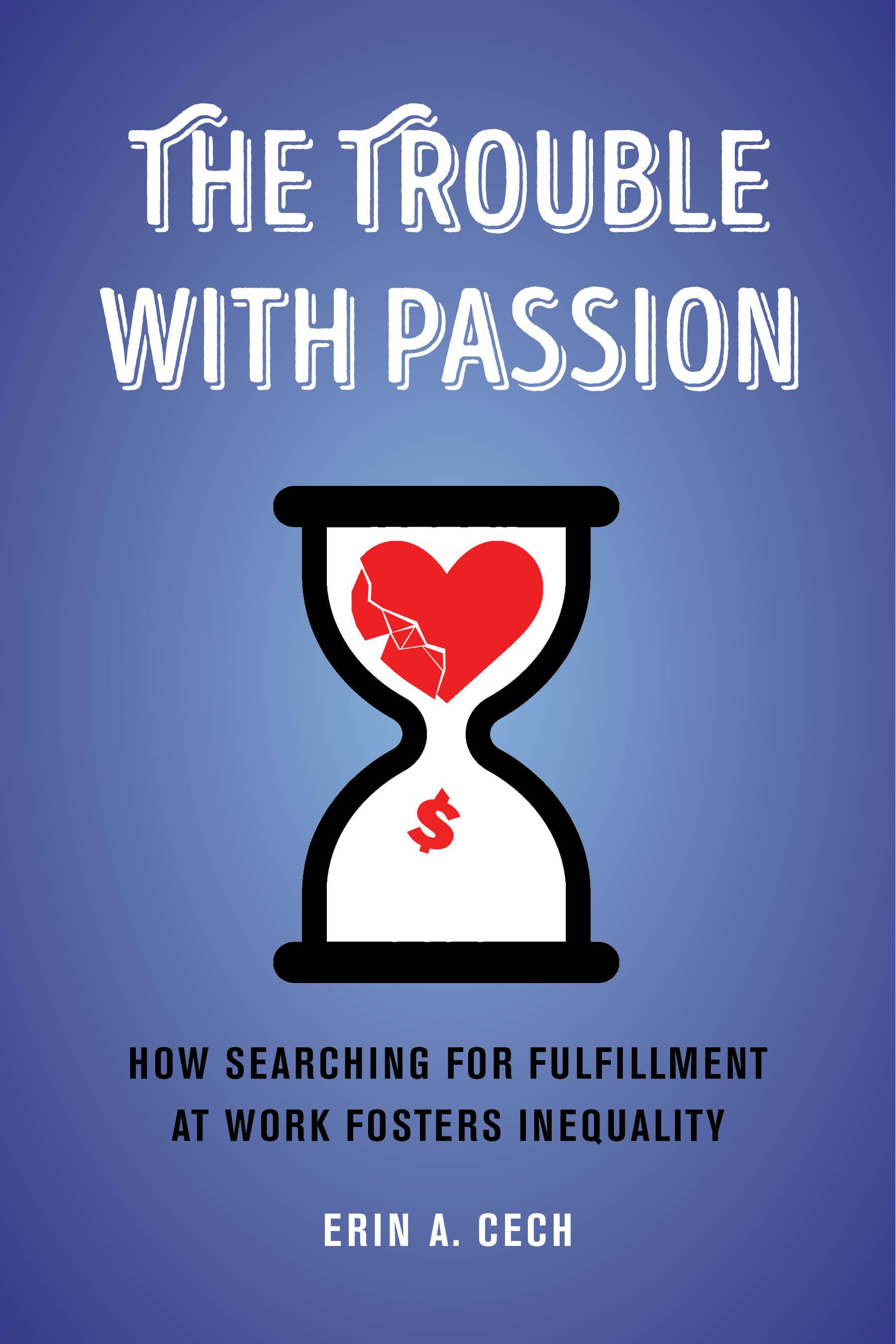
Probing the ominous side of career advice to "follow your passion," this data-driven study explains how the passion principle fails us and perpetuates inequality by class, gender, and race; and it suggests how we can reconfigure our relationships to paid work.
"Follow your passion" is a popular mantra for career decision-making in the United States. Passion-seeking seems like a promising path for avoiding the potential drudgery of a life of paid work, but this "passion principle"—seductive as it is—does not universally translate. The Trouble with Passion reveals the significant downside of the passion principle: the concept helps culturally legitimize and reproduce an exploited, overworked white-collar labor force and broadly serves to reinforce class, race, and gender segregation and inequality.
Grounding her investigation in the paradoxical tensions between capitalism's demand for ideal workers and our cultural expectations for self-expression, sociologist Erin A. Cech draws on interviews that follow students from college into the workforce, surveys of US workers, and experimental data to explain why the passion principle is such an attractive, if deceptive, career decision-making mantra, particularly for the college educated. Passion-seeking presumes middle-class safety nets and springboards and penalizes first-generation and working-class young adults who seek passion without them. The ripple effects of this mantra undermine the promise of college as a tool for social and economic mobility. The passion principle also feeds into a culture of overwork, encouraging white-collar workers to tolerate precarious employment and gladly sacrifice time, money, and leisure for work they are passionate about. And potential employers covet, but won't compensate, passion among job applicants. This book asks, What does it take to center passion in career decisions? Who gets ahead and who gets left behind by passion-seeking? The Trouble with Passion calls for citizens, educators, college administrators, and industry leaders to reconsider how we think about good jobs and, by extension, good lives.
"Follow your passion" is a popular mantra for career decision-making in the United States. Passion-seeking seems like a promising path for avoiding the potential drudgery of a life of paid work, but this "passion principle"—seductive as it is—does not universally translate. The Trouble with Passion reveals the significant downside of the passion principle: the concept helps culturally legitimize and reproduce an exploited, overworked white-collar labor force and broadly serves to reinforce class, race, and gender segregation and inequality.
Grounding her investigation in the paradoxical tensions between capitalism's demand for ideal workers and our cultural expectations for self-expression, sociologist Erin A. Cech draws on interviews that follow students from college into the workforce, surveys of US workers, and experimental data to explain why the passion principle is such an attractive, if deceptive, career decision-making mantra, particularly for the college educated. Passion-seeking presumes middle-class safety nets and springboards and penalizes first-generation and working-class young adults who seek passion without them. The ripple effects of this mantra undermine the promise of college as a tool for social and economic mobility. The passion principle also feeds into a culture of overwork, encouraging white-collar workers to tolerate precarious employment and gladly sacrifice time, money, and leisure for work they are passionate about. And potential employers covet, but won't compensate, passion among job applicants. This book asks, What does it take to center passion in career decisions? Who gets ahead and who gets left behind by passion-seeking? The Trouble with Passion calls for citizens, educators, college administrators, and industry leaders to reconsider how we think about good jobs and, by extension, good lives.
Zahle einfach mit Karte, Klarna, Apple Pay oder Google Pay. Nicht zufrieden? Du hast immer ein 14-tägiges Widerrufsrecht. Lies mehr in unseren AGB. Hast du Fragen, schreib uns eine E-Mail an hello@memmo.org.
Memmo macht das Lernen einfacher – wo auch immer du bist. Bei uns findest du deine Kursbücher und smarte Lerntools an einem Ort: Zusammenfassungen, Quizzes, Podcasts und Lernkarten. Und Ted, dein Lernbuddy, beantwortet alles, was du wissen möchtest. Über 50.000 Studierende lernen bereits hier – gemacht, damit du schneller lernst und weniger Stress hast.
Das könnte dir auch gefallen
Buch kaufen0