
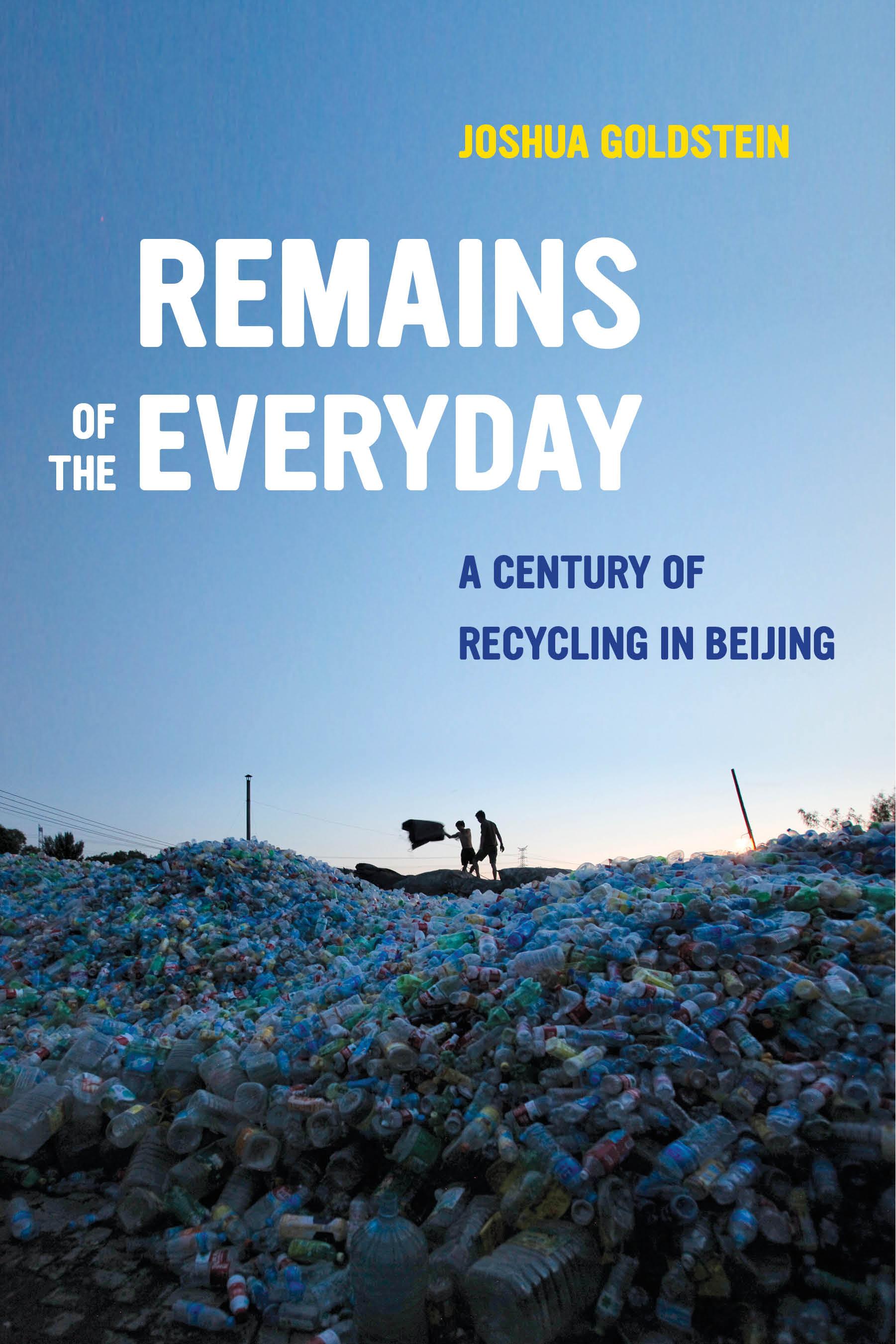
Remains of the Everyday traces the changing material culture and industrial ecology of China through the lens of recycling. Over the last century, waste recovery and secondhand goods markets have been integral to Beijing’s economic functioning and cultural identity, and acts of recycling have figured centrally in the ideological imagination of modernity and citizenship. On the one hand, the Chinese state has repeatedly promoted acts of voluntary recycling as exemplary of conscientious citizenship. On the other, informal recycling networks—from the night soil carriers of the Republican era to the collectors of plastic and cardboard in Beijing’s neighborhoods today—have been represented as undisciplined, polluting, and technologically primitive due to the municipal government’s failure to control them. The result, Joshua Goldstein argues, is the repeatedly re-inscribed exclusion of waste workers from formations of modern urban citizenship as well as the intrinsic liminality of recycling itself as an economic process.
Zahle einfach mit Karte, Klarna, Apple Pay oder Google Pay. Nicht zufrieden? Du hast immer ein 14-tägiges Widerrufsrecht. Lies mehr in unseren AGB. Hast du Fragen, schreib uns eine E-Mail an hello@memmo.org.
Memmo macht das Lernen einfacher – wo auch immer du bist. Bei uns findest du deine Kursbücher und smarte Lerntools an einem Ort: Zusammenfassungen, Quizzes, Podcasts und Lernkarten. Und Ted, dein Lernbuddy, beantwortet alles, was du wissen möchtest. Über 50.000 Studierende lernen bereits hier – gemacht, damit du schneller lernst und weniger Stress hast.
Das könnte dir auch gefallen
Buch kaufen0