
“I worked in a trailer that ICE had set aside for conversations between the women and the attorneys. While we talked, their children, most of whom seemed to be between three and eight years old, played with a few toys on the floor. It was hard for me to get my head around the idea of a jail full of toddlers, but there they were.”
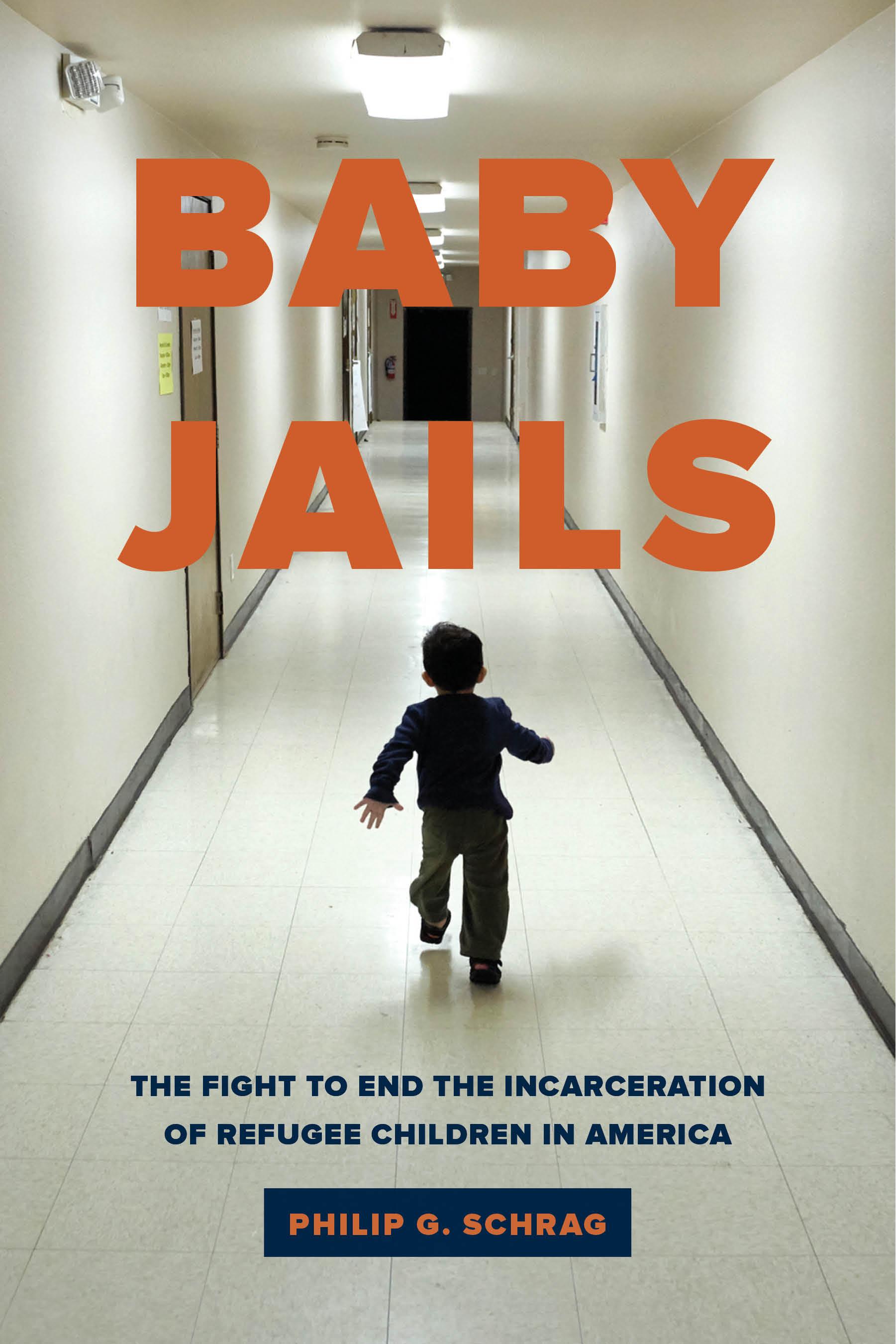
For decades, advocates for refugee children and families have fought to end the U.S. government’s practice of jailing children and families for months, or even years, until overburdened immigration courts could rule on their claims for asylum. Baby Jails is the history of that legal and political struggle. Philip G. Schrag, the director of Georgetown University’s asylum law clinic, takes readers through thirty years of conflict over which refugee advocates resisted the detention of migrant children. The saga began during the Reagan administration when 15-year-old Jenny Lisette Flores languished in a Los Angeles motel that the government had turned into a makeshift jail by draining the swimming pool, barring the windows, and surrounding the building with barbed wire. What became known as the Flores Settlement Agreement was still at issue years later, when the Trump administration resorted to the forced separation of families after the courts would not allow long-term jailing of the children. Schrag provides recommendations for the reform of a system that has brought anguish and trauma to thousands of parents and children. Provocative and timely, Baby Jails exposes the ongoing struggle between the U.S. government and immigrant advocates over the duration and conditions of confinement of children who seek safety in America.
For decades, advocates for refugee children and families have fought to end the U.S. government’s practice of jailing children and families for months, or even years, until overburdened immigration courts could rule on their claims for asylum. Baby Jails is the history of that legal and political struggle. Philip G. Schrag, the director of Georgetown University’s asylum law clinic, takes readers through thirty years of conflict over which refugee advocates resisted the detention of migrant children. The saga began during the Reagan administration when 15-year-old Jenny Lisette Flores languished in a Los Angeles motel that the government had turned into a makeshift jail by draining the swimming pool, barring the windows, and surrounding the building with barbed wire. What became known as the Flores Settlement Agreement was still at issue years later, when the Trump administration resorted to the forced separation of families after the courts would not allow long-term jailing of the children. Schrag provides recommendations for the reform of a system that has brought anguish and trauma to thousands of parents and children. Provocative and timely, Baby Jails exposes the ongoing struggle between the U.S. government and immigrant advocates over the duration and conditions of confinement of children who seek safety in America.
Zahle einfach mit Karte, Klarna, Apple Pay oder Google Pay. Nicht zufrieden? Du hast immer ein 14-tägiges Widerrufsrecht. Lies mehr in unseren AGB. Hast du Fragen, schreib uns eine E-Mail an hello@memmo.org.
Memmo macht das Lernen einfacher – wo auch immer du bist. Bei uns findest du deine Kursbücher und smarte Lerntools an einem Ort: Zusammenfassungen, Quizzes, Podcasts und Lernkarten. Und Ted, dein Lernbuddy, beantwortet alles, was du wissen möchtest. Über 50.000 Studierende lernen bereits hier – gemacht, damit du schneller lernst und weniger Stress hast.
Das könnte dir auch gefallen
Buch kaufen0