
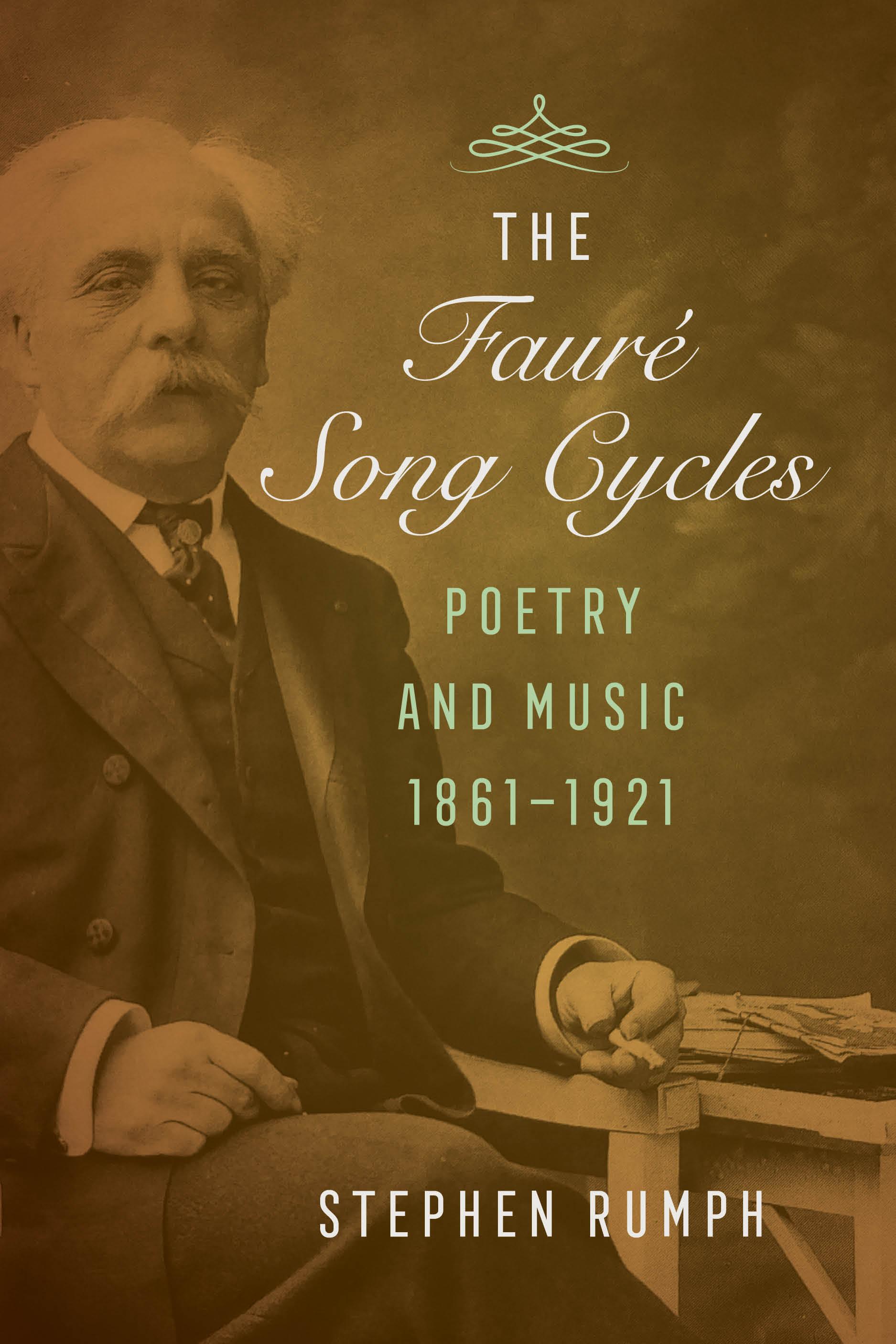
Gabriel Fauré’s mélodies offer an inexhaustible variety of style and expression that have made them the foundation of the French art song repertoire. During the second half of his long career, Fauré composed all but a handful of his songs within six carefully integrated cycles. Fauré moved systematically through his poetic contemporaries, exhausting Baudelaire’s Les fleurs du mal before immersing himself in the Parnassian poets. He would set nine poems by Armand Silvestre in swift succession (1878-84), seventeen by Paul Verlaine (1887-94), and eighteen by Charles Van Lerberghe (1906-14). As an artist deeply engaged with some of the most important cultural issues of the period, Fauré reimagined his musical idiom with each new poet and school, and his song cycles show the same sensitivity to the poetic material. Far more than Debussy, Ravel, or Poulenc, he crafted his song cycles as integrated works, reordering poems freely and using narratives, key schemes, and even leitmotifs to unify the individual songs. The Fauré Song Cycles explores the peculiar vision behind each synthesis of music and verse, revealing the astonishing imagination and insight of Fauré’s musical readings. This book offers not only close readings of Fauré’s musical works but an interdisciplinary study of how he responded to the changing schools and aesthetic currents of French poetry.
Zahle einfach mit Karte, Klarna, Apple Pay oder Google Pay. Nicht zufrieden? Du hast immer ein 14-tägiges Widerrufsrecht. Lies mehr in unseren AGB. Hast du Fragen, schreib uns eine E-Mail an hello@memmo.org.
Memmo macht das Lernen einfacher – wo auch immer du bist. Bei uns findest du deine Kursbücher und smarte Lerntools an einem Ort: Zusammenfassungen, Quizzes, Podcasts und Lernkarten. Und Ted, dein Lernbuddy, beantwortet alles, was du wissen möchtest. Über 50.000 Studierende lernen bereits hier – gemacht, damit du schneller lernst und weniger Stress hast.