
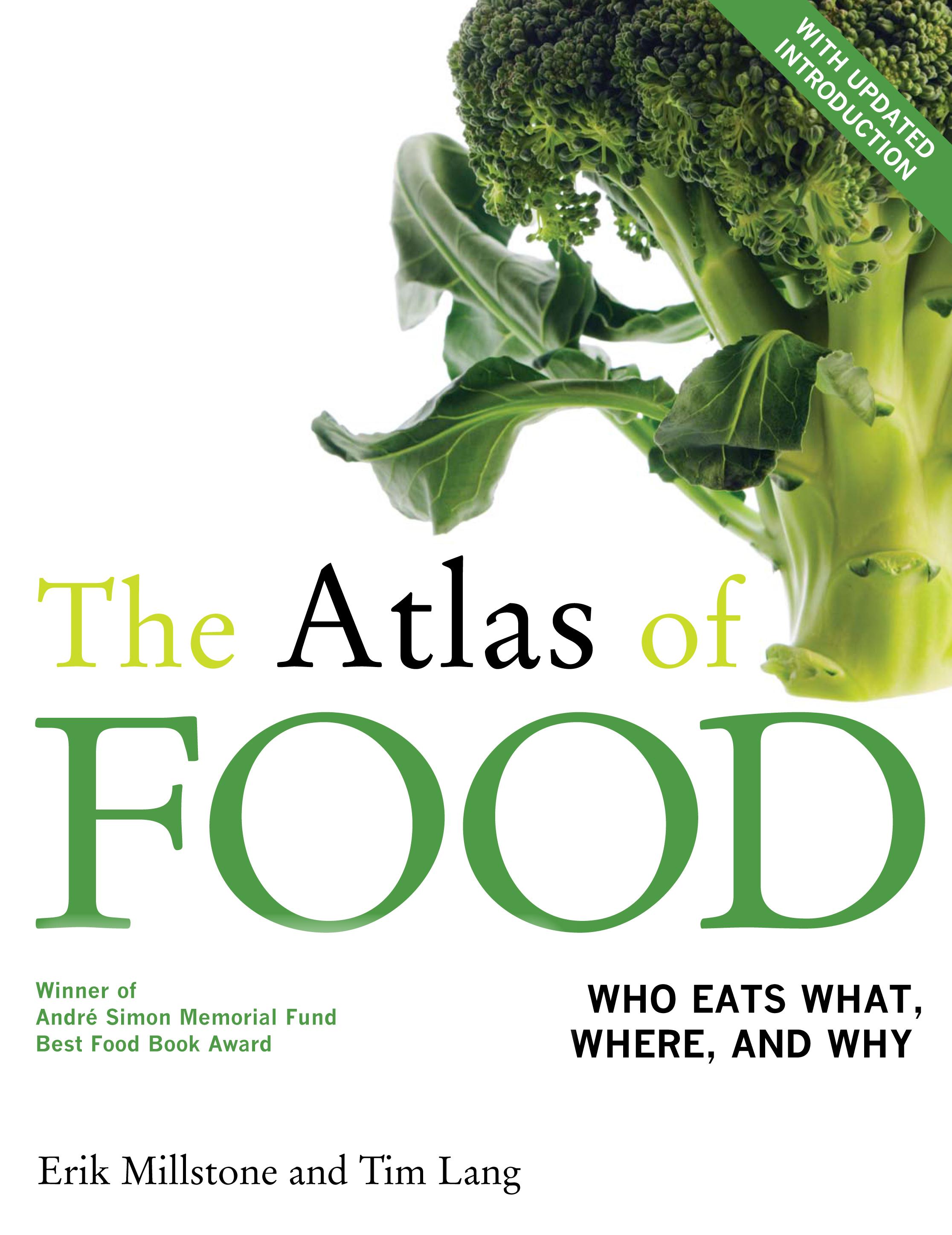
What we eat, where we eat, and how we eat: these questions are explored in this remarkable book, now with a new introduction contextualizing the atlas for 2013 and beyond.
By providing an up-to-date and visually appealing understanding of important issues around global food and agriculture, The Atlas of Food maps out broad areas of investigation—contamination of food and water, overnutrition, micronutrient deficiency, processing, farming, and trade—to offer a concise overview of today's food and farming concerns. Buttressed by engaging prose and vivid graphics, Erik Millstone and Tim Lang convincingly argue that human progress depends on resolving global inequality and creating a more sustainable food production system.
By providing an up-to-date and visually appealing understanding of important issues around global food and agriculture, The Atlas of Food maps out broad areas of investigation—contamination of food and water, overnutrition, micronutrient deficiency, processing, farming, and trade—to offer a concise overview of today's food and farming concerns. Buttressed by engaging prose and vivid graphics, Erik Millstone and Tim Lang convincingly argue that human progress depends on resolving global inequality and creating a more sustainable food production system.
Zahle einfach mit Karte, Klarna, Apple Pay oder Google Pay. Nicht zufrieden? Du hast immer ein 14-tägiges Widerrufsrecht. Lies mehr in unseren AGB. Hast du Fragen, schreib uns eine E-Mail an hello@memmo.org.
Memmo macht das Lernen einfacher – wo auch immer du bist. Bei uns findest du deine Kursbücher und smarte Lerntools an einem Ort: Zusammenfassungen, Quizzes, Podcasts und Lernkarten. Und Ted, dein Lernbuddy, beantwortet alles, was du wissen möchtest. Über 50.000 Studierende lernen bereits hier – gemacht, damit du schneller lernst und weniger Stress hast.
Das könnte dir auch gefallen
Buch kaufen0