
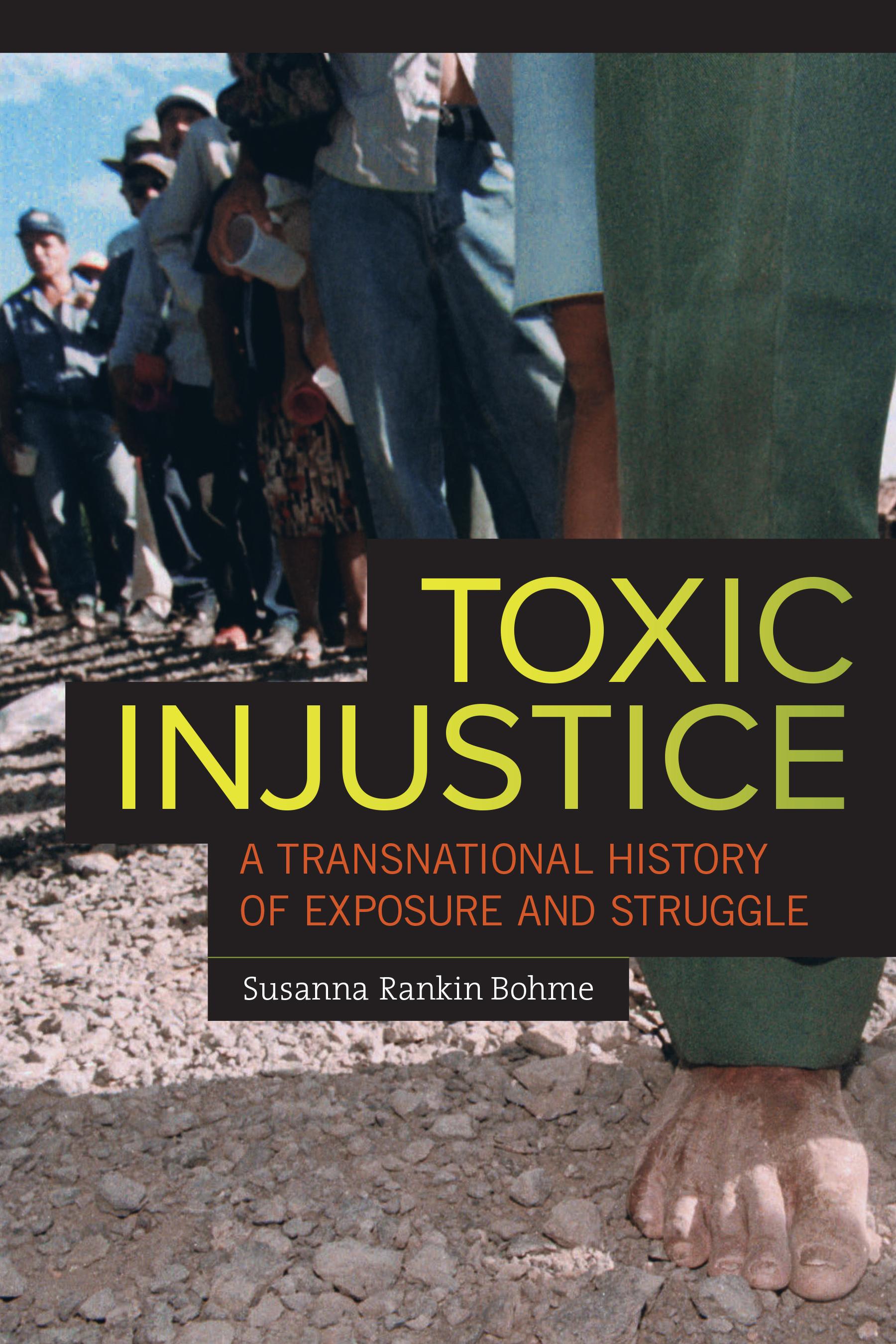
The pesticide dibromochloropropane, known as DBCP, was developed by the chemical companies Dow and Shell in the 1950s to target wormlike, soil-dwelling creatures called nematodes. Despite signs that the chemical was dangerous, it was widely used in U.S. agriculture and on Chiquita and Dole banana plantations in Central America. In the late 1970s, DBCP was linked to male sterility, but an uneven regulatory process left many workers—especially on Dole’s banana farms—exposed for years after health risks were known.
Susanna Rankin Bohme tells an intriguing, multilayered history that spans fifty years, highlighting the transnational reach of corporations and social justice movements. Toxic Injustice links health inequalities and worker struggles as it charts how people excluded from workplace and legal protections have found ways to challenge power structures and seek justice from states and transnational corporations alike.
Susanna Rankin Bohme tells an intriguing, multilayered history that spans fifty years, highlighting the transnational reach of corporations and social justice movements. Toxic Injustice links health inequalities and worker struggles as it charts how people excluded from workplace and legal protections have found ways to challenge power structures and seek justice from states and transnational corporations alike.
Zahle einfach mit Karte, Klarna, Apple Pay oder Google Pay. Nicht zufrieden? Du hast immer ein 14-tägiges Widerrufsrecht. Lies mehr in unseren AGB. Hast du Fragen, schreib uns eine E-Mail an hello@memmo.org.
Memmo macht das Lernen einfacher – wo auch immer du bist. Bei uns findest du deine Kursbücher und smarte Lerntools an einem Ort: Zusammenfassungen, Quizzes, Podcasts und Lernkarten. Und Ted, dein Lernbuddy, beantwortet alles, was du wissen möchtest. Über 50.000 Studierende lernen bereits hier – gemacht, damit du schneller lernst und weniger Stress hast.
Das könnte dir auch gefallen
Buch kaufen0