
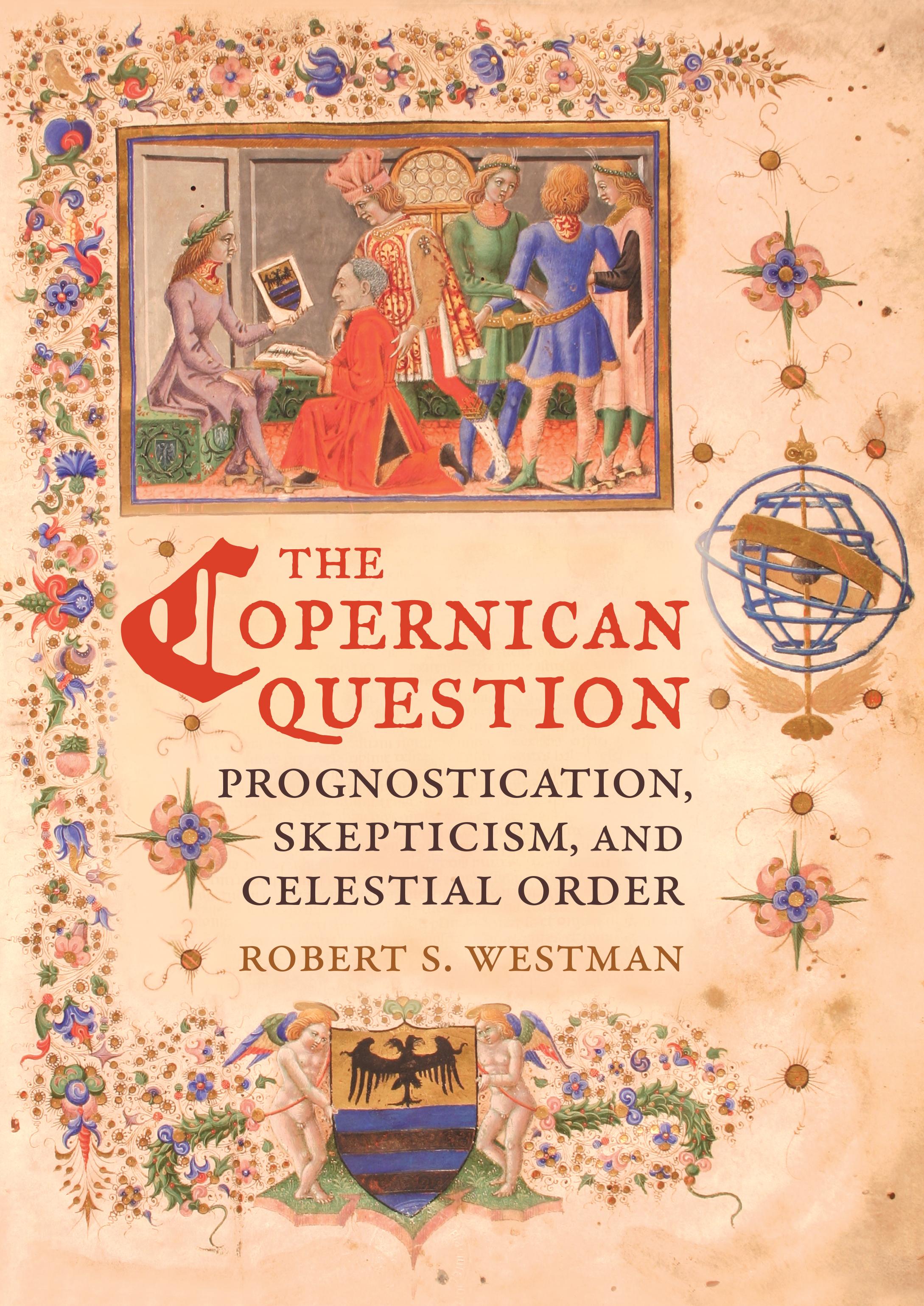
In 1543, Nicolaus Copernicus publicly defended his hypothesis that the earth is a planet and the sun a body resting near the center of a finite universe. But why did Copernicus make this bold proposal? And why did it matter? The Copernican Question reframes this pivotal moment in the history of science, centering the story on a conflict over the credibility of astrology that erupted in Italy just as Copernicus arrived in 1496. Copernicus engendered enormous resistance when he sought to protect astrology by reconstituting its astronomical foundations. Robert S. Westman shows that efforts to answer the astrological skeptics became a crucial unifying theme of the early modern scientific movement. His interpretation of this "long sixteenth century," from the 1490s to the 1610s, offers a new framework for understanding the great transformations in natural philosophy in the century that followed.
Zahle einfach mit Karte, Klarna, Apple Pay oder Google Pay. Nicht zufrieden? Du hast immer ein 14-tägiges Widerrufsrecht. Lies mehr in unseren AGB. Hast du Fragen, schreib uns eine E-Mail an hello@memmo.org.
Memmo macht das Lernen einfacher – wo auch immer du bist. Bei uns findest du deine Kursbücher und smarte Lerntools an einem Ort: Zusammenfassungen, Quizzes, Podcasts und Lernkarten. Und Ted, dein Lernbuddy, beantwortet alles, was du wissen möchtest. Über 50.000 Studierende lernen bereits hier – gemacht, damit du schneller lernst und weniger Stress hast.
Das könnte dir auch gefallen
Buch kaufen0