
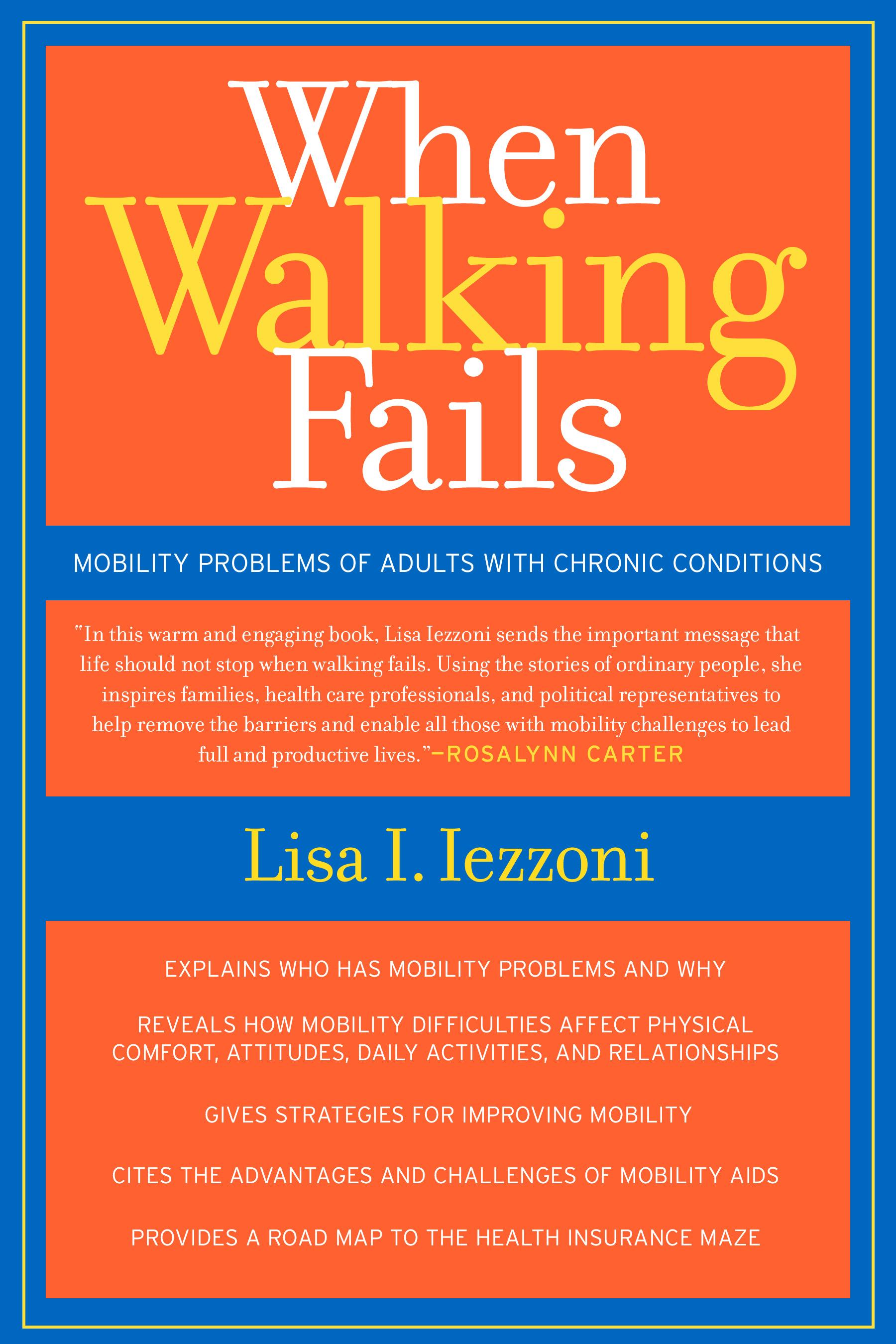
Roughly one in ten adult Americans find their walking slowed by progressive chronic conditions like arthritis, back problems, heart and lung diseases, and diabetes. In this passionate and deeply informed book, Lisa I. Iezzoni describes the personal experiences of and societal responses to adults whose mobility makes it difficult for them to live as they wish—partly because of physical and emotional conditions and partly because of persisting societal and environmental barriers.
Basing her conclusions on personal experience, a wealth of survey data, and extensive interviews with dozens of people from a wide social spectrum, Iezzoni explains who has mobility problems and why; how mobility difficulties affect people's physical comfort, attitudes, daily activities, and relationships with family and friends throughout their communities; strategies for improving mobility; and how the health care system addresses mobility difficulties, providing and financing services and assistive technologies.
Iezzoni claims that, although strategies exist to improve mobility, many people do not know where to turn for advice. She addresses the need to inform policymakers about areas where changes will better accommodate people with difficulty walking. This straightforward and engaging narrative clearly demonstrates that improving people's ability to move freely and independently will enhance overall health and quality of life, not only for these persons, but also for society as a whole.
Basing her conclusions on personal experience, a wealth of survey data, and extensive interviews with dozens of people from a wide social spectrum, Iezzoni explains who has mobility problems and why; how mobility difficulties affect people's physical comfort, attitudes, daily activities, and relationships with family and friends throughout their communities; strategies for improving mobility; and how the health care system addresses mobility difficulties, providing and financing services and assistive technologies.
Iezzoni claims that, although strategies exist to improve mobility, many people do not know where to turn for advice. She addresses the need to inform policymakers about areas where changes will better accommodate people with difficulty walking. This straightforward and engaging narrative clearly demonstrates that improving people's ability to move freely and independently will enhance overall health and quality of life, not only for these persons, but also for society as a whole.
Zahle einfach mit Karte, Klarna, Apple Pay oder Google Pay. Nicht zufrieden? Du hast immer ein 14-tägiges Widerrufsrecht. Lies mehr in unseren AGB. Hast du Fragen, schreib uns eine E-Mail an hello@memmo.org.
Memmo macht das Lernen einfacher – wo auch immer du bist. Bei uns findest du deine Kursbücher und smarte Lerntools an einem Ort: Zusammenfassungen, Quizzes, Podcasts und Lernkarten. Und Ted, dein Lernbuddy, beantwortet alles, was du wissen möchtest. Über 50.000 Studierende lernen bereits hier – gemacht, damit du schneller lernst und weniger Stress hast.
Das könnte dir auch gefallen
Buch kaufen0