
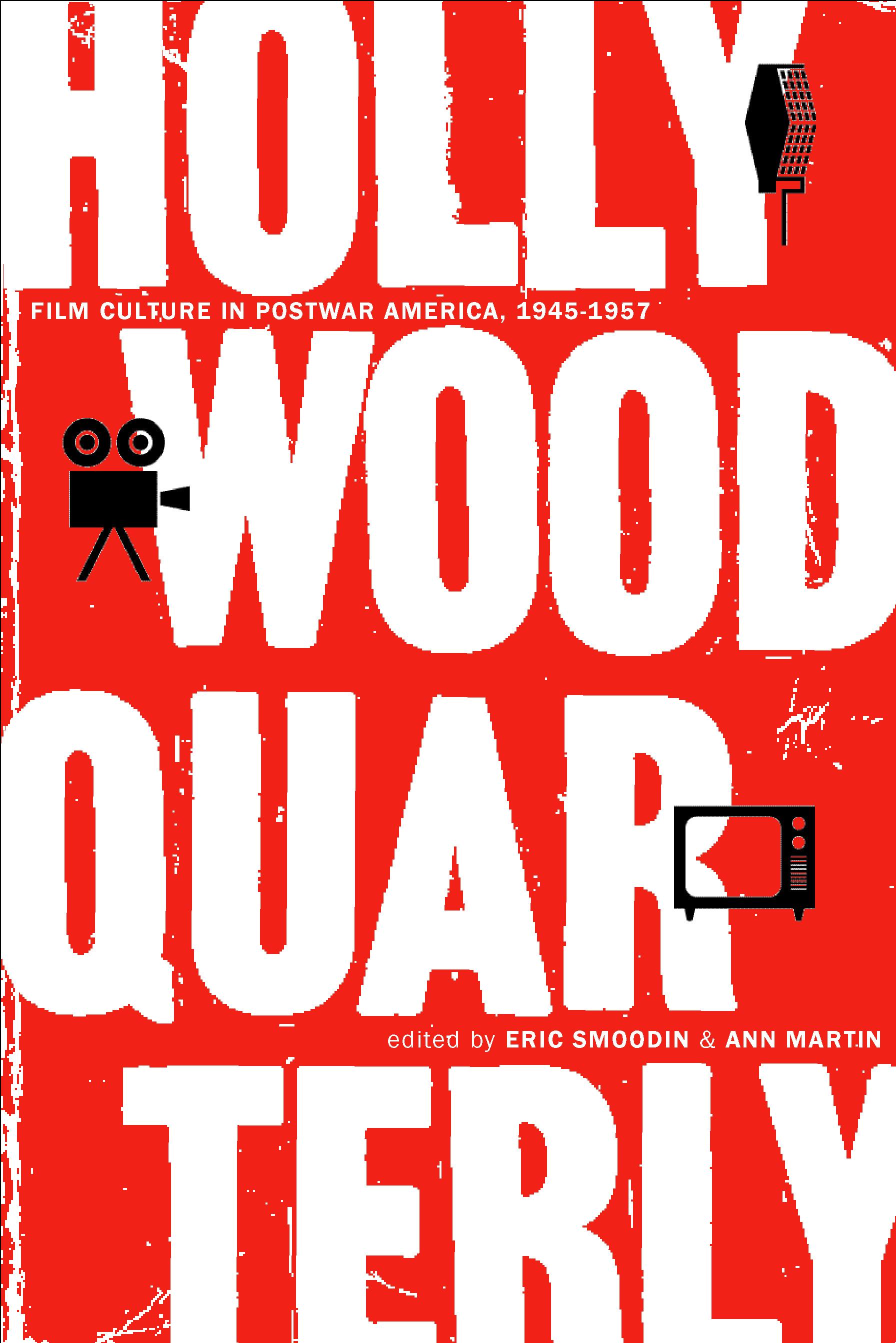
The first issue of Hollywood Quarterly, in October 1945, marked the appearance of the most significant, successful, and regularly published journal of its kind in the United States. For its entire life, the Quarterly held to the leftist utopianism of its founders, several of whom would later be blacklisted. The journal attracted a collection of writers unmatched in North American film studies for the heterogeneity of their intellectual and practical concerns: from film, radio, and television industry workers to academics; from Sam Goldwyn, Edith Head, and Chuck Jones to Theodor Adorno and Siegfried Kracauer. For this volume, Eric Smoodin and Ann Martin have selected essays that reflect the astonishing eclecticism of the journal, with sections on animation, the avant-garde, and documentary to go along with a representative sampling of articles about feature-length narrative films. They have also included articles on radio and television, reflecting the contents of just about every issue of the journal and exemplifying the extraordinary moment in film and media studies that Hollywood Quarterly captured and helped to create.
In 1951, Hollywood Quarterly was renamed the Quarterly of Film, Radio, and Television, and in 1958 it was replaced by Film Quarterly, which is still published by the University of California Press. During those first twelve years, the Quarterly maintained an intelligent, sophisticated, and critical interest in all the major entertainment media, not just film, and in issue after issue insisted on the importance of both aesthetic and sociological methodologies for studying popular culture, and on the political significance of the mass media.
In 1951, Hollywood Quarterly was renamed the Quarterly of Film, Radio, and Television, and in 1958 it was replaced by Film Quarterly, which is still published by the University of California Press. During those first twelve years, the Quarterly maintained an intelligent, sophisticated, and critical interest in all the major entertainment media, not just film, and in issue after issue insisted on the importance of both aesthetic and sociological methodologies for studying popular culture, and on the political significance of the mass media.
Zahle einfach mit Karte, Klarna, Apple Pay oder Google Pay. Nicht zufrieden? Du hast immer ein 14-tägiges Widerrufsrecht. Lies mehr in unseren AGB. Hast du Fragen, schreib uns eine E-Mail an hello@memmo.org.
Memmo macht das Lernen einfacher – wo auch immer du bist. Bei uns findest du deine Kursbücher und smarte Lerntools an einem Ort: Zusammenfassungen, Quizzes, Podcasts und Lernkarten. Und Ted, dein Lernbuddy, beantwortet alles, was du wissen möchtest. Über 50.000 Studierende lernen bereits hier – gemacht, damit du schneller lernst und weniger Stress hast.
Das könnte dir auch gefallen
Buch kaufen0