
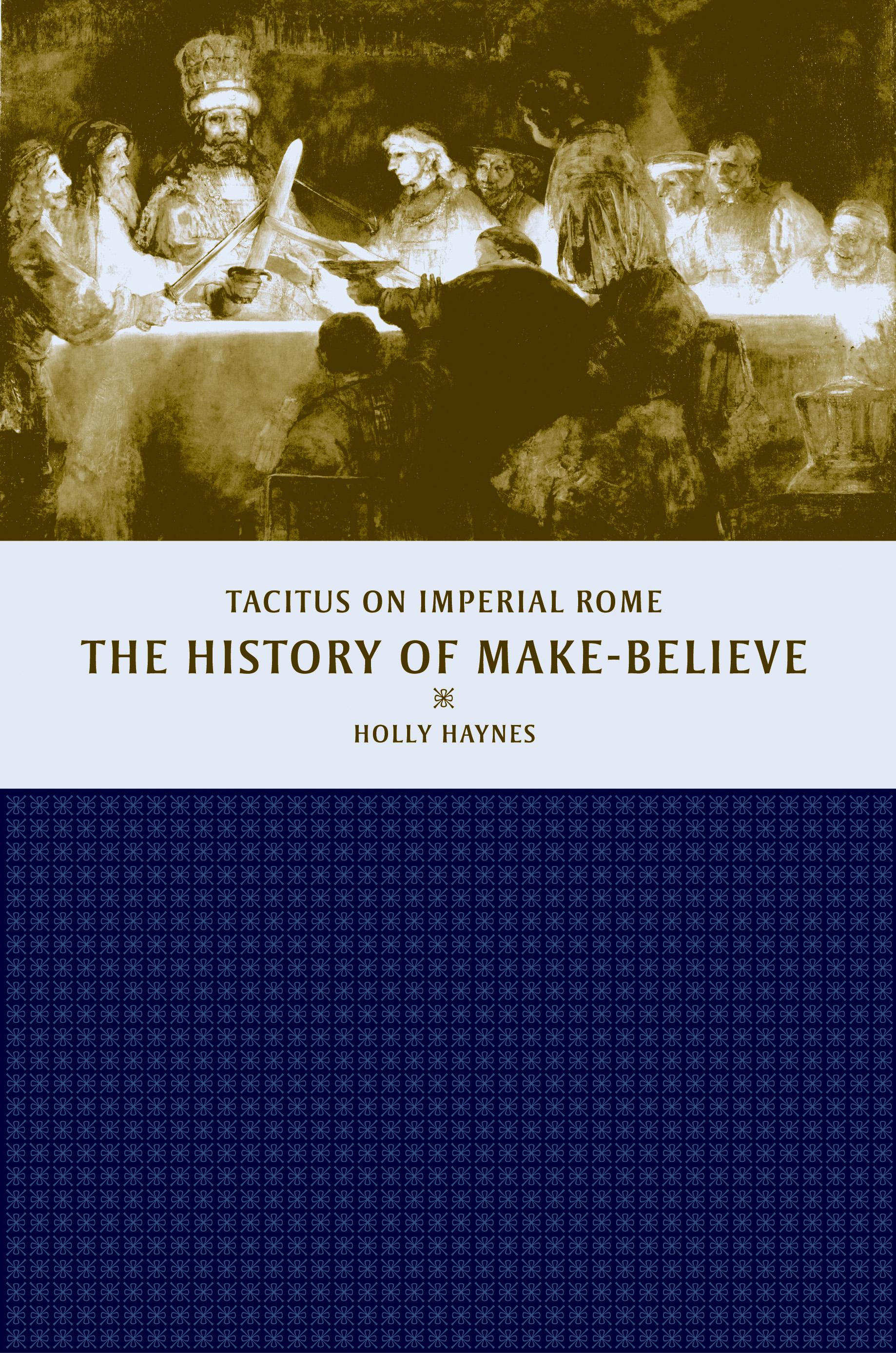
A theoretically sophisticated and illuminating reading of Tacitus, especially the Histories, this work points to a new understanding of the logic of Roman rule during the early Empire.
Tacitus, in Holly Haynes’ analysis, does not write about the reality of imperial politics and culture but about the imaginary picture that imperial society makes of these concrete conditions of existence—the "making up and believing" that figure in both the subjective shaping of reality and the objective interpretation of it. Haynes traces Tacitus’s development of this fingere/credere dynamic both backward and forward from the crucial year A.D. 69. Using recent theories of ideology, especially within the Marxist and psychoanalytic traditions, she exposes the psychic logic lurking behind the actions and inaction of the protagonists of the Histories. Her work demonstrates how Tacitus offers penetrating insights into the conditions of historical knowledge and into the psychic logic of power and its vicissitudes, from Augustus through the Flavians.
By clarifying an explicit acknowledgment of the difficult relationship between res and verba, in the Histories, Haynes shows how Tacitus calls into question the possibility of objective knowing—how he may in fact be the first to allow readers to separate the objectively knowable from the objectively unknowable. Thus, Tacitus appears here as going further toward identifying the object of historical inquiry—and hence toward an "objective" rendering of history—than most historians before or since.
Tacitus, in Holly Haynes’ analysis, does not write about the reality of imperial politics and culture but about the imaginary picture that imperial society makes of these concrete conditions of existence—the "making up and believing" that figure in both the subjective shaping of reality and the objective interpretation of it. Haynes traces Tacitus’s development of this fingere/credere dynamic both backward and forward from the crucial year A.D. 69. Using recent theories of ideology, especially within the Marxist and psychoanalytic traditions, she exposes the psychic logic lurking behind the actions and inaction of the protagonists of the Histories. Her work demonstrates how Tacitus offers penetrating insights into the conditions of historical knowledge and into the psychic logic of power and its vicissitudes, from Augustus through the Flavians.
By clarifying an explicit acknowledgment of the difficult relationship between res and verba, in the Histories, Haynes shows how Tacitus calls into question the possibility of objective knowing—how he may in fact be the first to allow readers to separate the objectively knowable from the objectively unknowable. Thus, Tacitus appears here as going further toward identifying the object of historical inquiry—and hence toward an "objective" rendering of history—than most historians before or since.
Zahle einfach mit Karte, Klarna, Apple Pay oder Google Pay. Nicht zufrieden? Du hast immer ein 14-tägiges Widerrufsrecht. Lies mehr in unseren AGB. Hast du Fragen, schreib uns eine E-Mail an hello@memmo.org.
Memmo macht das Lernen einfacher – wo auch immer du bist. Bei uns findest du deine Kursbücher und smarte Lerntools an einem Ort: Zusammenfassungen, Quizzes, Podcasts und Lernkarten. Und Ted, dein Lernbuddy, beantwortet alles, was du wissen möchtest. Über 50.000 Studierende lernen bereits hier – gemacht, damit du schneller lernst und weniger Stress hast.
Das könnte dir auch gefallen
Buch kaufen0