
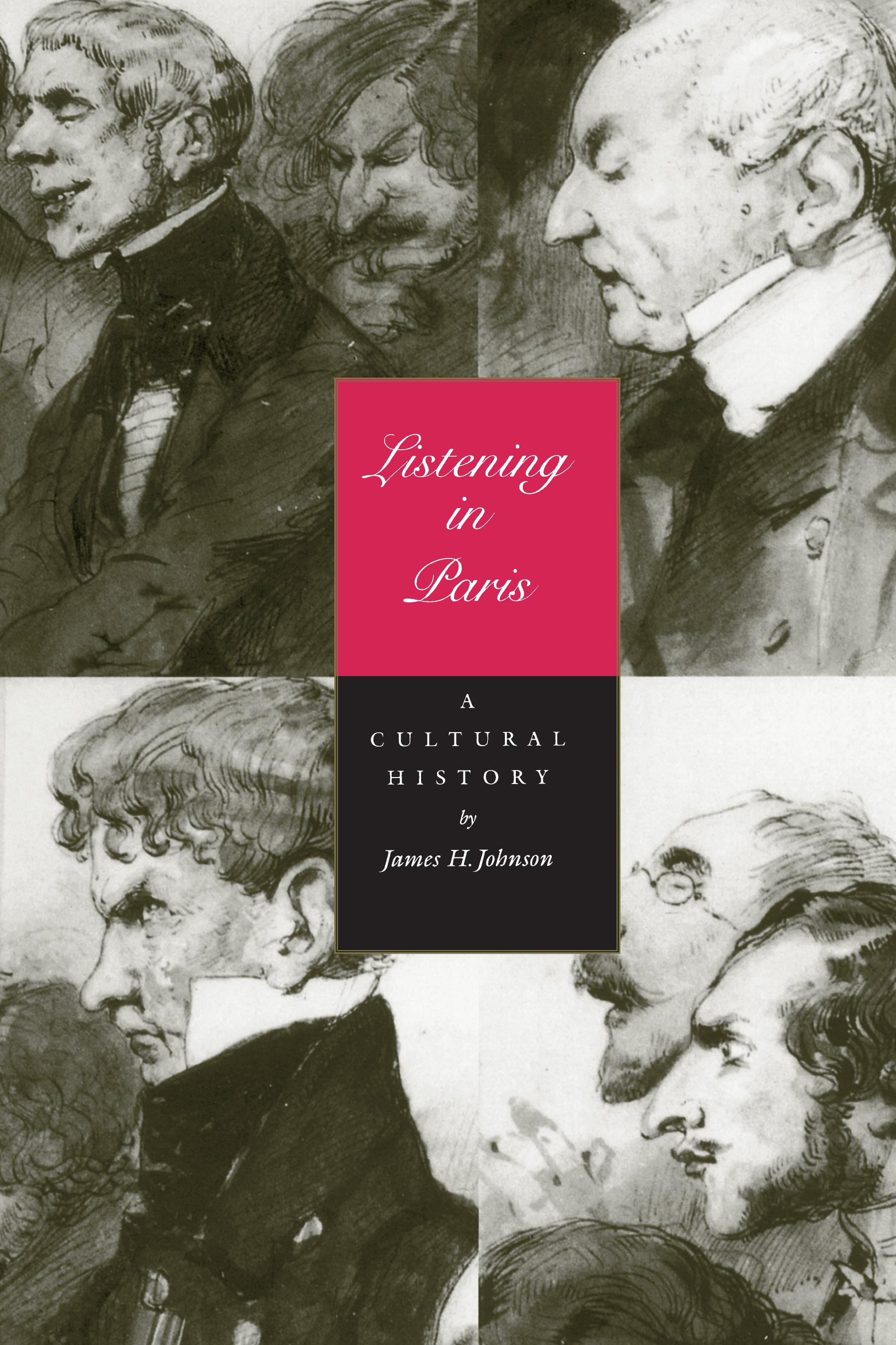
Beginning with the simple question, "Why did audiences grow silent?" Listening in Paris gives a spectator's-eye view of opera and concert life from the Old Regime to the Romantic era, describing the transformation in musical experience from social event to profound aesthetic encounter. James H. Johnson recreates the experience of audiences during these rich decades with brio and wit. Woven into the narrative is an analysis of the political, musical, and aesthetic factors that produced more engaged listening. Johnson shows the gradual pacification of audiences from loud and unruly listeners to the attentive public we know today.
Drawing from a wide range of sources—novels, memoirs, police files, personal correspondence, newspaper reviews, architectural plans, and the like—Johnson brings the performances to life: the hubbub of eighteenth-century opera, the exuberance of Revolutionary audiences, Napoleon's musical authoritarianism, the bourgeoisie's polite consideration. He singles out the music of Gluck, Haydn, Rossini, and Beethoven as especially important in forging new ways of hearing. This book's theoretical edge will appeal to cultural and intellectual historians in many fields and periods.
Beginning with the simple question, "Why did audiences grow silent?" Listening in Paris gives a spectator's-eye view of opera and concert life from the Old Regime to the Romantic era, describing the transformation in musical experience from social
Drawing from a wide range of sources—novels, memoirs, police files, personal correspondence, newspaper reviews, architectural plans, and the like—Johnson brings the performances to life: the hubbub of eighteenth-century opera, the exuberance of Revolutionary audiences, Napoleon's musical authoritarianism, the bourgeoisie's polite consideration. He singles out the music of Gluck, Haydn, Rossini, and Beethoven as especially important in forging new ways of hearing. This book's theoretical edge will appeal to cultural and intellectual historians in many fields and periods.
Beginning with the simple question, "Why did audiences grow silent?" Listening in Paris gives a spectator's-eye view of opera and concert life from the Old Regime to the Romantic era, describing the transformation in musical experience from social
Zahle einfach mit Karte, Klarna, Apple Pay oder Google Pay. Nicht zufrieden? Du hast immer ein 14-tägiges Widerrufsrecht. Lies mehr in unseren AGB. Hast du Fragen, schreib uns eine E-Mail an hello@memmo.org.
Memmo macht das Lernen einfacher – wo auch immer du bist. Bei uns findest du deine Kursbücher und smarte Lerntools an einem Ort: Zusammenfassungen, Quizzes, Podcasts und Lernkarten. Und Ted, dein Lernbuddy, beantwortet alles, was du wissen möchtest. Über 50.000 Studierende lernen bereits hier – gemacht, damit du schneller lernst und weniger Stress hast.
Das könnte dir auch gefallen
Buch kaufen0