
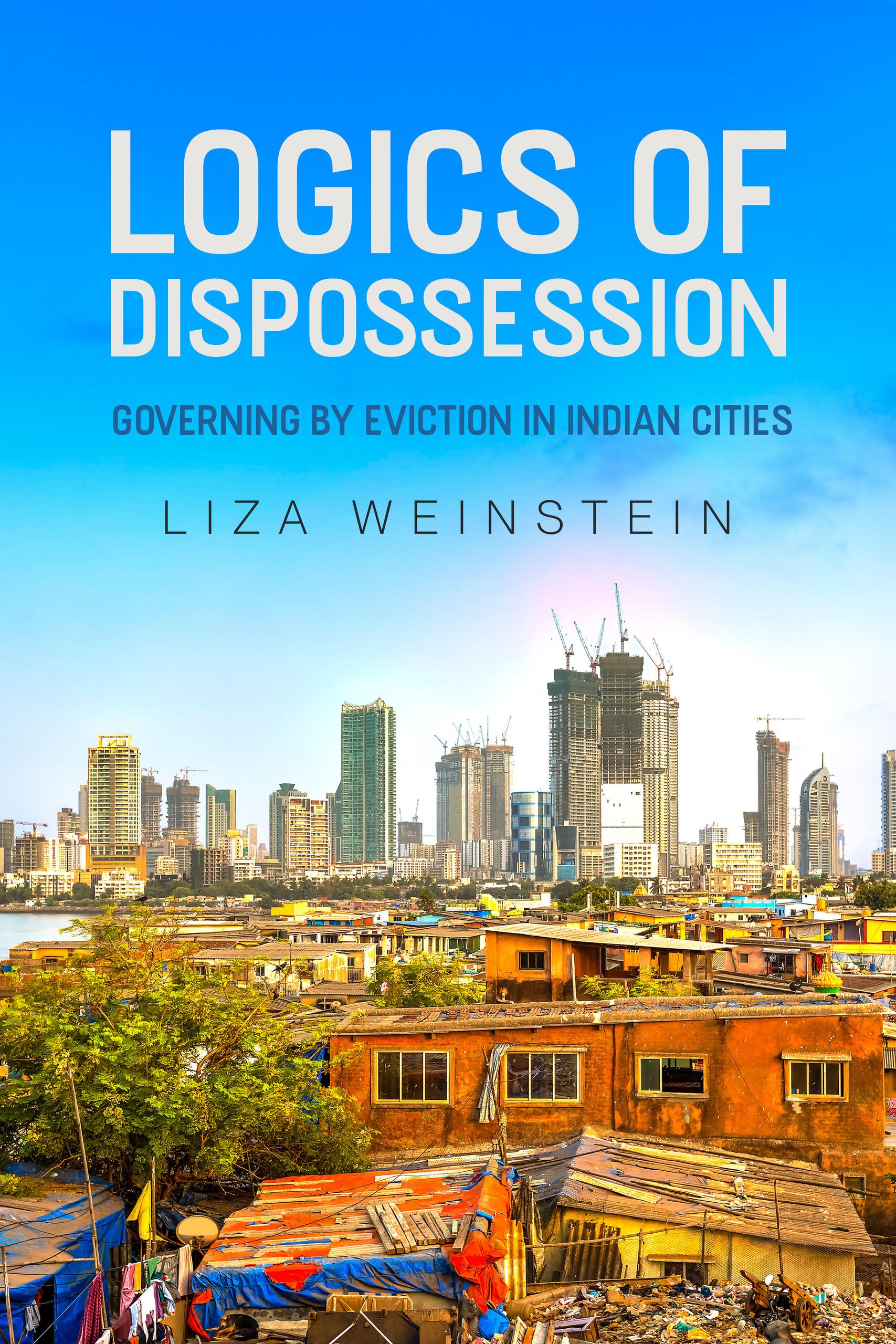
A new "bulldozer politics" has taken hold in many Indian cities, destroying neighborhoods and displacing city residents as it pursues a global city aesthetic. Presentist accounts might explain these evictions as emergent modes of capital accumulation, but Logics of Dispossession challenges that story and situates these acts in a longer historical durée.
Employing a comparative genealogical approach to historical analysis, Liza Weinstein traces the Indian government’s power to evict—from its beginnings in the colonial capitals of the British Raj, to developmental state-building projects and the rise of ethnonationalist politics, up to the present neoliberal conjuncture. Drawing on multicity fieldwork, archival research, and a database of more than a thousand eviction cases, Weinstein argues that evictions constitute a historically entrenched tool of city governance, motivated by a shifting set of intersecting, often contradictory logics that have accumulated over time and in locally specific ways across Indian cities aspiring to be world-class.
Zahle einfach mit Karte, Klarna, Apple Pay oder Google Pay. Nicht zufrieden? Du hast immer ein 14-tägiges Widerrufsrecht. Lies mehr in unseren AGB. Hast du Fragen, schreib uns eine E-Mail an hello@memmo.org.
Memmo macht das Lernen einfacher – wo auch immer du bist. Bei uns findest du deine Kursbücher und smarte Lerntools an einem Ort: Zusammenfassungen, Quizzes, Podcasts und Lernkarten. Und Ted, dein Lernbuddy, beantwortet alles, was du wissen möchtest. Über 50.000 Studierende lernen bereits hier – gemacht, damit du schneller lernst und weniger Stress hast.