
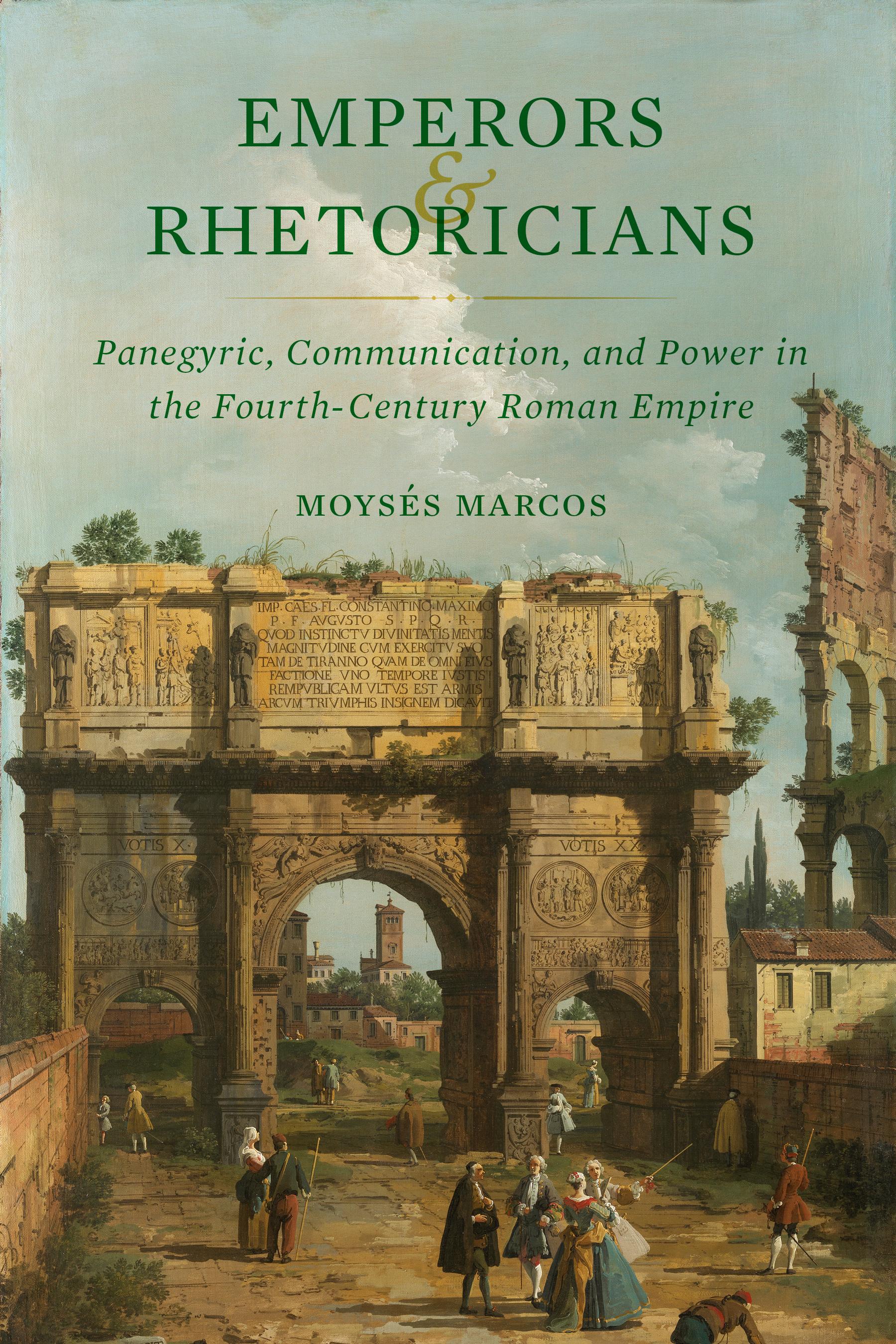
Panegyric, the art of publicly praising prominent political figures, occupied an important place in the Roman Empire throughout late antiquity. Orators were skilled political actors who manipulated the conventions of praise giving, taking great license with what they chose to present (or omit). Their ancient speeches are rare windows into the world of panegyrists, emperors, and their audiences. In Emperors and Rhetoricians, Moysés Marcos offers an original, comprehensive look at all panegyrics to and by Julian, who in 355/56 CE promoted himself as a learned caesar by producing his own panegyric on his cousin and Augustan benefactor, Constantius II. During key stages in his public career and throughout the time he held imperial power, Julian experimented with and utilized panegyric as both political communication and political opportunity. Marcos expertly mines this vast body of work to uncover a startlingly new picture of Julian the Apostate, explore anew the arc of his career in imperial office, and model new ways to interpret and understand imperial speeches of praise.
Zahle einfach mit Karte, Klarna, Apple Pay oder Google Pay. Nicht zufrieden? Du hast immer ein 14-tägiges Widerrufsrecht. Lies mehr in unseren AGB. Hast du Fragen, schreib uns eine E-Mail an hello@memmo.org.
Memmo macht das Lernen einfacher – wo auch immer du bist. Bei uns findest du deine Kursbücher und smarte Lerntools an einem Ort: Zusammenfassungen, Quizzes, Podcasts und Lernkarten. Und Ted, dein Lernbuddy, beantwortet alles, was du wissen möchtest. Über 50.000 Studierende lernen bereits hier – gemacht, damit du schneller lernst und weniger Stress hast.
Das könnte dir auch gefallen
Buch kaufen0