
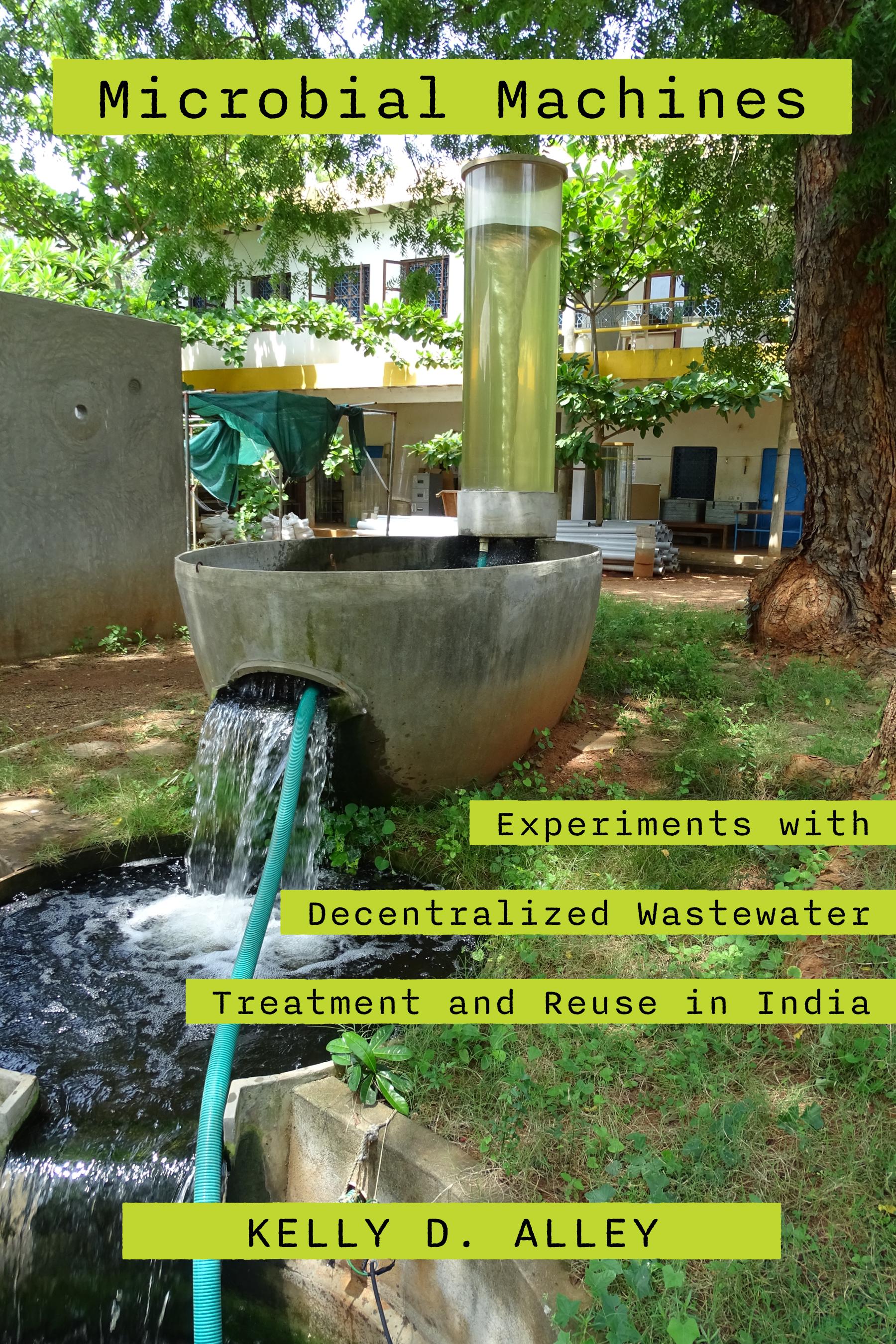
Around 2004, members of governmental and nongovernmental organizations, science institutes, and private companies throughout India began brainstorming and then experimenting with small-scale treatment systems that could produce usable water from wastewater. Through detailed case studies, Microbial Machines describes how residents, workers, and scientists interact with technology, science, and engineering during the processes of treatment and reuse. Using a human-machine-microbe framework, Kelly Alley explores the ways that people's sensory perceptions of water—including disgust—are dynamic and how people use machines and microbes to digest wastewater. A better understanding of how the human and nonhuman interact in these processes will enable people to generate more effective methods for treating and reusing wastewater. While decentralized wastewater treatment systems may not be a perfect solution, they alleviate resource stress in regions that are particularly hard hit by climate change. These case studies have broad relevance for solving similar problems in many other places around the world.
Zahle einfach mit Karte, Klarna, Apple Pay oder Google Pay. Nicht zufrieden? Du hast immer ein 14-tägiges Widerrufsrecht. Lies mehr in unseren AGB. Hast du Fragen, schreib uns eine E-Mail an hello@memmo.org.
Memmo macht das Lernen einfacher – wo auch immer du bist. Bei uns findest du deine Kursbücher und smarte Lerntools an einem Ort: Zusammenfassungen, Quizzes, Podcasts und Lernkarten. Und Ted, dein Lernbuddy, beantwortet alles, was du wissen möchtest. Über 50.000 Studierende lernen bereits hier – gemacht, damit du schneller lernst und weniger Stress hast.
Das könnte dir auch gefallen
Buch kaufen0