
A free open access book is available upon publication. Learn more at www.luminosoa.org.
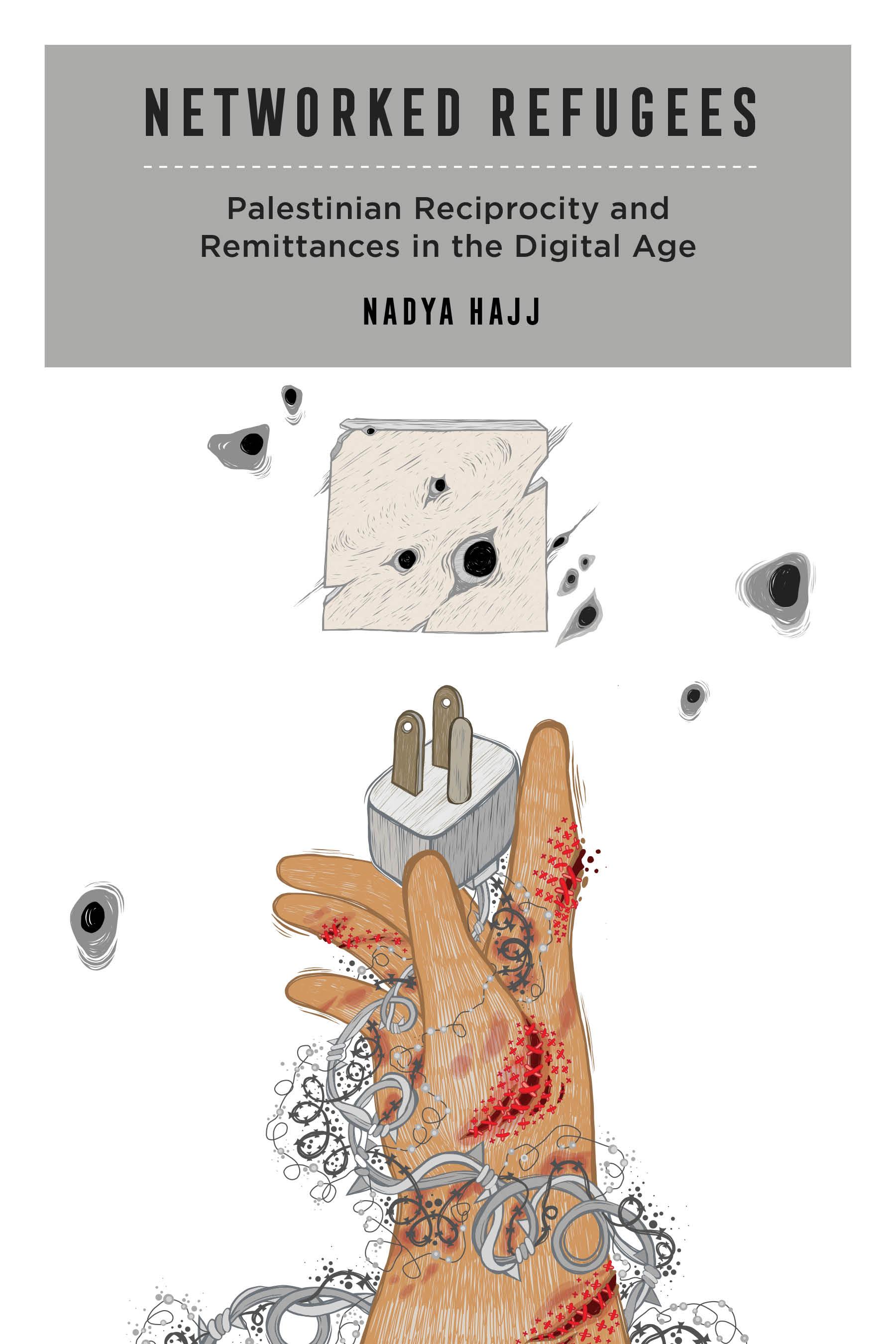
Almost 68.5 million refugees in the world today live in a protection gap, the chasm between protections stipulated in the Geneva Convention and the abrogation of those responsibilities by states and aid agencies. With dwindling humanitarian aid, how do refugee communities solve collective dilemmas, like raising funds for funeral services, or securing other critical goods and services?
In Networked Refugees, Nadya Hajj finds that Palestinian refugees utilize Information Communication Technology platforms to motivate reciprocity—a cooperative action marked by the mutual exchange of favors and services—and informally seek aid and connection with their transnational diaspora community. Using surveys conducted with Palestinians throughout the diaspora, interviews with those inside the Nahr al Bared Refugee camp in Lebanon, and data pulled from online community spaces, these findings push back against the cynical idea that online organizing is fruitless, emphasizing instead the productivity of these digital networks.
Almost 68.5 million refugees in the world today live in a protection gap, the chasm between protections stipulated in the Geneva Convention and the abrogation of those responsibilities by states and aid agencies. With dwindling humanitarian aid, how do refugee communities solve collective dilemmas, like raising funds for funeral services, or securing other critical goods and services?
In Networked Refugees, Nadya Hajj finds that Palestinian refugees utilize Information Communication Technology platforms to motivate reciprocity—a cooperative action marked by the mutual exchange of favors and services—and informally seek aid and connection with their transnational diaspora community. Using surveys conducted with Palestinians throughout the diaspora, interviews with those inside the Nahr al Bared Refugee camp in Lebanon, and data pulled from online community spaces, these findings push back against the cynical idea that online organizing is fruitless, emphasizing instead the productivity of these digital networks.
Zahle einfach mit Karte, Klarna, Apple Pay oder Google Pay. Nicht zufrieden? Du hast immer ein 14-tägiges Widerrufsrecht. Lies mehr in unseren AGB. Hast du Fragen, schreib uns eine E-Mail an hello@memmo.org.
Memmo macht das Lernen einfacher – wo auch immer du bist. Bei uns findest du deine Kursbücher und smarte Lerntools an einem Ort: Zusammenfassungen, Quizzes, Podcasts und Lernkarten. Und Ted, dein Lernbuddy, beantwortet alles, was du wissen möchtest. Über 50.000 Studierende lernen bereits hier – gemacht, damit du schneller lernst und weniger Stress hast.
Das könnte dir auch gefallen
Buch kaufen0