
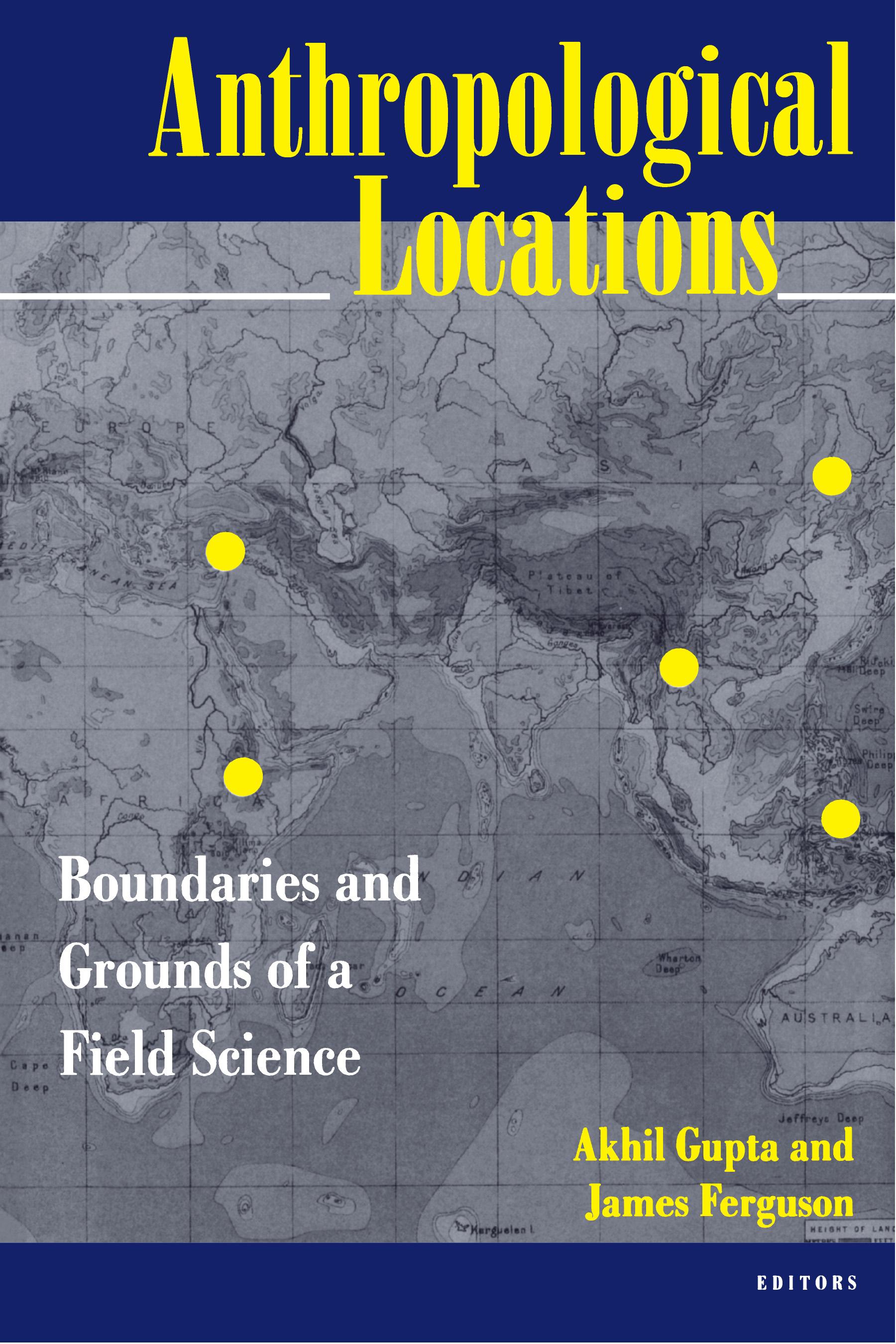
Among the social sciences, anthropology relies most fundamentally on "fieldwork"—the long-term immersion in another way of life as the basis for knowledge. In an era when anthropologists are studying topics that resist geographical localization, this book initiates a long-overdue discussion of the political and epistemological implications of the disciplinary commitment to fieldwork.
These innovative, stimulating essays—carefully chosen to form a coherent whole—interrogate the notion of "the field," showing how the concept is historically constructed and exploring the consequences of its dominance. The essays discuss anthropological work done in places (in refugee camps, on television) or among populations (gays and lesbians, homeless people in the United States) that challenge the traditional boundaries of "the field." The contributors suggest alternative methodologies appropriate for contemporary problems and ultimately propose a reformation of the discipline of anthropology.
Among the social sciences, anthropology relies most fundamentally on "fieldwork"—the long-term immersion in another way of life as the basis for knowledge. In an era when anthropologists are studying topics that resist geographical localization, this book
These innovative, stimulating essays—carefully chosen to form a coherent whole—interrogate the notion of "the field," showing how the concept is historically constructed and exploring the consequences of its dominance. The essays discuss anthropological work done in places (in refugee camps, on television) or among populations (gays and lesbians, homeless people in the United States) that challenge the traditional boundaries of "the field." The contributors suggest alternative methodologies appropriate for contemporary problems and ultimately propose a reformation of the discipline of anthropology.
Among the social sciences, anthropology relies most fundamentally on "fieldwork"—the long-term immersion in another way of life as the basis for knowledge. In an era when anthropologists are studying topics that resist geographical localization, this book
Zahle einfach mit Karte, Klarna, Apple Pay oder Google Pay. Nicht zufrieden? Du hast immer ein 14-tägiges Widerrufsrecht. Lies mehr in unseren AGB. Hast du Fragen, schreib uns eine E-Mail an hello@memmo.org.
Memmo macht das Lernen einfacher – wo auch immer du bist. Bei uns findest du deine Kursbücher und smarte Lerntools an einem Ort: Zusammenfassungen, Quizzes, Podcasts und Lernkarten. Und Ted, dein Lernbuddy, beantwortet alles, was du wissen möchtest. Über 50.000 Studierende lernen bereits hier – gemacht, damit du schneller lernst und weniger Stress hast.
Das könnte dir auch gefallen
Buch kaufen0