
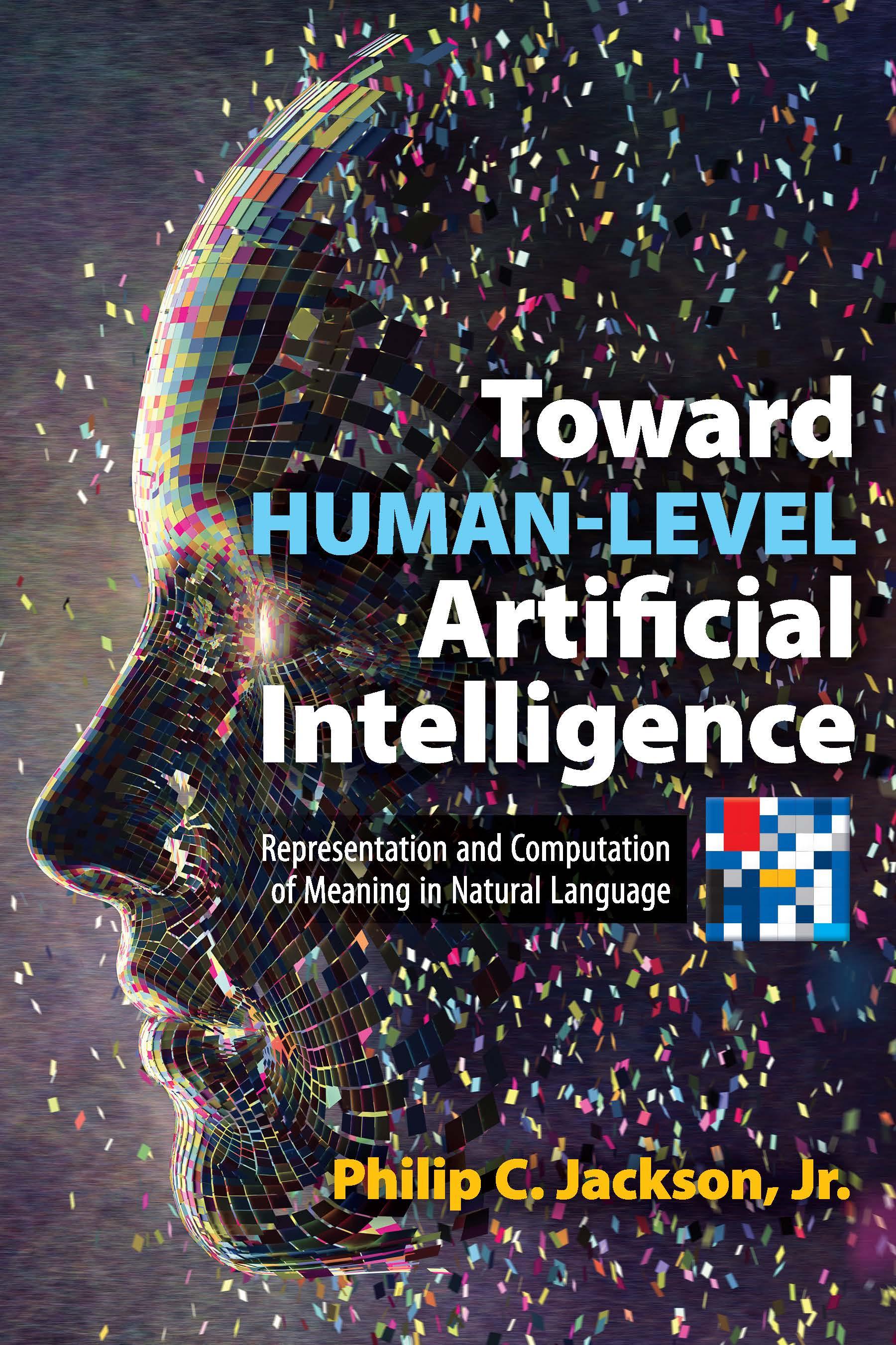
How can human-level artificial intelligence be achieved? What are the potential consequences? This book describes a research approach toward achieving human-level AI, combining a doctoral thesis and research papers by the author.
The research approach, called TalaMind, involves developing an AI system that uses a 'natural language of thought' based on the unconstrained syntax of a language such as English; designing the system as a collection of concepts that can create and modify concepts to behave intelligently in an environment; and using methods from cognitive linguistics for multiple levels of mental representation. Proposing a design-inspection alternative to the Turing Test, these pages discuss 'higher-level mentalities' of human intelligence, which include natural language understanding, higher-level forms of learning and reasoning, imagination, and consciousness. Dr. Jackson gives a comprehensive review of other research, addresses theoretical objections to the proposed approach and to achieving human-level AI in principle, and describes a prototype system that illustrates the potential of the approach.
This book discusses economic risks and benefits of AI, considers how to ensure that human-level AI and superintelligence will be beneficial for humanity, and gives reasons why human-level AI may be necessary for humanity's survival and prosperity.
The research approach, called TalaMind, involves developing an AI system that uses a 'natural language of thought' based on the unconstrained syntax of a language such as English; designing the system as a collection of concepts that can create and modify concepts to behave intelligently in an environment; and using methods from cognitive linguistics for multiple levels of mental representation. Proposing a design-inspection alternative to the Turing Test, these pages discuss 'higher-level mentalities' of human intelligence, which include natural language understanding, higher-level forms of learning and reasoning, imagination, and consciousness. Dr. Jackson gives a comprehensive review of other research, addresses theoretical objections to the proposed approach and to achieving human-level AI in principle, and describes a prototype system that illustrates the potential of the approach.
This book discusses economic risks and benefits of AI, considers how to ensure that human-level AI and superintelligence will be beneficial for humanity, and gives reasons why human-level AI may be necessary for humanity's survival and prosperity.
Zahle einfach mit Karte, Klarna, Apple Pay oder Google Pay. Nicht zufrieden? Du hast immer ein 14-tägiges Widerrufsrecht. Lies mehr in unseren AGB. Hast du Fragen, schreib uns eine E-Mail an hello@memmo.org.
Memmo macht das Lernen einfacher – wo auch immer du bist. Bei uns findest du deine Kursbücher und smarte Lerntools an einem Ort: Zusammenfassungen, Quizzes, Podcasts und Lernkarten. Und Ted, dein Lernbuddy, beantwortet alles, was du wissen möchtest. Über 50.000 Studierende lernen bereits hier – gemacht, damit du schneller lernst und weniger Stress hast.
Das könnte dir auch gefallen
Buch kaufen0