
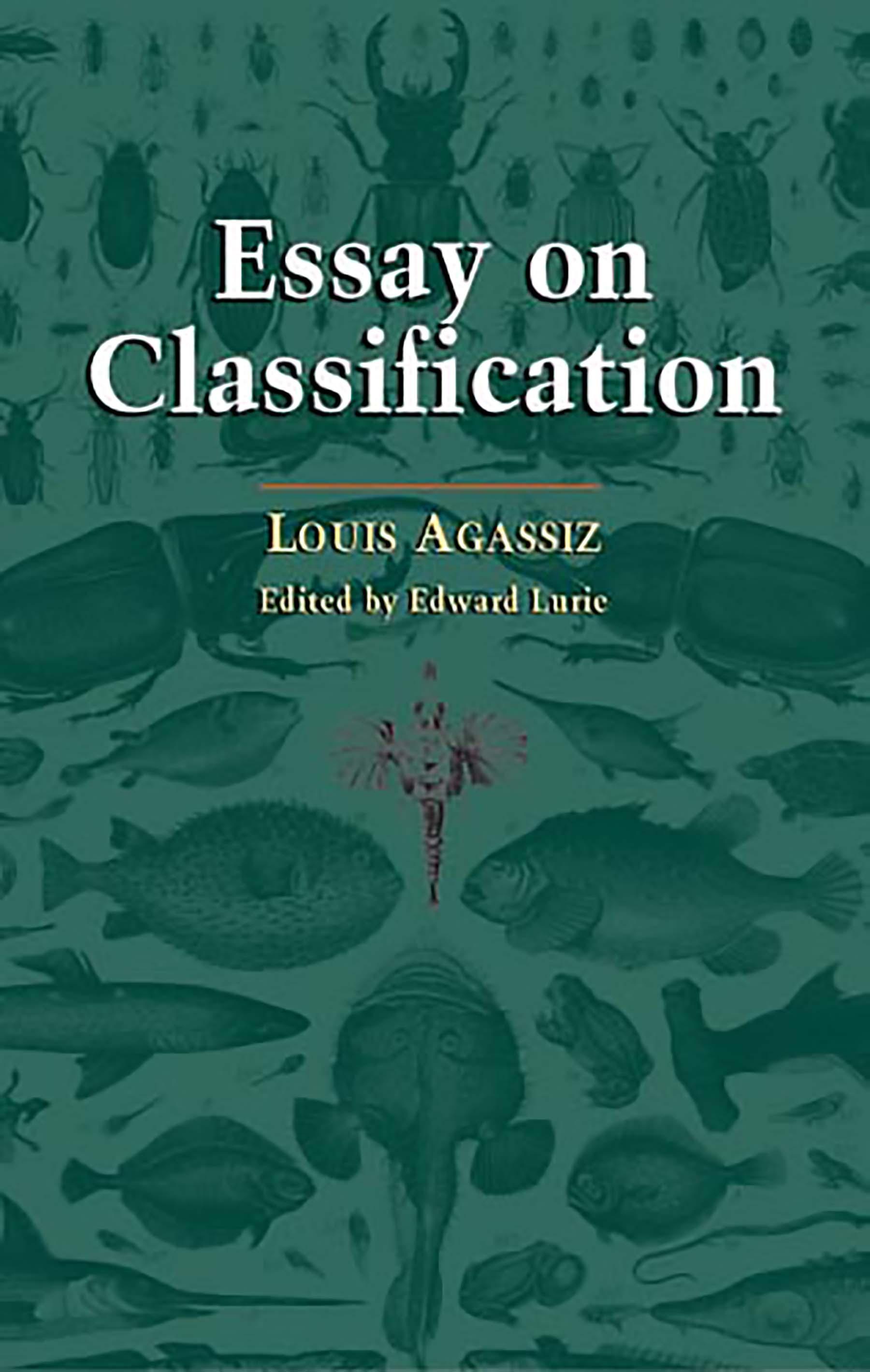
A major influence on the development of American scientific culture, Swiss-born Louis Agassiz (1807–73) was one of the great scientists of his day. A student of anatomist Georges Cuvier, Agassiz adapted his teacher's pioneering techniques of comparative anatomy to paleontology, and he rose to prominence as a distinguished systematist, paleontologist, and educator. Agassiz introduced science to ordinary citizens to an unprecedented degree; people around the world read his books, sent him specimens, and consulted his opinion.
Agassiz was also a staunch opponent of the theory of evolution, and he was among the last of the reputable scientists who continued to reject the concept after the publication of The Origin of the Species. All of nature bore testimony to a divine plan, Agassiz believed, and he could not reconcile himself to a theory that did not invoke God's design. Ironically, his 1851 Essay on Classification provided Darwin and other evolutionists with evidence from the fossil record to support the theory of natural selection.
A treasure of historically valuable insights that contributed to the development of evolutionary biology, this volume introduced the landmark contention that paleontology, embryology, ecology, and biogeography are inextricably linked in classifications that reveal the true relationships between organisms. Its emphasis on advanced and original work gave major impetus to the study of science directly from nature, and it remains a classic of American scientific literature.
Agassiz was also a staunch opponent of the theory of evolution, and he was among the last of the reputable scientists who continued to reject the concept after the publication of The Origin of the Species. All of nature bore testimony to a divine plan, Agassiz believed, and he could not reconcile himself to a theory that did not invoke God's design. Ironically, his 1851 Essay on Classification provided Darwin and other evolutionists with evidence from the fossil record to support the theory of natural selection.
A treasure of historically valuable insights that contributed to the development of evolutionary biology, this volume introduced the landmark contention that paleontology, embryology, ecology, and biogeography are inextricably linked in classifications that reveal the true relationships between organisms. Its emphasis on advanced and original work gave major impetus to the study of science directly from nature, and it remains a classic of American scientific literature.
Zahle einfach mit Karte, Klarna, Apple Pay oder Google Pay. Nicht zufrieden? Du hast immer ein 14-tägiges Widerrufsrecht. Lies mehr in unseren AGB. Hast du Fragen, schreib uns eine E-Mail an hello@memmo.org.
Memmo macht das Lernen einfacher – wo auch immer du bist. Bei uns findest du deine Kursbücher und smarte Lerntools an einem Ort: Zusammenfassungen, Quizzes, Podcasts und Lernkarten. Und Ted, dein Lernbuddy, beantwortet alles, was du wissen möchtest. Über 50.000 Studierende lernen bereits hier – gemacht, damit du schneller lernst und weniger Stress hast.
Das könnte dir auch gefallen
Buch kaufen0