
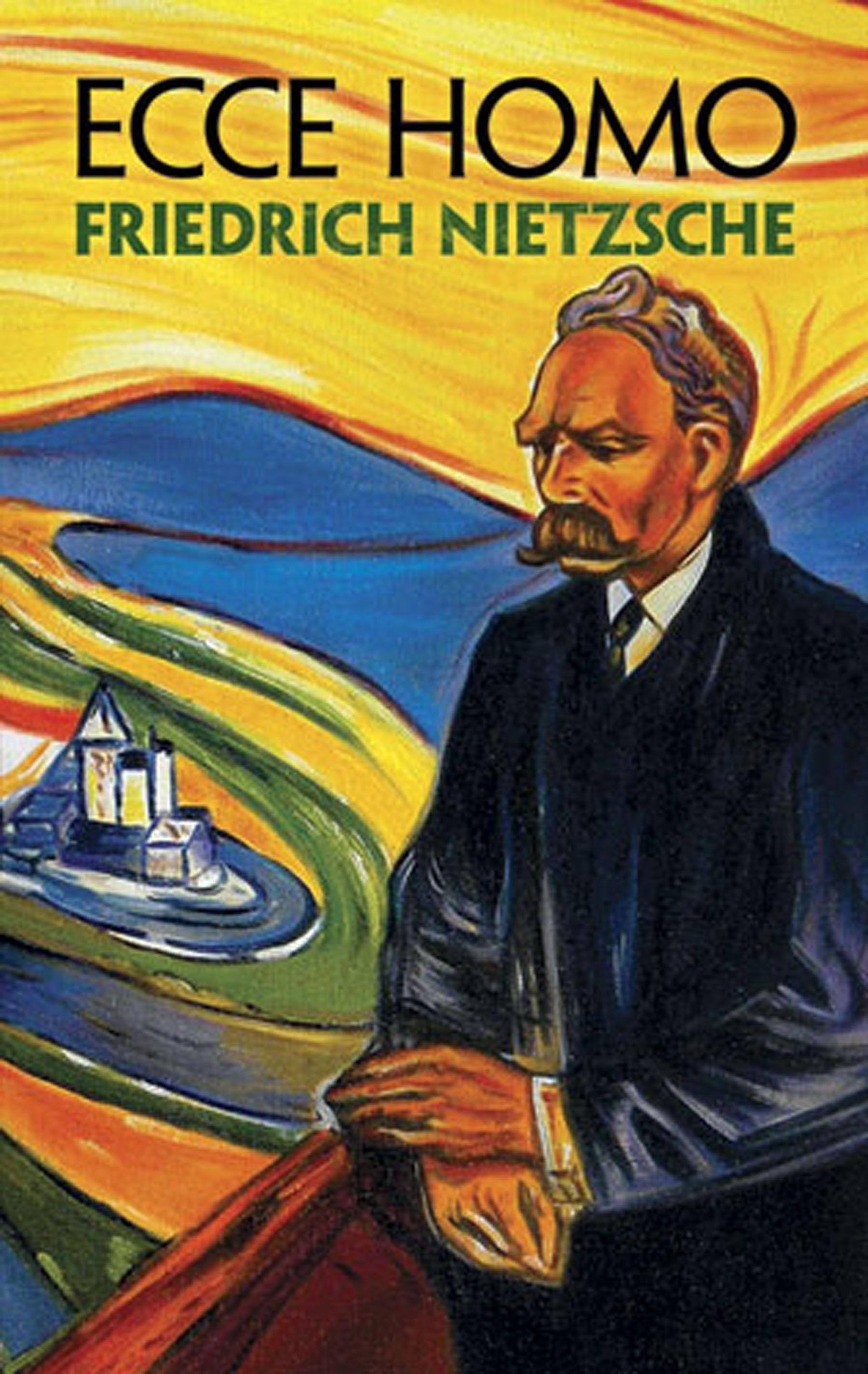
For the title of his autobiography, Friedrich Nietzsche chose Pilate's words upon discharging Christ to the mob: Ecce Homo, or "Behold the man." The original subtitle, How One Becomes What One Is, suggests a psychologically intriguing exploration of the philosopher's personal history. Nietzsche fulfills that promise with a dramatic summation of his life and career that turns conventional notions of autobiography inside out.
Published posthumously in 1908, Ecce Homo was written in 1888 and completed just a few weeks before Nietzsche's complete mental collapse. Its outrageously egotistical review of the philosopher's life and works — featuring chapters called Why I Am So Wise and Why I Write Such Good Books — are redeemed from mere arrogance by masterful language and ever-relevant ideas. In addition to settling scores with his many personal and philosophical enemies (including Richard Wagner, German nationalism, and Christianity), Nietzsche emphasizes the importance of questioning traditional morality, establishing autonomy, and making a commitment to creativity.
Essential reading for students of philosophy, this unique memoir is crucial to an understanding of Nietzsche's other works.
Zahle einfach mit Karte, Klarna, Apple Pay oder Google Pay. Nicht zufrieden? Du hast immer ein 14-tägiges Widerrufsrecht. Lies mehr in unseren AGB. Hast du Fragen, schreib uns eine E-Mail an hello@memmo.org.
Memmo macht das Lernen einfacher – wo auch immer du bist. Bei uns findest du deine Kursbücher und smarte Lerntools an einem Ort: Zusammenfassungen, Quizzes, Podcasts und Lernkarten. Und Ted, dein Lernbuddy, beantwortet alles, was du wissen möchtest. Über 50.000 Studierende lernen bereits hier – gemacht, damit du schneller lernst und weniger Stress hast.